








Compared with traditional construction methods, precast concrete buildings have significant advantages in construction efficiency, environmental performance, and economic benefits. However, we must face up to the issue of safety risk control during the construction of precast concrete buildings, which is also an important link that cannot be ignored. This article will delve into the key points of safety risk control in precast concrete building construction, aiming to provide practical reference and guidance for relevant practitioners to ensure that the construction of prefabricated building projects can proceed safely and smoothly.
1. Danger sources of precast concrete buildings
Risks in the production, fabrication, and transportation of prefabricated components: During the production and fabrication process of prefabricated components, there may be potential quality problems due to material defects, production process problems, or equipment failures. For example, insufficient strength of concrete, inaccurate location of steel bars, etc.; risks of overturning and damage during component transportation, etc.
Construction operation risks: High-altitude operations, installation and disassembly of temporary supports, and other operations involved in construction may bring safety risks if the operations are not standardized or the tools are used improperly.
Risks of hoisting and fixing: The hoisting and fixing of prefabricated components are key links. Improper operation or equipment used does not meet the requirements, which may lead to accidents such as falling and overturning of prefabricated components.
Construction environment risks: Construction environments such as bad weather, slippery sites, cross-working operations, etc. may increase construction safety risks.
Construction personnel training and protection: Construction personnel lack necessary safety training or fail to take appropriate safety protection measures, which is also an important reason for safety accidents.
2. Transportation Safety of Precast Concrete Components
Road condition risks: Poor transport road conditions, road damage, or traffic congestion may increase risks during transport.
Loading and fixing risks: Unstable loading of prefabricated components on transport vehicles or improper fixing measures may cause prefabricated components to be damaged or fall during transportation.
Driver skill and status risks: Driver inexperience, fatigue, or negligence may affect transportation safety.
Risks of overloading and illegal driving: Overloading of transport vehicles or drivers violating traffic rules may increase the risk of transport accidents.
2.1 Is the loading of the vehicle reasonable?

2.2 Whether the load is controlled as required

2.3 The impact of height and width restrictions needs to be considered

2.4 Whether the road width and turning radius meet transportation requirements
2.5 The basement roof needs to be reinforced to meet transportation requirements
3. Storage safety of prefabricated buildings
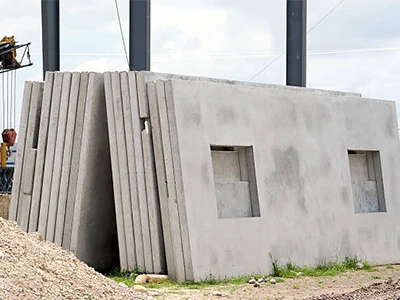
Site planning risks: Unreasonable storage site planning, such as uneven ground, poor drainage, etc., may cause damage to prefabricated components or unstable storage.
Risks of stacking and marking: excessively high or irregular stacking of prefabricated components, as well as confusing component markings, may affect subsequent construction and management.
Natural disaster risk: In the event of severe weather such as strong winds or heavy rain, prefabricated components may be damaged or safety accidents may occur.
Fire and theft risks: The lack of necessary fire prevention measures or security monitoring at the storage site may lead to fire or theft incidents.
3.1 Can be stored with a trailer or shelf

3.2 The component storage area should be closed and managed

3.3 Eliminate existing safety hazards in advance

4. Hoisting safety of prefabricated buildings
Risks of hoisting plans: Unreasonable or insufficiently demonstrated hoisting plans may lead to safety accidents during the hoisting process.
Equipment selection and maintenance risks: Improper selection of lifting equipment or inadequate equipment maintenance may lead to failure of the lifting operation or damage to the equipment.
Operating environment risks: Hoisting operating environments such as excessive wind and slippery sites may increase the risks of hoisting operations.
Operator skills and training risks: Operators lacking the necessary skills or training may lead to misoperation during the hoisting process.
Command and monitoring risks: Improper command or lack of effective monitoring means during hoisting operations may lead to accidents.
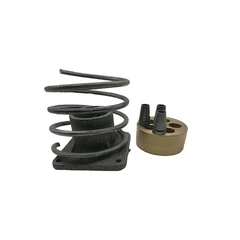
4.1 Lifting Clutch: Lifting clutch and rigging must be qualified products from safety-approved manufacturers. Check the slings/spreaders regularly.

4.2 Lifting anchors: If the hanging nails are buried too deep, the hanging claws cannot hook them; if they are too shallow or placed behind the hanging nails, they will collapse due to force.

4.3 Internally threaded sleeve/lifting ring: The hole of the sleeve pipe fitting is clogged/rusty, the screw cannot be completely in place, and the force is pulled out; the lifting ring is pulled out after the force is applied.

4.4 Temporary restraint: the restraint is not released, the shelf is brought down or the tower crane is tilted and covered
4.5 Unloading: Uneven unloading, shelf overturning

4.6 Fall from height: Without ladders or safety hooks, people can easily fall.
5. Installation safety of prefabricated buildings
Risks of connection and fixation: The connection methods and fixation measures of prefabricated components that do not meet the requirements may lead to structural instability or connection failure.
Construction sequence and collaborative work risks: Improper construction sequence or uncoordinated collaborative work between different types of work during the installation process may lead to safety accidents.
Risks of temporary support installation and removal: Improper installation and removal of temporary supports during the installation of prefabricated elements may lead to structural collapse.
Risks of anti-corrosion and anti-leakage measures: Failure to take effective anti-corrosion and anti-leakage measures after the installation of prefabricated components may lead to premature damage to the structure.
Risks of protective facilities and personnel training: The lack of necessary protective facilities at the construction site or the failure of construction workers to receive adequate safety training may lead to accidental injuries.
5.1 The wear of the spreader should be checked, tested, and replaced in time

5.2 The spreader must be installed in place

5.3 Lifting of prefabricated columns

5.4 Tower crane overload

5.5 Wall panel hoisting: cable wind ropes and anti-falling ropes should be installed
5.6 Temporary support: support removed, wall panel overturning

5.6 Temporary support: Reasons for removing the support: 1. Insufficient concrete strength, 2. Manual removal of support, 3. Violent collision
5.6 Temporary support: The concrete strength of the floor slab should be above C20 or ring-type support, and isolation areas should be set up according to the classification of high-altitude operations.
5.7 Edge protection: can adopt lifting frame/climbing frame/hanging frame

5.8 Climbing operations

5.9 Working channels should be safe and smooth
5.10 Use electricity safely and take protective measures
6. Quality risks of prefabricated construction
Material quality risk: The quality of materials used in prefabricated components, such as concrete and steel bars, does not meet the requirements, which may lead to a decrease in structural performance.
Production and processing accuracy risks: Strict accuracy control during the production process of prefabricated components may lead to installation difficulties or structural performance that does not meet requirements.
To sum up, the safety risk control of precast concrete building construction covers many key areas, requiring us to comprehensively grasp every detail from multiple perspectives. Only through in-depth understanding and effective control measures can we ensure the safe construction of every precast concrete building project. During the actual operation process, practitioners must continuously improve their professionalism, strengthen safety awareness, and use practical actions to facilitate the smooth advancement of precast concrete construction projects.