




Precast concrete component hoisting scenarios include molding and transportation in the component production stage and flipping and installation in the on-site construction stage. The lifting method of pre-embedded lifting nails and special spreaders is a practical application in engineering due to its fast lifting, safe, and reliable characteristics. Precast concrete lifting technology is the most commonly used in China and is widely used in European and American countries. As the most critical component, the reliable performance and correct operation and application of hoisting and embedded products are the primary conditions for ensuring the safety of hoisting operations. Currently, there are various hoisting and embedded products at home and abroad, each with its own characteristics, and can be used in residential and public buildings. Hoisting of precast concrete components in, industry, municipal and other fields. This article focuses on the main prefabricated component lifting systems, including product features, application conditions, design details actual operations, etc., which not only ensures the safety of lifting operations but also improves lifting efficiency.
Introduction to the Lifting System
Precast concrete components usually have a large self-weight and a wide variety of component shapes, so there is also a wide variety of embedded hanging nails that can be used. The safety factor of the hanging nail itself exceeds 3.0 times, the safety factor of the spreader exceeds 4.0 times, and the safety factor of lifting damage to concrete exceeds 2.5 times. The following introduces the commonly used prefabricated component lifting systems in the civil and industrial fields. There are no strict application boundaries between them, but each has its characteristics. Especially in some special components and lifting environments, choosing the appropriate lifting system will get twice the result with half the effort.
Lifting Anchors
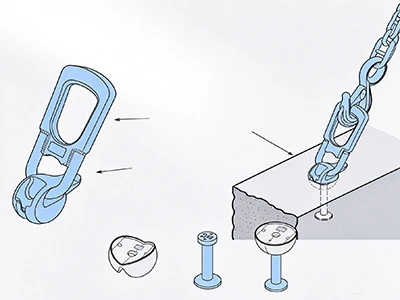
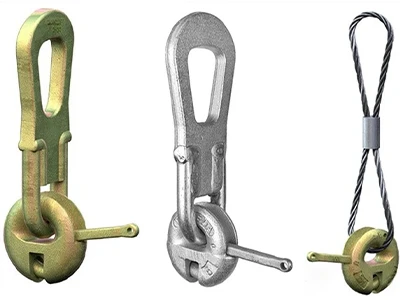
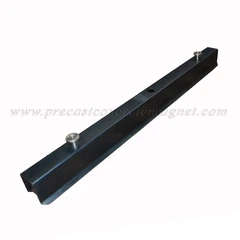
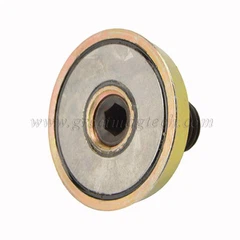
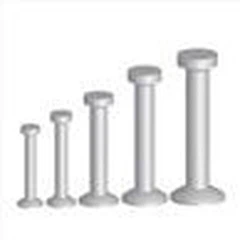
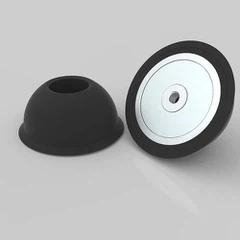
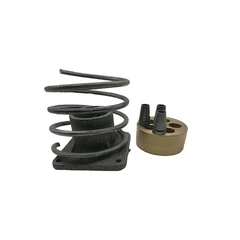
Lifting Anchors are used for hooking, and are equipped with a special lifting clutch to achieve quick hooking. The hoisting load is transferred to the concrete through the round end anchor at the other end of the hoisting nail. During installation, Recess Former Magnet needs to be used to fix the lifting nails, and at the same time, a hemispherical groove is formed on the concrete surface so that the lifting device can be hooked and lifted.

Threaded Lifting System
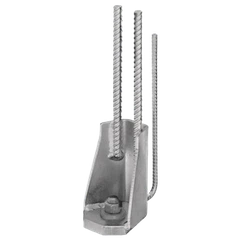
The ends of the Threaded Lifting System are all tapped from steel pipes, and their special lifting tools have external threads, which need to be screwed into the lifting nail sleeve during lifting. The extruded steel bar at the other end of the casing will lift the load to the concrete. Commonly used methods include steel bar straight anchors, curved anchors, and steel plate end anchors.

In addition to conventional prefabricated components, the threaded embedded hanging nail system can also be used in some thin-walled components, such as thin prefabricated wall panels and floor slabs. There is no need to form special grooves on the concrete surface when installing hanging nails, and the installation and fixing are very simple. The supporting slings include wire rope slings and universal slings. It should be noted that the slings cannot be used for flipping and hoisting components.
Erection Anchors
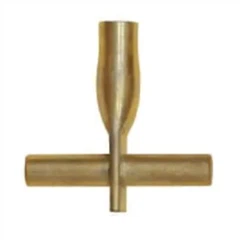
Erection Anchors are all made of steel plates. The hook is hooked by opening a hole at the end. Its special Ring Clutch has a rotating pin. When hooking, the latch needs to be rotated to prevent it from falling off. When installing flat-panel hanging nails, flat spherical formers are required to fix them and form grooves in the concrete for hanging hooks.

Erection anchors have different bearing capacities inside and outside the plane, so directionality needs to be taken into consideration when laying them out. In addition to being widely used in ordinary prefabricated components, flat-plate lifting nails are very suitable for lifting wall panels in the lifting system. The rotating pin end of the supporting spreader can pass through the string. After the component is hoisted in place, the hoisting personnel only need to pull the string on the ground. Unhooking the rope eliminates the need for high-altitude operations, greatly reducing safety risks. my country's first logistics warehouse built with a lifting system. All prefabricated wall panels are lifted using a flat-plate hanging nail system. The average weight of the prefabricated wall panels is 40 tons and 12 meters high. The self-decoupling lifting system provided by Finnish Peke Company is safe. , quickly ensuring the hoisting construction of components.
Lifting Application Environment
The application environment for lifting prefabricated components is highly uncertain. At the same time, the stress conditions of embedded hanging nails at each stage of construction are also different. Therefore, it is necessary to fully understand the application environment before selecting and designing lifting anchors and setting corresponding operating restrictions. Ensure safety during final implementation.
The first is the concrete strength when the component is lifted. To increase the turnover speed of the prefabricated component mold, usually the concrete strength when the component is lifted for the first time should reach 15MPa. When there are operations such as using lifting nails to flip the component during the lifting process, the concrete compressive strength should be greater than 25MPa.


Secondly, to avoid damage to the concrete caused by the embedded hanging nails during the lifting process, the prefabricated components need to be strengthened accordingly, which is mainly reflected in three aspects. The designed reinforcement ratio of the first component itself should meet the corresponding requirements. The hanging nails with different load levels There are different requirements for the reinforcement ratio of the steel mesh on the surface of the component; during the second lifting process, there is a corresponding angle between the steel wire rope and the axial direction of the hanging nail. To avoid damage to the concrete due to tensile and shear loads, additional reinforcing steel bars are required, usually U-shaped steel bars. , the opening direction is opposite to the inclination direction of the wire rope. When lifting anchors are used to flip the component or lift it at 90°, additional reinforcing steel bars need to be placed above the hanging nails; thirdly, due to the special anchoring shape of the lifting anchors themselves in the concrete, special additional steel bars are needed to ensure that the lifting load is transferred to the component itself. , usually lifting anchors with end anchors need to be configured.
Again, choose suitable lifting equipment, commonly used lifting balance beams or lifting frames, to ensure that each hanging nail is stressed evenly. When there are a large number of lifting points for large components, pulley blocks can be used to assist in the distribution of lifting points. When lifting prefabricated components of the opposite sex, the inverted chain can be used to adjust the length of the sling, thereby adjusting the plane angle of the component during the hoisting process, which is beneficial to the installation and fixation of the final component. Finally, there is the on-site environment and storage environment for component lifting. First of all, when hoisting prefabricated components in some severely cold areas, the material properties of embedded hanging nails should meet the requirements for impact performance at low temperatures.
Design and Selection of Lifting Anchors
When designing the lifting of prefabricated components, all processes of component lifting must be fully considered, including molding, transportation, and final installation. At the same time, the configuration of hoisting equipment and slings must be taken into consideration. Therefore, we use the envelope design method when selecting hanging nails. We take the maximum load that the hanging nails bear under each working condition as the design value. After selecting the embedded hanging nails that meet the performance, we then specify the corresponding lifting details, including The strength of the concrete, the angle of the sling, and the requirements for lifting equipment, etc., the following are various factors that need to be considered when selecting lifting nails.
Lifting method and number of lifting points
Most of the precast concrete components are cast in flat molds. To ensure the stability of component hoisting, two-point pre-embedded lifting nails are usually used for beam components, and four-point pre-embedded lifting nails are used for plate components. When the bearing capacity of each lifting point cannot find hanging nails of suitable size and bearing capacity, it is necessary to increase the corresponding number of lifting points, adjust the slings and tooling reasonably, and redistribute the lifting load. When designing the lifting of special-shaped three-dimensional components, the position of the lifting point must be above the center of gravity of the component to prevent the component from turning over during lifting, which may lead to safety accidents.

Lifting power coefficient and molding conditions
The entire lifting and transportation is a moving process, and the design load needs to be amplified to a certain extent by considering the dynamic coefficient. The dynamic coefficient needs to consider the influence of two aspects. The first is whether the lifting process is demoulding lifting or transportation hoisting. Since de-molding lifting usually has a slow lifting speed, the dynamic coefficient is generally small. European standards recommend a coefficient of 1.1~1.2. Our country JGJ 1-2014 "Technical Regulations for Prefabricated Concrete Structures" recommends consideration of 1.2. Secondly, during normal lifting and transportation, different lifting equipment will also have an impact on the value of the power coefficient. When the most commonly used truck cranes and tower cranes are used to lift prefabricated components, the lifting power coefficient is 1.3~1.4. my country's JGJ-2014 specification recommends 1.5.

The formwork condition is that when the prefabricated component is a plate component, special consideration needs to be given to the adsorption force of the contact surface between the formwork and the concrete. The adsorption coefficient recommended in my country's JGJ 1-2014 is 1.5 kN/m2. In Europe, it is usually considered more carefully. Different adsorption coefficients are selected according to different mold materials. For example, the adsorption coefficient of oil-coated steel molds is 1.0 kN/m2. Secondly, the de-molding adsorption force is related to the shape of the component itself and the shape of the contact surface. For example, when the contact surface is a grid surface, the demoulding adsorption force is 3 times the self-weight of the component, so it should be considered according to the specific situation during the design process.
Sling angle
Most hoisting operations are not equipped with balance beam hangers and other tools. The slings have a certain lifting angle, which will cause tension, shear, and stress on the embedded hanging nails. Therefore, strict restrictions on the lifting angle are required. And consider the corresponding design load amplification factor. The restrictions on lifting angles at home and abroad are basically the same, that is, the angle between the lifting steel rope and the vertical direction should not exceed 30° and should not exceed 45°. At the same time, the tensile and shear stress amplification coefficient of the hanging nail is also related to the vertical angle, that is, 1 /cosβ, β is the lifting angle.

For municipal prefabricated pipes and hoistway components, a 90° angle lifting method is usually used. At this time, the load-bearing capacity of the hanging nails needs to be reduced, and additional steel bars are configured to strengthen the components themselves. This is also the case with the prefabricated wall panels for lifting the building system mentioned earlier. All the embedded hanging nails are on the front of the wall panels. During the lifting and installation stages after the wall panels are lifted, the steel wire ropes are also at 90° to the axial direction of the hanging nails. angle.

Component dimensions and hanging point locations
When choosing a suitable pre-embedded hanging nail system, the size of the prefabricated components is a very important consideration, especially for some thin-walled prefabricated components or thin plate components. The thickness is usually an important factor in considering the type and size of the hanging nails. At the same time, the distance between the hanging nails and the distance between the hanging nails and the edge of the concrete will also affect the bearing capacity of the embedded hanging nails. Therefore, when designing the lifting position, it is necessary to strictly consider the impact of the hanging nails on the concrete under different stress conditions.
In addition to considering the above factors, usually the lifting point layout needs to be symmetrical around the center of gravity so that the forces on each lifting point are balanced. Secondly, the position of the lifting points needs to be such that the bending moment on the component itself is minimized during the lifting process to avoid disadvantages such as bending and cracking of the component itself. Influence.
Installation and Lifting Operations
After the prefabricated component lifting plan is completed, it enters the corresponding implementation stage, which is also the most critical link in the entire process. It mainly includes the installation and embedding of hanging nails before component pouring and the lifting operation after component production. Provide technical explanations of the plan to the operators in advance, and conduct special training on the hanging nail system used, including precautions such as identification of the types and load levels of hanging nails and spreaders, to avoid mixed use and misuse on site.
Lifting anchors installation
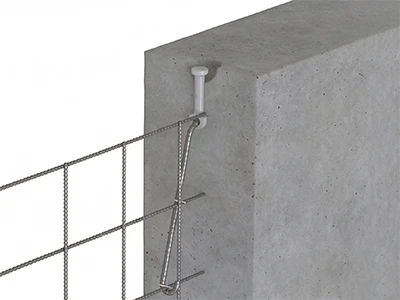
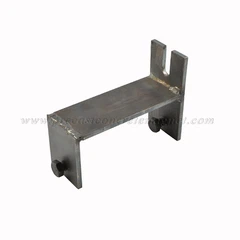
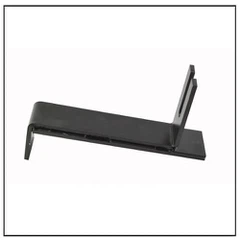
Before installing lifting anchors, fixing holes should be reserved on the mold according to the position of the hanging nails on the drawing. When the hanging nails are on the upper surface of the component, some overhanging plates can be set up to fix them. Then connect the lifting anchors and matching formers and fix them on the mold. You can use bolts to fix them, or you can use a former with magnets to directly fix them on the mold surface. Finally, according to the lifting plan, arrange additional reinforcing steel bars around the lifting anchors.

Magnet recess former fixation

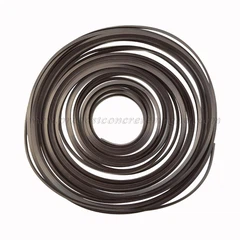
Rubber recess former fixation
Before pouring concrete, a final inspection should be done to confirm whether the type of hanging nails is accurate, whether the hanging nails are firmly fixed, whether the surface of the former is coated with a release agent, whether the additional steel bars are constructed according to the drawings and other details. If the hanging nails are found to be loose during the pouring process, they should be adjusted before the concrete solidifies. Peikko's hanging nail formers and fixing accessories can be used to fix pre-embedded hanging nails in different positions, and can also fix additional steel bars, which not only makes the installation process simple and fast, but also ensures the installation quality of the hanging nails.

Lifting operations
Lifting personnel should be familiar with the instructions for use of the spreader in advance, and configure corresponding slings according to the special lifting plan. During the lifting process, ensure that the lifting angle of the wire rope does not exceed the design requirements. For threaded hanging nails, the external thread of the spreader should be completely screwed into the embedded hanging nail; for round-head hanging nails, the spreader hook has special direction requirements, which should be familiarized in advance.

Maintenance of spreaders and accessories
The former and fixing parts of the hanging nail can be reused. Necessary cleaning after each disassembly can effectively increase the number of uses. As a lifting product subjected to repeated stress, special spreaders should be regularly checked for wear and tear, and whether the key dimensions in the product manual meet the requirements. It is also recommended that magnetic particle testing be performed every three years to check for cracks.