




Maximizing Efficiency and Quality with Precast Concrete Accessories
The construction industry has become dependent on precast concrete. This technology presents many advantages including heightened efficiency, diminished construction time, and enhanced quality control. The successful use of precast concrete is to incorporate precast concrete accessories.
Precast concrete accessories ensure the process's smooth, effective, and efficient operation.
This article digs into the precast concrete accessories world. It examines a variety of available types and discusses the advantages associated with incorporating these components in precast-concrete construction projects. Furthermore, it explains best practices for installing and maintaining such crucial additions to enhance longevity in structures.
What Are Precast Concrete Accessories?
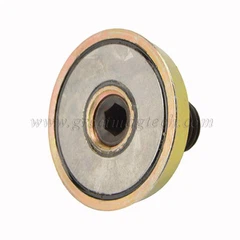
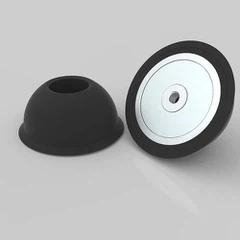
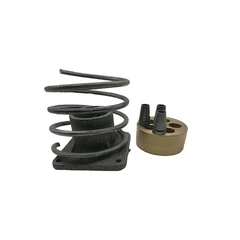
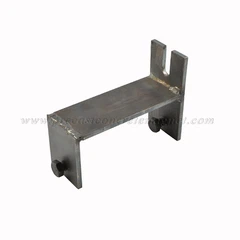
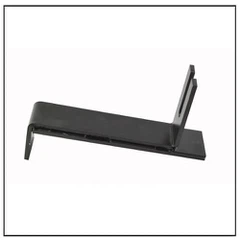
A wide range of components, devices, and materials are collectively known as precast concrete accessories. These are utilized in the precast concrete manufacturing process. They are essential for a multitude of functions including formwork provision, reinforcement support, transportation convenience, and efficient assembly.
Overall, they play an integral role. These accessories are broadly categorized into several types.
Formwork Accessories:
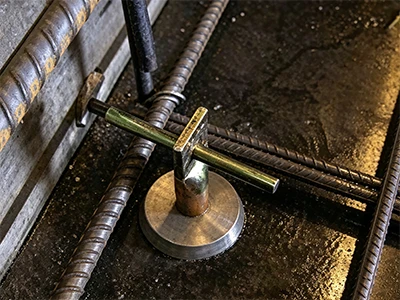
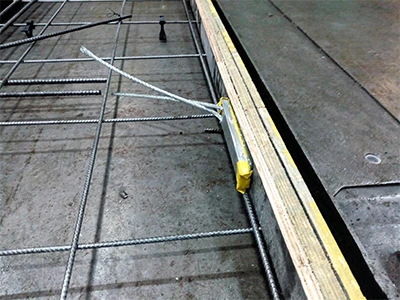
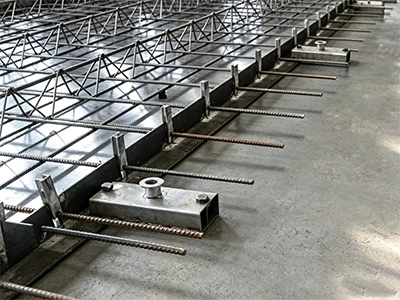
In precast concrete production, formwork is crucial. It serves as the mold for pouring and shaping the concrete. Ties, clamps, brackets, and other components are formwork accessories. They secure and maintain the desired shape of formwork during its curing process.
Reinforcement Accessories:
Accessories such as rebar, mesh, and connectors critically reinforce precast concrete structures. They provide the necessary strength and durability. These elements in this category contribute to creating a solid yet resilient framework for the concrete.
Transportation and Handling Equipment:
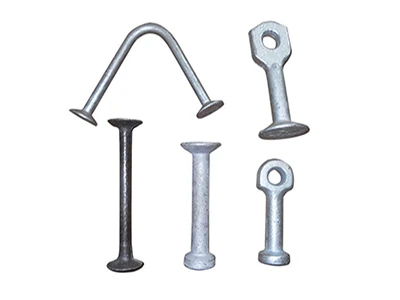
The manufacturing facility must transport precast concrete elements to the construction site. Specialized accessories like lifting anchors, clutches, and spreader beams facilitate not only safe handling but also transportation of these heavy components.
Connection Accessories:
Connection accessories include bolts, nuts, and anchors. These often crucially secure the joining of precast elements to each other or other structural components.
Anchoring and Fixing Accessories:
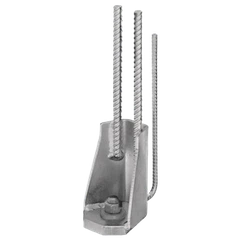
Anchoring proves vital to guarantee the stability and integrity of precast concrete structures. Anchor bolts, brackets, and chemical adhesives serve as accessories. They aid in securing the precast elements either to the foundation or other supporting structures.
Types of Precast Concrete Accessories
Let's dive into the various types of precast concrete accessories. We aim to explain their roles and advantages in the construction process.
Formwork Accessories:
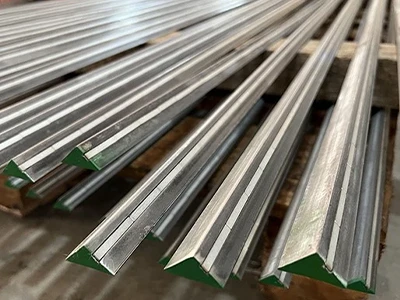
Ties: One uses formwork ties to secure the formwork together and guarantee its retention of the desired shape during the concrete setting. Various forms of these ties exist like snap ties, loop ties, and flat ties.
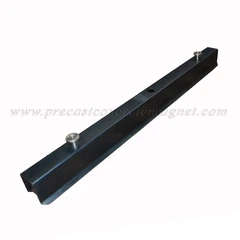
Formwork Clamps and Brackets: Accessories secure the formwork in place and ensure precise alignment. They have various styles to accommodate a range of formwork systems.
Reinforcement Accessories:
Rebar: Commonly, we use reinforcing bars or rebar to instill the concrete with tensile strength. They prove essential for structural stability. Moreover, given their malleability and versatility, we can shape and place them in a myriad of configurations. Thus, meeting specific project requirements effectively.
Mesh: Manufacturers often utilize reinforcement mesh for flat or thin precast concrete elements. This structure-supporting material is crafted from welded steel wire.
Rebar Couplers: To ensure a strong and continuous reinforcement network without the requirement for overlapping bars, we use couplers. These join two lengths of rebar.
Transportation and Handling Equipment:
Lifting Anchors: Designed with the purpose of secure attachment to precast elements, lifting anchors enable cranes or other lifting equipment to lift and transport them.
Lifting Clutches: Clutches also streamline the handling of precast elements providing a quick and efficient method for attaching to lifting anchors.
Spreader Beams: In transportation, we use these beams with lifting equipment to achieve an even distribution of precast elements' weight.
Connection Accessories:
Bolts and Nuts: Bolts and nuts are used to connect precast elements or to other structural components. These are available in a variety of sizes and types, catering to diverse applications.
Anchors and Connectors: Designers purposefully create anchors and connectors to establish a secure bond between precast elements and foundations or other supportive structures.
Anchoring and Fixing Accessories:
Anchor Bolts: To secure precast elements to concrete or masonry foundations, you can use anchor bolts. These bolts accommodate a multitude of project requirements and are available in varying lengths and designs.
Chemical Anchors: The use of chemical anchors establishes a robust bond between the precast elements and the substrate. This proves particularly advantageous in scenarios where conventional mechanical fastening methods fall short.
Benefits of Using Precast Concrete Accessories
Precast construction projects succeed by harnessing a wide range of benefits provided through the utilization of precast concrete accessories:
Enhanced Efficiency:
Designers create precast concrete accessories to streamline construction tasks and diminish project completion time. This increased efficiency not only shortens construction schedules but also accelerates project delivery.
Quality Control:
Precast concrete accessories help maintain the accuracy and consistency of precast elements. This leads to higher-quality finished products that meet design specifications and industry standards.
Cost Savings:
Acquiring precast accessories requires an initial investment. However, the long-term cost savings prove substantial. These accessories play an essential role. They reduce labor costs and diminish errors, thus enhancing construction efficiency.
Safety:
With safety as a primary consideration, designers meticulously craft numerous precast accessories. These elements enhance efficiency in handling and installing heavy precast components. They also dramatically mitigate the potential for accidents or injuries.
Design Flexibility:
Architects and engineers leverage precast concrete accessories to actualize complex, innovative designs. These provide the crucial flexibility for crafting uniquely aesthetic structures.
Environmental Benefits:
The use of accessories enhances the efficiency of precast concrete construction, making it environmentally friendly. This method reduces both construction time and waste while improving energy efficiency. This results in a smaller carbon footprint.
Consistency:
Precast accessories are crucial for large-scale projects requiring seamless integration of numerous precast components. These sustain the production of consistently high-quality precast elements.
Best Practices for Installing and Maintaining Precast Concrete Accessories
Precast construction projects' long-term success critically hinges on the meticulous installation and maintenance of precast concrete accessories. To guarantee these accessories perform their intended functions, adherence to best practices is non-negotiable. This includes:
Proper Installation:
Follow Manufacturer's Guidelines: Adhere consistently to the manufacturer's installation recommendations for precast accessories. This guarantees correct usage and optimal performance of these accessories.
Skilled Workforce: Employ skilled and experienced personnel to install precast concrete accessories. Proper training and meticulous supervision guard against potential errors.
Regular Inspections:
Scheduled Inspections: Conduct regular inspections on precast concrete accessories. The aim is to discern any signs of wear and tear.
Replacement When Necessary: Promptly replace worn or damaged accessories to prevent accidents or structural issues.
Maintenance and Lubrication:
Lubrication: Regular lubrication is essential to guarantee the smooth operation of moving parts like formwork clamps or lifting equipment.
Prevent Corrosion: Apply anti-corrosion treatments or coatings to accessories that are exposed to rigorous environmental conditions.
Documentation and Record-Keeping:
Keep Records: Maintain comprehensive records. Note the accessories used, installation details, and maintenance schedules. These documents facilitate an effective tracking process, monitoring performance as well as each accessory's history.
Training and Education:
Regular Training: The workforce must receive continuous training on the accurate use, handling, and maintenance of precast accessories.
Safety Measures:
Safety Guidelines: Always prioritize worker safety and precast element integrity by strictly adhering to handling heavy precast elements following safety guidelines.
Are Precast Concrete Accessories A Solution for Green Construction?
Recently, the construction industry has placed a burgeoning emphasis on sustainable and eco-friendly building practices. Within this context, precast concrete accessories emerge as pivotal players. Notably, they actively reduce construction waste. This is a critical element towards environmental protection and promotes energy efficiency with marked effectiveness.
Reduced Waste: The creation of consistent and precise precast elements necessitates the integration of precast concrete accessories. This precision results in a reduction of material waste due to fewer errors during production.
Consequently, construction not only conserves resources but also alleviates its environmental impact.
Energy Efficiency: Aided by accessories, precast concrete production's efficiency yields reduced energy consumption.
In a controlled environment, we can implement energy-efficient measures like an optimized curing process and minimize transportation requirements more effectively.
Recyclability: Designers create many precast accessories, for instance, formwork components, with a focus on reusability. This strategy mitigates the necessity of perpetually manufacturing new materials and thereby bolsters sustainable construction practices.
How do Precast Concrete Accessories Facilitate Unique Designs?
Precast concrete, often synonymous with efficiency and durability, promotes architectural creativity as well. It pivots on the role of precast accessories in changing design concepts into visually stunning structures.
Architectural Freedom: Architects and designers utilize precast concrete accessories as a platform for experimenting with complex, intricate designs.
In particular, they connect the flexibility of formwork attachments to sculpt precast elements into an array of shapes. This capability facilitates the construction of iconic structures.
Textures and Finishes: A single finish does not limit precast elements. Rather, they possess the potential for various surface treatments and textures via accessories to attain desired aesthetics.
Customization: Precast concrete accessories, ranging from decorative cladding panels to ornamental details, empower a profound customization level.
This meticulous design detail plays an essential role in crafting buildings to stand out and articulate bold statements.
The Versatility of Precast Accessories
Not only traditional buildings utilize precast concrete. Its versatility extends from precast accessories to an expansive range of applications outside structure construction.
Infrastructure Projects: Infrastructure projects such as bridges, tunnels, and culverts commonly utilize precast elements and their accessories. The viability of these construction materials stems from their dual advantages.
They offer both a swift speed in building processes and high durability.
Landscaping and Hardscaping: In landscaping and hardscaping projects, we use precast accessories. These accessories enable the creation of decorative concrete elements for parks, plazas, and gardens.
Outdoor spaces can be enhanced with precast concrete, from seating arrangements to decorative fountains.
Sound Barriers and Retaining Walls: Precast concrete's sound-dampening properties render it suitable for the construction of noise barriers along highways and railways.
Furthermore, when using precast elements and accessories to build retaining walls, effective erosion control and slope stabilization are achievable.
Lifting Precast Concrete Accessories, Safety First!
In construction, the paramount importance lies in the safe handling of heavy precast elements. Lifting accessories ensure the flawless execution of these operations.
Safety Standards: Designing and manufacturing lifting anchors, clutches, and spreader beams adhere to stringent safety standards. Rigorous testing verifies their capacity to support the elements they are meant to lift.
Load Distribution: Specifically engineered, spreader beams evenly distribute the weight of precast elements. This action prevents structural damage or deformation during lifting. Thus, it safeguards the elements and personnel involved in this process.
Training and Certification: To optimize the efficiency of lifting operations and enhance safety, workers must undergo proper training and certification in using these accessories. This measure not only ensures their competence but also mitigates potential risks associated with improper handling.
A Perfect Match: Digital Tools and Precast Concrete Accessories
The construction industry, in this progressively digital age, has actively embraced modernization. It has leveraged the integration of digital tools and precast accessories to revolutionize project planning, design, and execution.
BIM (Building Information Modeling): BIM software enables the creation of intricate 3D models. These provide a comprehensive view of the project and integrate precast accessories.
Efficient Resource Management: Project managers, through the incorporation of precast accessories into digital models, can accurately estimate the quantity and type of required materials.
This strategy minimizes material wastage. Moreover, it ensures optimal resource utilization for efficient construction management.
Real-Time Monitoring: IoT (Internet of Things) technology and digital tools facilitate the real-time monitoring of precast elements throughout their production and transportation phases. This process guarantees optimal conditionality for installation.
The Future of Precast Concrete Accessories
Precast accessories aren't excluded from technological advancements and innovations as the construction industry incessantly evolves.
Advanced Materials: Ongoing research extends the range of available precast accessories by exploring materials such as fiber-reinforced composites. These materials, offering enhanced strength and durability, promote longevity in precast elements.
Automation and Robotics: Precast manufacturing is experiencing a rise in automation, which leads to the enhancement of precision and efficiency in production processes.
Employing robotics for tasks like formwork placement and element finishing represents an innovative stride.
Sustainability Initiatives: In the production of precast accessories, many manufacturers focus on sustainable practices. They use recycled materials, reduce energy consumption, and adopt eco-friendly coatings.
Bottomline
The construction industry hails precast concrete accessories as unsung heroes. Though not as visibly prominent as finished structures, they ensure efficiency, safety, and quality in precast construction projects.
Accessories such as formwork shape the concrete, and transportation equipment moves heavy elements. Each one finds its place and purpose within this intricate system.
During an era characterized by escalating complexity and demands in construction projects, we cannot overstate the significance of precast concrete accessories. These components not only contribute to cost savings but also offer design flexibility while reducing construction time. Importantly, they uphold safety and quality standards.
Following best practices in installing and maintaining these accessories, construction professionals can unlock their full potential to create enduring structures of distinction.
Precast concrete accessories will continue being indispensable as the construction industry evolves, contributing towards a future characterized by enhanced efficiency and sustainability.