




Introduction
Cracks in precast wall panels are not merely surface defects; they also affect durability, waterproofing, and the ease of on-site inspection. Many precast component manufacturers pay close attention to concrete strength, yet cracks can still appear during curing, demolding, or hoisting. Cracks are rarely caused by a single error; they are usually the result of a series of minor process defects accumulating. Compared to cast-in-place concrete, precast components are handled earlier and have stricter tolerances, which increases stress on the components. This guide will introduce some factory-proven, practical methods to help you reduce cracking and improve the overall quality of your components.
Common Types of Cracks in Precast Wall Panels
Plastic Shrinkage Cracks
These typically appear within hours of pouring, manifesting as small, shallow, random cracks. The main cause is excessively rapid evaporation of moisture from the concrete surface, commonly seen under conditions of high temperature, low humidity, and strong winds, or due to delayed finishing processes, causing the concrete to shrink and crack before achieving sufficient early strength.
Drying Shrinkage Cracks
These appear later, possibly during curing, storage in the yard, or even transportation. As the internal moisture of the concrete gradually evaporates, the entire component shrinks. When this shrinkage is constrained by formwork, reinforcement arrangement, or connection points, tensile stress is generated, leading to cracking.
Thermal Cracks
These are caused by the temperature difference between the interior and surface of the concrete. They commonly appear in components with thicker sections, higher cement content, or those cured with steam or with improper temperature control. When different parts of the concrete cool and shrink asynchronously, the resulting internal stress exceeds its tensile strength, forming temperature cracks.
Handling And Hoisting Cracks
These are mostly concentrated around hoisting anchors, at the edges of components, or in thin-walled areas, especially during demolding, turning, and transportation. These types of cracks are essentially structural cracks caused by load transfer, often resulting from improper hoisting angles, insufficient early strength, improper anchoring positions, or uneven stress distribution.
Stress Concentration Cracks
These typically appear at locations with abrupt changes in geometry, such as holes, sharp corners, embedded parts, or sleeves. Sudden changes in cross-sectional thickness or reinforcement configuration can significantly amplify local stress. In precast component production, even minute dimensional deviations or positioning errors can cause abnormal stress concentration, leading to severe cracking.

Optimize Concrete Mix Design to Minimize Cracking
Most cracks in precast wall panels are not caused by insufficient strength, but primarily by shrinkage and stress. The initial shrinkage of concrete largely depends on the mix design. To reduce cracking, the mix should be stable, homogeneous, and contain an appropriate amount of cement paste, not an excessive amount.
Controlling the water-cement ratio is crucial. While adding too much water may improve workability during casting, it significantly increases drying shrinkage and internal porosity. During production, this often leads to microcracks appearing several days later. Good workability should be achieved by optimizing aggregate gradation and adding appropriate admixtures, rather than simply increasing the amount of water.
Aggregate gradation deserves special attention. Well-graded aggregates reduce the amount of cement paste required to fill voids. The less cement paste, the less shrinkage and the lower the heat of hydration. Cement paste can be considered the "active ingredient" of concrete; the more cement paste, the greater the shrinkage deformation and the higher the risk of cracking.
Cement dosage and temperature rise should be strictly controlled, especially in confined thin-wall panels. Excessive cement dosage increases the heat of hydration and early shrinkage. A properly balanced cement system can improve stability, provided performance requirements are met, rather than solely pursuing excessively high strength.
Polypropylene fibers are a practical reinforcement measure for precast wall panels. They cannot replace steel reinforcement, but they help control early microcracks and reduce plastic shrinkage cracking, especially on large surfaces exposed to airflow. The key is to select the appropriate fiber type and dosage, and ensure thorough mixing to prevent fiber agglomeration.
Finally, maintaining consistency between production batches is crucial. Even with the same panel design, differences in moisture content, aggregate source, or admixture dosage can lead to significant variations in performance and cracking behavior. Routine controls, such as slump or flowability checks, temperature monitoring, and moisture adjustment, must be implemented to ensure crack prevention is based on process control, not chance.
Appropriate Use Of Precast Concrete Fibers
In precast wall panels, synthetic fibers such as polypropylene are most commonly used to control early-age cracking. They help reduce large-area plastic shrinkage cracks, improve resistance to microcracking during curing, and lower the risk of edge damage during demolding. However, fibers do not replace structural reinforcement. If a precast panel is designed to rely on rebar or mesh for load-bearing capacity, fibers act as a supplementary measure rather than a substitute for steel reinforcement.
Fiber selection should begin with identifying the primary risk. If a plant frequently observes fine surface cracks shortly after casting, micro polypropylene fibers are usually a suitable choice. When impact resistance and toughness are more critical, macro synthetic fibers may be considered, but their influence on surface finish and placement must be carefully evaluated. Steel fibers can improve toughness and crack resistance in certain elements, yet they also affect workability and finishing, which makes them less suitable for thin panels or architectural surfaces.
Application performance depends heavily on dosage and mixing. Too little fiber will not deliver the expected benefits, while excessive dosage can reduce flowability, trap air, and cause fiber balling. Best practice is to follow a clearly defined dosage range, use consistent feeding methods, and confirm proper fiber dispersion through simple on-site checks during trial production.

Improve Curing Practices in Precast Plants
In precast component factories, good curing is not about being slow or complex, but about maintaining consistency.
Begin curing as early as possible. Once the surface can withstand it, prevent rapid evaporation of the slabs. Hot air, powerful fans, and low humidity will draw moisture from the surface at a rate that concrete cannot withstand, exacerbating plastic shrinkage cracks. Simple measures such as using curing agents, plastic films, or controlled curing chambers can produce significant results.
Maintain uniform curing conditions. Uneven curing, with one side wet and the other dry, creates stress. Different shrinkage rates along the thickness of the slab mean that cracks act as stress release valves. Thin-walled slabs, large-area slabs, and confined edges increase this risk.
If steam curing is used, heating and cooling rates must be controlled. While rapid heating can speed up production, it also increases thermal stress, leading to early shrinkage. A stable curing profile is generally better than a rapid one, especially for building slabs where surface quality is critical.
Prevent Cracks During Demolding and Lifting
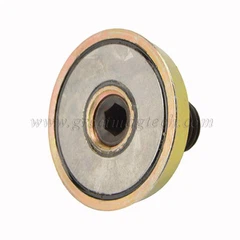
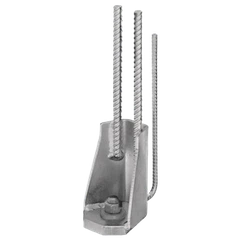
Handling and lifting are high-risk stages for cracking, especially when the concrete has not yet reached full strength. Panels should achieve the minimum required strength before demolding. Early demolding may save time, but it increases bending stress and the risk of edge damage, particularly in thin-wall panels. Correct positioning of lifting anchors is essential. Anchors placed too close to edges or with improper spacing create stress concentrations and increase the risk of cracking during tilting. Off-axis lifting introduces bending forces that the panel was not designed to resist. Balanced lifting reduces stress and keeps loads under control. Sudden movements during tilting, lifting, or transport generate shock loads that can cause microcracks to grow into visible damage.
Implement Consistent Quality Control Checks

Long-term crack reduction relies on a self-correcting quality control loop: measure, record, analyze, adjust, and re-verify.
The first step is to bring environmental factors under control. Concrete temperature, mold table temperature, and workshop airflow and humidity all influence early moisture loss and shrinkage. Daily records are strongly recommended, with predefined "enhanced curing" responses triggered during high temperatures, strong airflow, or low humidity-such as earlier surface covering, faster application of curing compounds, or adjustments to the steam-curing profile.
Second, move key control points upstream to the mixer. Instead of investigating cracks after they appear, it is far more effective to stabilize variation at the source. Continuously monitor slump or flow, discharge temperature, mixing time, and air content (if applicable), and correct for aggregate moisture fluctuations.
Third, when fibers are used, treat dispersion as a quality indicator. Adding fibers is not enough-poor dispersion leads to localized weak zones and uneven shrinkage. Use standardized feeding methods with fixed dosages and timing, perform quick visual checks during trial pours, and, when necessary, record fiber batch numbers and mixing times to prevent fiber balling that causes spot cracking or surface defects.
Fourth, strengthen pre-pour inspections. Misaligned inserts, sleeves, or lifting anchors create stress concentrations that later appear as cracks during demolding, tilting, or lifting. A clear "pre-pour release" checklist-covering position, edge distance, concrete cover, fixing method, and rebar interference-costs far less than post-cast repairs.
Fifth, verify curing consistency every shift. One of the most common issues is uneven drying, where one face loses moisture faster than the other, allowing internal tension to build. Standardize curing actions such as covering methods, spraying frequency, and steam-curing heating, holding, and cooling rates, and record both timing and responsible operators.
Finally, turn cracking into data by creating a "crack map." Link crack location, orientation, length, and appearance time with panel type, mold ID, production shift, mix design, daily environment, curing method, and lifting scheme. Patterns emerge quickly-and once they do, corrective action becomes targeted rather than guesswork.
Conclusions
Reducing cracks in precast wall panels is not something that can be achieved overnight; it requires strict control over the stability of the concrete mix, the curing process, formwork restraint, and safe hoisting. Only when these aspects work together can the wall panels remain clean, strong, and consistent in performance.