





With the rapid development of prefabricated buildings, prefabricated component installation teams continue to spring up and grow. However, due to insufficient reserves of professional and technical workers, inadequate training, and inadequate management, the installation of prefabricated components has emerged and been exposed. Quite a few questions. During the installation process of prefabricated components, insufficient preparation before hoisting, poor process control, and inadequate inspection of all links will cause problems with the installation quality and even cause hidden dangers in structural safety and other aspects. If the components and installation joint surfaces are not properly inspected before the installation of prefabricated components, two types of abnormal situations may occur. One is that the component cannot be installed, such as the position deviation of the lower component or the cast-in-place steel bar protruding from the cast-in-place layer is too large, the grouting sleeve is blocked or not vertical. , the size of the component itself is out of tolerance, etc., which will cause the component to be unable to be installed; second, the component cannot be installed, for example, the lower component or cast-in-place layer protruding steel bar is too short and cannot be inserted into the specified position of the sleeve, and the steel bar cannot form a reliable and effective connection.
When hoisting the laminated panels, if the independent support system is not strong and the elevation is not strictly controlled, after the hoisting of the laminated panels is completed, the elevations of the four corners of the bottom surface of the laminated panels may be out of tolerance, which will cause great trouble to the acceptance of the building structure and house decoration; Insufficient support may also cause safety accidents. After the prefabricated wall panels are installed, the accuracy of the installation position is not paid attention to, and the verticality is not strictly inspected and accepted. If the hoisting construction is carried out layer by layer, it will cause a large accumulation of errors, which will affect the construction quality and also affect other aspects. Subsequent construction of related majors will have an impact. So, how can you install precast concrete elements correctly and quickly?

When hoisting the laminated panels, if the independent support system is not strong and the elevation is not strictly controlled, after the hoisting of the laminated panels is completed, the elevations of the four corners of the bottom surface of the laminated panels may be out of tolerance, which will cause great trouble to the acceptance of the building structure and house decoration; Insufficient support may also cause safety accidents. After the prefabricated wall panels are installed, the accuracy of the installation position is not paid attention to, and the verticality is not strictly inspected and accepted. If the hoisting construction is carried out layer by layer, it will cause a large accumulation of errors, which will affect the construction quality and also affect other aspects. Subsequent construction of related majors will have an impact. So, how can you install precast concrete elements correctly and quickly?
First of all, strict control of the entire process of prefabricated component installation is a prerequisite for ensuring the installation quality of prefabricated components, and is also the basis for building qualified and high-quality prefabricated concrete buildings.
(1) Key points for on-site inspection of prefabricated components
1) After the prefabricated components arrive at the site, the specifications, quantity, size, appearance quality, protruding steel bars, embedded parts, reserved holes, etc. of the prefabricated components need to be inspected and accepted.

2) The surface of prefabricated components should be smooth and smooth, and there should be no serious quality defects such as missing edges, dropped corners, honeycombs, and pitted surfaces.

3) It is necessary to use methods such as lighting, water injection, ventilation, and tapping to check the smoothness of the grouting sleeves of prefabricated components.

(2). Key points of preparation before installation of prefabricated components
1) Check the installation location. Check the specifications, quantity, location and extension length of the steel bars to be connected to the prefabricated components. Also check whether the cleaning, roughening, and moistening of the concrete installation joint surface meet the requirements.

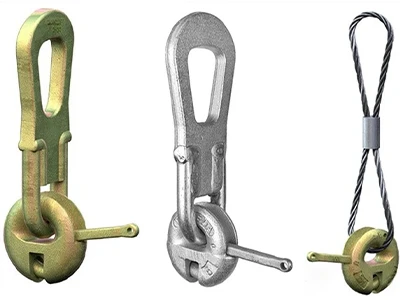
2) Equipment and machinery inspection. Before hoisting prefabricated components, the suitability, safety, and reliability of lifting equipment, spreaders, slings, rigging, support system components, etc. need to be checked. Lifting equipment and other equipment should also be inspected through trial operation and trial hoisting.

3) Installation control lines for prefabricated components. The axis and control lines pop up according to the construction drawings; and the component position and edge lines are determined according to the construction floor baseline and construction drawings. Positioning marks such as component edges, center lines, and elevation control lines should be clearly marked and distinguished.

(3) Key points for installation of commonly used prefabricated components
When hoisting prefabricated components, lift them slowly. When the components are raised to a height of 60cm from the ground, pause briefly to check whether the hanging is firm. Continue the operation after confirming that it is correct.
The prefabricated component pauses briefly at a height of about 60cm above the installation position. The construction personnel hold the component and control the component to slowly fall into place.

1) Key points for installing prefabricated wall panels. Set the elevation control gasket according to the drawings and the actual elevation measured on site; when lifting the wall panels, they must be lifted with professional spreaders; install fixed temporary supports immediately after the wall panels are in place, and remove the hooks; install the wall panels by adjusting the temporary supports Precise adjustment of position and verticality.

2) Key points for installing prefabricated exterior wall panels. After the external wall panels are in place, adjust the external wall panels according to the previous control lines.
After adjusting the horizontal, vertical and elevation of the wall panels to within the allowable deviation range, tighten the bolts to the design requirements; when checking the center line of the side of the exterior wall panel and the verticality of the panel, the center line should be the main adjustment; the upper and lower sides of the exterior wall panel should be adjusted When correcting, the vertical joints should be mainly adjusted and the exterior facade should be flattened. Exterior wall panels are all independent self-supporting components, and elastic sealing structures should be ensured around the panel seams.

4) Key points for installing prefabricated stairs. Use long and short ropes to hoist the stairs to ensure the lifting angle and position of the stairs
The back angle is the same. In order to adjust the angle, two hand chain hoists can be used instead of the two steel wire ropes on the lower side; if there are reserved insertion bars, attention should be paid to aligning the insertion bars with the reserved holes of the stair before installing the stairs in place.

(3) Key points for temporary support installation and removal
1) The upper fulcrum of the vertical component should be set at 2/3 of the height of the prefabricated component; the fulcrum of the vertical component supported on the ground should keep the horizontal angle between the diagonal support and the ground between 45° and 60°.

2) To fix the footings of diagonal supports of vertical prefabricated components, the pre-embedded method is preferred, and attention should be paid to the accuracy of the pre-embedded position.

3) The spacing between independent supports of horizontal components must be strictly controlled, and the spacing between supports must not be increased at will. The distance between independent supports and the wall must be controlled to ensure the stability of the entire system.