




Precast Concrete Component Production Material Control:
Precast concrete components are concrete parts that are pre-processed in the factory to make buildings or structures. There are many types of PC components, and the types of PC components vary greatly depending on the building structure design. Horizontal components: composite floor slabs, precast stairs, precast balcony slabs, precast beams, etc.; vertical components: exterior wall panels, sandwich external insulation wall panels, interior wall panels, etc.; other components: PCF wall panels, reverse decorative exterior wall panels, double skin walls, etc.
Precast Concrete Component Production Process Control:
The product quality of prefabricated building PC components is mainly affected by production organization management, production line equipment, production process and industrial workers. Production organization management can adopt ERP production line management system suitable for PC component production and equipment control system matching production line equipment. The following mainly introduces the control of PC component production process from the production process.
1. Mold Layout And Assembly
Production process: Check the mold size and appearance in advance, transport the mold to the mold table according to the production plan, place the mold in the corresponding position of the mold table according to the layout plan, and fix it.
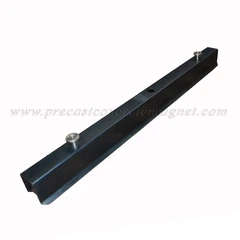
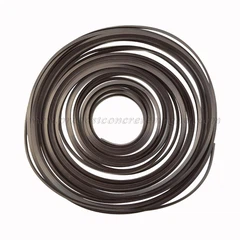
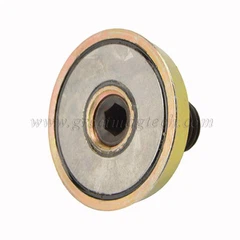
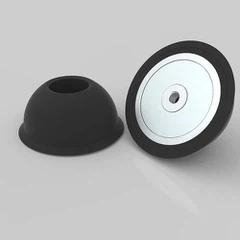
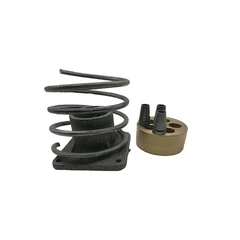
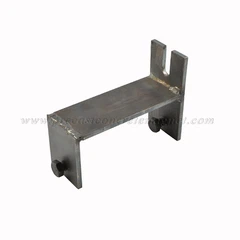
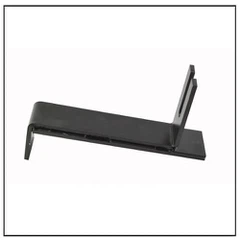
Quality control: Ensure that the dimensional deviations of mold size, diagonal, etc. are within the allowable error range, and adopt a reasonable fixing method to ensure that the mold does not move during pouring, vibration, etc. The figure below shows the mold of prefabricated beam components and more complex prefabricated wall panel components with window holes. The mold is heavy, and the mold can be lifted to the mold table by a bridge crane. After determining the position, the mold is assembled and then fixed by shuttering magnet.

2. Applying Mold And Mold Table Interface Agent:
Production process: Apply the release agent evenly on the mold table, first use a sprayer to spray evenly, then use a dust pusher or roller brush to flatten it. If a retarder is required, apply the retarder on the mold contact surface with a brush.
Quality control: Before using the roller brush of the release agent, the surface needs to be cleaned without stains and spots, and the release agent is applied evenly without liquid accumulation, otherwise it will cause poor apparent quality of the finished component.
After the PC component factory sprays the release agent with a sprayer, the release agent is often applied manually to achieve the effect of the left picture below, which is smooth and uniform without dripping. The right picture shows that the release agent spraying is unqualified. Not only does the release agent drip, but the mold platform is not cleaned up, which will affect the apparent quality of the PC component.

3. Pre-reserved And Embedded Installation
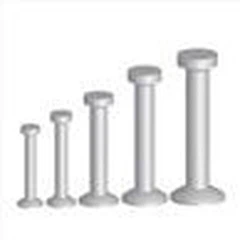
Production process: Determine the position of the reserved and embedded parts according to the detailed design drawings, and fix the PVC pipe of the reserved hole and the nuts connected and fixed by the tooling on the mold platform.
Quality control: The fastening of the embedded PVC needs to be firm and reliable without looseness. Check and confirm the position of the reserved holes and embedded parts, and the size deviation meets the standard requirements.
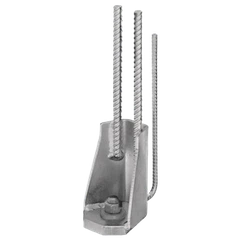
The left picture below shows the embedded parts installed on the prefabricated composite floor, and the right picture shows the embedded parts installed on the prefabricated wall panel components. According to the detailed design drawings, the embedded parts and reserved parts are fixed in the corresponding positions. After installation, the corresponding drawings need to be reviewed again.

4. Rebar Laying And Binding
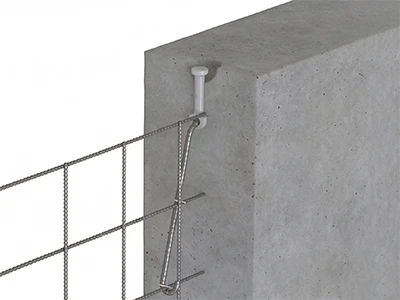
Production process: After the detailed drawings are reviewed, the components are transported to the mold platform according to the requirements of the component reinforcement, and the protective layer pads/stirrups and binding wires are prepared. The steel mesh or steel mesh cage is laid and tied strictly according to the drawings.
Quality control: Consider the size of the steel bars when cutting steel bars. When steel bars are avoided, ensure the thickness of the protective layer. Arrange the reinforcement bars according to the design requirements. After all the steel bars are tied, conduct hidden inspections such as position and spacing again. The side mold reinforcement grooves need to be sealed with slurry strips/textured paper.
The left picture below shows the reinforcement binding of prefabricated wall panels. The inner leaf wall panel steel mesh cage is more complicated in form, and the reinforcement binding personnel need to strictly follow the drawings to bind the steel bars. The right picture shows the outer leaf plate of the prefabricated sandwich exterior wall panel. The outer leaf plate steel bars are in the form of mesh, which is relatively simple, but attention should be paid to the arrangement of reinforcement bars at the window opening.

5. Concrete Pouring And Vibration
Production process: Confirm the concrete grade and amount, and start pouring after the concrete is transported to the concrete placing machine to make the concrete vibrated and compacted. The vibration frequency is adjusted to 36-38Hz, and the time is controlled to about 15-30s.
Quality control: The concrete placing machine should pour evenly and continuously, and the feeding height should not be greater than 500mm. The parts with cavities need to be manually leveled. The vibration time should not be too long, otherwise water seepage will occur, affecting the apparent quality of the concrete.
At present, the concrete placing machine uses a remote control operated by a manual fixed-point station to carry out the concrete placing work (as shown below). This method of placing can effectively carry out precise placing according to the size of the component. At the same time, uniform placing can reduce the workload of subsequent manual leveling. The vibration time should be strictly controlled to avoid concrete water seepage, affecting the apparent quality of the PC component and avoiding the peeling of the surface of the PC component after maintenance.

6. Laying And Installation Of Insulation Layer And Connectors
Production process: Prefabricate the insulation layer, splice, cut and punch in advance according to the size of the insulation layer in the drawing, and install the connectors on the laid insulation board according to the layout of the connector distribution diagram.
Quality control: Check that the surface of the outer page concrete is flat, there is no surface deviation, and the concrete has a certain fluidity before initial setting to ensure the fluidity of the concrete, and can hold the connector tightly. Check that the number and position of the connectors meet the requirements.
In the production process of prefabricated sandwich wall panels, the laying of insulation boards and the laying of tie pieces are very important links, which are very important for the insulation performance and the safety performance of the outer blades. The insulation board should be punched offline and the connectors should be installed online as much as possible, which can effectively ensure the position of the tie pieces and reduce the gaps in the insulation board. The left picture below shows a prefabricated sandwich wall panel component with a hole; the right picture shows a prefabricated sandwich wall panel component without a hole.

7. Concrete Roughening/Surface Polishing
Production process: When using an automatic roughening machine, try to arrange the components along the flow direction. Use a roughening machine, use a trowel or manual smoothing, and stop and pre-maintain after the roughening/smoothing is completed.
Quality control: Pay attention to the flatness around the embedded parts, wire boxes and exposed wire tubes. The edges should be flattened in time. The surface flatness requirement is ±3mm. Ensure that there are no cracks, bubbles, impurities, or debris on the surface. The surface is flat and smooth, and the upper surface is flat within 3mm.

8. Steaming And Curing Of Components
Production process: Use a stacker to load the formwork into the corresponding kiln position, with priority given to the same row, and steam and cure the components according to the preset heating and cooling rates, constant temperature and humidity, and curing time.
Quality control: When the temperature difference between the concrete surface and the ambient temperature is large, it should be immediately covered and cured. The heating rate is 10~20℃/h; the constant temperature is ≤60℃, and the constant temperature time is not less than 4h; the cooling rate is not more than 10℃/h.
PC component curing is mostly done in the same row, which can effectively reduce the amount of steam used. The stacker can move horizontally and vertically at the same time to improve the efficiency of formwork storage and retrieval. The curing kiln uses a central control room to control the temperature and humidity, heating curve, constant temperature time, and cooling curve in the kiln, and can strictly follow the steam curing system to perform PC component curing.

9. Component Demoulding And Lifting
Production process: After the formwork is out of the kiln, check whether the component meets the demoulding and lifting conditions. After confirming that the demoulding and lifting conditions are met, demoulding and lifting work are carried out.
Quality control: The strength must meet the requirement that the concrete strength reaches more than 75% of the design strength grade. When removing the mold, the mold should be removed strictly in accordance with the mold structure sequence, and special tooling should be used for stable lifting.
After the strength of the component meets the requirements, the component lifting operation can be carried out. Special tooling can be used to lift the component or directly lift it through the component lifting point. The stacking number of layers of the composite floor shall not exceed six layers. The lifting of prefabricated wall panel components requires the cooperation of the side tipping station to avoid direct lifting of the wall panel components and damage to the corners

10. Exposed Aggregate Flushing
Production process: Place the component steadily in the flushing area, and use a high-pressure water gun to flush the parts of the component that need rough surfaces.
Quality control: Ensure that the depth of the rough surface is 4 to 6 mm. For sandwich wall panel components, the nozzle cannot directly flush the leaking insulation board.
The components that need to be flushed with exposed aggregate are transported to the component flushing area, and the corresponding positions are flushed with high-pressure water guns.

11. Yard storage
Production process: Use a flatbed truck to transport the components to the designated location of the yard, and keep records of the relevant locations.
Quality control: The stacked floor should not be stored for more than 6 layers. The pads between each layer should be in the same position. The wall panel components should be stored vertically. The PC component yard should be maintained by sprinkling or spraying.
PC component yard storage should be based on component type and project progress. The number of component stacking layers should be considered to facilitate component loading and unloading.

Common Problems In Precast Concrete Component Production
(1) The mold surface is not cleaned, which affects the surface quality of the component and makes demoulding difficult;
(2) The release agent is sprayed unevenly, there is liquid accumulation, and dead corners are missed, resulting in roughness/oil printing, affecting the surface quality of the component and making demoulding difficult;
(3) The thickness of the steel bar protective layer must meet the requirements, and protective layer pads should be added at the bottom of the steel mesh;
(4) The concrete is unevenly distributed, which affects the size of the component. Excessive distribution leads to waste. Avoid excessive admixture water and over-vibration, which affects the mechanical properties and durability of the concrete;
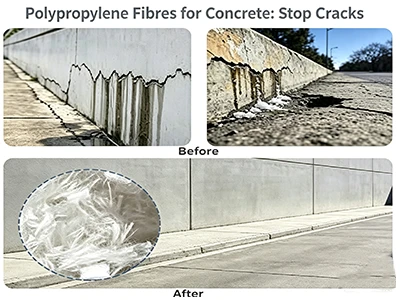
(5) Strictly control the steam curing temperature rise/lowering system, control the steam curing temperature and time, otherwise it will affect the demoulding strength of the concrete and easily cause cracks.