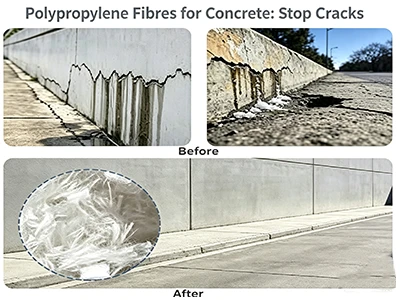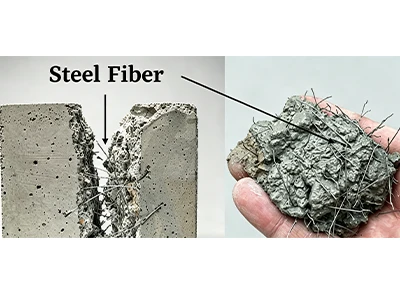





The expansion of cracks in reinforced concrete structures is often one of the main causes of quality accidents that damage and collapse projects. Therefore, it is of great significance to study the shape of cracks, analyze the causes of cracks, and the impact of cracks on structural functions. Ordinary reinforced concrete structures generally work with cracks. As the cracks develop and change, the durability and applicability of the structural components will be reduced to varying degrees. In severe cases, it may even cause damage to the structural components. However, this is not the case. Cracks in reinforced concrete are generally difficult to detect through careful observation with observation instruments.
1. The Harm Caused By Cracks To The Structure
When the width of reinforced concrete cracks exceeds the specification limit, it becomes a harmful crack; the existence of harmful cracks seriously impacts the structure's durability and applicability. The harm of cracks to the structure generally manifests itself in three aspects:
1.1 Cause leakage in buildings.
Because cracks and leaks are not handled in time or handled improperly, they not only affect the appearance of the building but also cause defects in the use function.
1.2 Effect of freezing.
Once cracks occur in reinforced concrete, moisture will take advantage of it. Even if the penetration is not very deep, when the outside temperature drops below 0°C, the moisture will condense into ice. After multiple ice melt cycles, spalling will form on the edges of the crack surface. Over time, the cracks will gradually widen and the stress on the structure will also change. Eventually, there will be structural damage.
1.3 Corrosion of steel bars
It can be divided into two situations: "crack first and then rust" and "rust first and then crack". Crack first and then rust, that is, cracks caused by shrinkage of reinforced concrete and construction quality, etc., often become channels for air, moisture, and other corrosive media. After the cracks last for a long time, the steel bars will rust, thereby weakening the stress cross-sectional area of the steel bars. , destroying the holding force of concrete on steel bars. Rusting first and then cracking means that due to the chemical changes of the reinforced concrete itself, the steel bars will rust and the volume of the corroded objects will expand. This will cause splitting cracks in the concrete along the length of the steel bars, destroy the protective layer of the reinforced concrete, and make the steel bars come into contact with the outside air. Leading to rapid corrosion of steel bars.
2. Causes Of Cracks In Precast Concrete Components
The so-called increase in cracks refers to the first two types, that is, the two types of increased cracks occur in the early stages of concrete. This stage is very critical for the cracking process of concrete. In the early stage when concrete is mixed with water, the volume of concrete changes most drastically, and the heat of hydration is released intensively. Since the tensile strength and ultimate tensile strain of concrete at this stage are relatively low, the stress generated by the early restraint deformation can easily cause Cracks to occur in concrete, and the micro-crack defects formed by these cracks cause tensile stress concentration in the later stage. The cracks are easy to expand and affect the appearance quality of the component. The actual effective protective layer thickness is reduced, the durability of the steel bar is reduced due to corrosion, and in severe cases, the component structure may be damaged. Serious quality problems such as reduced bearing capacity.
The main reasons for the increase in early cracks are: that the components are produced according to the design drawing requirements, the on-site construction efficiency is improved, the construction period is tight, and the curing age is less than 28 days. The early strength of the concrete needs to be improved, and the concrete can be prestressed or tensioned in advance to leave the factory in advance. Using early-strength cement and increasing cement dosage will lead to problems such as setting time and cement hydration heat.
In addition to cementitious materials, changes in the variety of fine aggregates are also one of the reasons for increased cracking. When natural sand resources are dwindling, especially when medium-sized sand suitable for component production is difficult to purchase, fine sand and mountain sand are used. Artificial machine-made sand is inevitable and is also the trend of social development. However, the subsequent application technology was not synchronized, which is also one of the reasons for the increase in cracks.
3. Causes Of Various Cracks And Prevention Measures
3.1 Cracks Caused By Plastic Deformation Of Concrete
The cracks caused by the plastic deformation of concrete are generally discontinuous and shallow in the upper part of the component. Sometimes it can be noticed after demoulding.
Reason analysis: The concrete is too dry during mixing, and the fluidity and workability are too small; the vibration is not dense enough during construction; the coverage is not timely, the maintenance is not good, and the water evaporates too quickly.
Preventive measures: Strictly control the water-cement ratio, the setting time should not be too fast, and retarder can be added if necessary; the concrete vibration should be evenly distributed, and the upper and lower layers should be well combined; strengthen maintenance to prevent concrete from evaporating too quickly-uneven hardening.
3.2 Cracks Under Load
Load cracks are cracks caused by excessive deformation of the structure under load.
The main causes are structural design, construction errors, insufficient bearing capacity, uneven settlement of foundations, etc. Human factors are often more influential. Careful control of human errors can reduce the occurrence of load cracks.
Preventive measures: Do not change the load range during use, especially unformed structures, and heavy vehicles are not allowed to drive. The filling thickness shall be strictly to the inspection requirements; improve the quality of designers, improve the design quality of drawings, and ensure necessary structural reinforcement; strengthen the quality concept of construction personnel, and accept steel bars in strict accordance with drawings and national specifications.
3.3 Cracks Due To Temperature
Temperature cracks are caused by various factors such as changes in atmospheric temperature, the influence of high ambient temperatures, and the heat of hydration generated during mass concrete construction. Natural climate changes have a greater impact on temperature cracks. Therefore, technical measures should be taken to deal with the impact of temperature. is crucial.
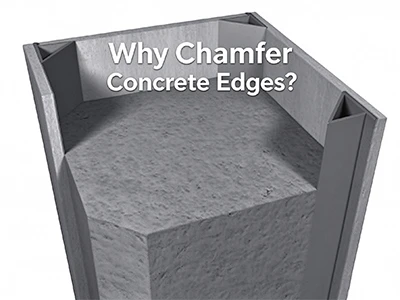
Cause analysis: Under the action of concrete temperature stress and shrinkage stress, the concrete is constrained by the surrounding structure and cannot deform freely, exceeding the tensile strength of the concrete structure. At this time, the tensile strength is weak in the parts with a low reinforcement ratio. Cracks occurred. Cracks at corners are caused by the shrinkage of concrete being restrained by the structural surfaces on both sides of the corner.
Preventive measures: Temperature cracks are caused by climate change. It often appears or increases after summer or winter. Under the influence of high temperature in the use environment, the temperature of the heat source is high, which can cause cracking even if the action time is not long. If the heat source temperature is not too high, it may crack under long-term baking. A relatively large component. Due to the high heat of cement hydration, there is a temperature difference between the internal temperature of the component and the external temperature. The prevention and treatment of cracks is to strengthen the coverage on the surface of the component and take certain insulation measures to minimize this temperature difference. For components produced by the open-air pedestal method, when the shear strength is reached, the steel bars should be cut immediately.
3.4 Self-weight Creep Cracks
Before the side formwork is removed, its manifestations are very similar to transverse cracks. However, the self-weight creep cracks are very different from the transverse cracks on the upper board surface after the side formwork is removed, especially after the bottom formwork is removed and the skid supports are removed. Such cracks extend downward and occur about 1 to 2 meters away from the end of the plate. The number varies, usually two to three. Downward expansion depends on the specific circumstances.
Cause analysis: The main reason is that the shrinkage of concrete forms micro-cracks on the surface, and due to insufficient support or stiffness of the formwork, the concrete at the end of the bridge deck beam forms a bending moment with the corner of the end bearing as the fulcrum under the action of gravity, resulting in tensile stress. Causing nearby concrete to crack.
Preventive measures: First, strengthen the secondary smooth surface and early maintenance, secondly, strengthen the formwork stiffness and check the formwork support during the concrete pouring process and after the pouring is completed. It is best to tighten the support after the concrete pouring is completed. After removing the side formwork, the end formwork should be temporarily removed. Generally, the formwork should be removed after the curing strength reaches 70% of the design strength under the same conditions.
4 Principles Of Crack Treatment
Corresponding preventive measures were formulated for the occurrence of different cracks, which achieved good results, and the principles of treatment measures were summarized.
① Meet the design requirements and comply with the relevant provisions of the standard specifications.
② Find out the actual condition, crack status, and development changes of the building structure. Determine the nature of cracks, observe changes in cracks, formulate appropriate treatment measures, and organize construction correctly.
③Determine the purpose of treatment according to the nature of the crack and the use requirements.
④Cracks that endanger the safety of the structure must be carefully analyzed and dealt with to prevent malignant accidents of structural damage and collapse, and necessary emergency protective measures must be taken to prevent the accident from worsening.
⑤ It is best to treat the cracks after they are stable: temperature cracks that change with environmental conditions should be treated when the cracks are widest; cracks that endanger the safety of the structure should be treated as early as possible.