





Introduction
Have you ever wondered how large precast concrete slabs are safely hoisted without cracking or collapsing? In precast component construction, a lifting anchor is an engineering component designed to safely transfer loads from the concrete structure to the lifting equipment.
Improper selection or use can have disastrous consequences: cracking, pull-out failure, or even component collapse. In this guide, we will explain step-by-step how lifting anchors work in precast components, providing a better understanding of their operation.
What Is a Lifting Anchor in Precast Concrete?
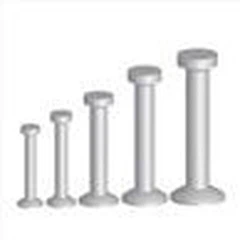
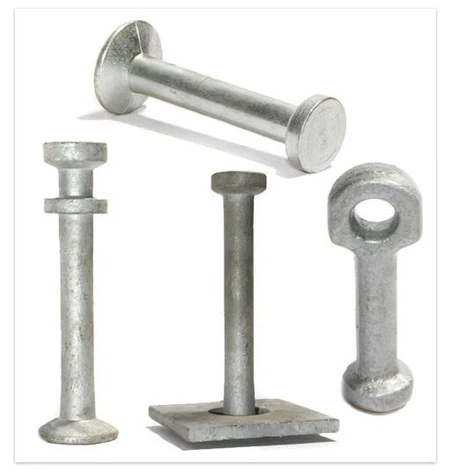
The lifting anchor head provides spherical seating that the Lifting Eye engages, while a disc-shaped foot is embedded in the concrete. Due to its forged nature, the lift anchor does not depend on welds or thread engagement to develop its safe working load. Forging provides maximum safety with its advantageous material structure. Its function is to establish a safe and predictable load transfer path between the concrete component and the lifting clutch, slings, and crane, allowing for smooth demolding, rotation, transportation, and installation of the component, avoiding unnecessary cracking, spalling, or sudden load transfer.
Why Are Lifting Anchors Embedded During Casting?
Lifting anchors are pre-embedded during casting because the safest lifting point is one that is part of the component from the beginning. As the concrete hardens around the anchor, a strong mechanical interlock is formed, helping to distribute forces throughout the surrounding concrete. The lifting point is pre-designed, reusable, and positioned according to design requirements, rather than through post-drilling or temporary on-site construction.
Typical Applications In Precast Elements:
Wall panels: face-lifting, edge-lifting, tilting, and rotating during demolding and installation.
Beams & columns: controlled lifting during yard handling and transport, often with higher load class requirements.
Slabs & hollow-core units: lifting from recessed points to keep surfaces clean and protect edges.
Stairs, balconies, and custom elements: safer handling of irregular shapes where the center of gravity shifts easily.
Common Types of Lifting Anchors and How They Work
In precast component construction, lifting anchors may appear similar at first glance, but their internal design and load-bearing capacity can differ significantly.
Lifting Foot Anchors:
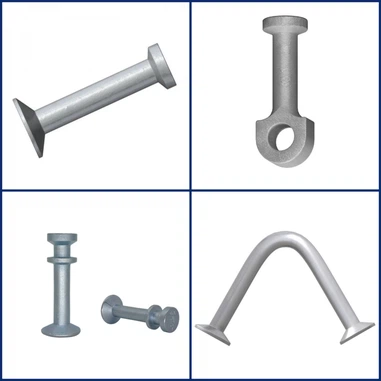
Lifting foot anchors are one of the most commonly used solutions for precast components. Their key feature is a widened base at the embedded end, allowing the load to be transferred deeper into the concrete. This design reduces the risk of pull-out, making base anchors particularly reliable for wall panels, beams, and other heavy structural components.
Spherical Double-Headed Lifting Anchors:
Spherical double-headed lifting anchors are designed for precise and repeatable lifting operations. The spherical anchor head works in conjunction with a dedicated lifting clutch to ensure controlled force transfer even when the lifting angle is not perfectly vertical.
Lifting Eye Anchors:
Lifting eye anchors employ a simpler design. Anchor bolts with exposed eyelets or slings can be directly attached to hooks or slings for easy visual inspection. They are commonly used for temporary lifting operations or lighter precast components, especially suitable for applications where load and lifting angle are controllable.
V-anchor lifting anchors:
V-anchor lifting anchors are typically used for thinner or edge-sensitive precast components. By transferring forces at an angle, they help reduce stress concentration near concrete edges, thereby reducing the likelihood of cracking.
The Basic Working Principle of Lifting Anchors
How Loads are Transferred from Concrete to Reinforcing Steel
During lifting, the weight of the precast component does not act directly on the steel anchor bolts. Instead, the load is transferred from the concrete to the anchor bolts through mechanical interlocking and bearing. The surrounding concrete absorbs and disperses the load, allowing the anchor bolts to "work in tandem" with the concrete, rather than resisting it. This load-sharing mechanism enables lifting anchor bolts to reliably lift heavy components.
Relationship between Anchor Head, Anchor Bolt, and Concrete
Each part of the anchor bolt plays a specific role. The anchor head connects to the lifting clutch and determines how the load is applied. The anchor bolt transfers the load to the embedded area, while the shape of the anchor bolt-such as the anchor foot, widened anchor head, or profile-helps to distribute stress into the concrete. When these components are designed and positioned correctly, the load is transferred smoothly without causing harmful stress concentrations.
Overview of Tension and Compression During Lifting
During lifting, the anchor bolt primarily bears tension, while the surrounding concrete bears compression. This balance is crucial. If the tensile force exceeds the concrete's load-bearing capacity, cracking or pull-out will occur. Well-designed lifting anchors can control these forces, keeping stress within safe limits even during tilting or dynamic lifting.
How to Choose the Right Lifting Anchoring System
Component Shape and Thickness
The geometry of precast components is a primary consideration. Thin slabs, edge-sensitive components, or building facades often limit anchoring depth, making the anchor shape crucial. Flat or V-shaped anchors are generally better suited for slender components, while bottom anchors are suitable for thicker walls and beams.
Concrete Strength
The concrete strength at the time of lifting is just as important as the anchor's rated load-bearing capacity. Even high-quality anchors cannot be safely used if the concrete has not reached the required compressive strength. Premature lifting increases the risk of pull-out or surface cracking.
Environmental Conditions
Site and factory conditions affect long-term performance. Temperature variations, humidity, and corrosive environments all affect concrete curing and the durability of reinforcing steel. In outdoor or corrosive environments, anchors made with high-quality materials and protective coatings offer greater reliability for repeated use. Considering environmental factors from the outset can prevent premature wear and unexpected failure.

Common Failure Causes When Lifting Anchors Are Misused
A common cause is improper anchor selection. Anchors suitable for thick members may not be suitable for thin panels, edge lifting, or angled lifting. Worse still, using a clutch that doesn't fully match the anchor head can lead to partial engagement and uneven force distribution.
Another common problem is lifting before the concrete has reached the required strength. In actual production, tight schedules and uneven curing can cause the concrete around the anchor to be insufficiently strong to support the load-bearing zone, causing the concrete to fail before the reinforcement reaches its ultimate strength.
If the anchors are too close to the edge, too close together, or poured in poorly compacted areas, stress concentration occurs, causing the concrete to fracture at its weakest point.
Conclusion
Lifting anchors are far more than simple embedded steel components. In precast component construction, they constitute a carefully balanced system, connecting concrete components, lifting hardware, and the handling process into a controlled load transfer path.
The correct application of lifting anchoring systems can support the entire precast component production process, from demolding and transportation to on-site installation. Understanding how lifting anchoring systems work in precast components can reduce malfunctions, simplify operations, and continuously produce higher-quality precast components.