





Modular construction with prefabricated concrete elements is transforming the building industry. By moving work to controlled factory settings, precast methods boost quality, efficiency, and sustainability. However realizing these benefits depends on secure, adjustable connections between components. That's where cast-in channels shine.
Cast-in channels are steel profiles embedded in precast modules to enable robust attachments after installation. Their predetermined locations avoid risky field drilling or welding. Cast-in channels' slotted design also allows flexibility to correct minor alignment issues. This combination of strength, accuracy, and adjustability makes cast-in channels essential in precast projects.
Let's explore their role in precast systems, highlighting design, applications, and innovations.
What Are Cast-In Channels?
Cast-in channels are steel or stainless steel profiles that are pre-embedded in concrete elements. The channels have internal threads or slots to accept bolt and nut assemblies for attachments. By installing connections during the casting process, Cast-in channels avoid drilling or welding post-installation. Their adjustability facilitates precise alignment of facades, medical equipment, utilities, and other connections in precast modules. Cast-in channels' versatility explains their extensive use in prefabrication.

The Importance of Cast-In Channels in Precast Construction
Precast concrete construction involves making concrete elements like walls and slabs off-site. This allows greater quality control but requires expert planning to assemble the pieces on-site. Cast-in channels make this possible by creating secure attachment points inside the precast components.
Accuracy in Manufacturing
Since precast factories have controlled settings, they can position Cast-in channels within millimeters of design specs. Embedding the channels while pouring concrete ensures perfect alignment every time.
This eliminates the need to drill holes on-site, which risks:
Hitting rebar and weakening the concrete
Cracks forming around drilled holes
Misaligned attachments from human error
By integrating Cast-in channels at the casting stage, precast producers enhance structural integrity.
Flexibility in Design
Unlike cast-in-place anchors, Cast-in channels allow some adjustment because of their slotted bolt holes. This flexibility accommodates:
Minor variations between precast pieces
Small structural movements
A single Cast-in channel can also support multiple attachments like cladding, ductwork ,and more. This simplifies changes to the structure over its lifetime.
Efficient Workflow
Since drilling and welding are minimized, projects with Cast-in channels saw 20% faster assembly in one industry study.
Strict compliance with international standards also ensures the load capacities and performance of Cast-in channels are validated. This prevents failures or accidents on-site.
Structural Performance
Cast-in channels reliably withstand dynamic and static loads, providing resilience:
In seismic zones, Cast-in channels prevent ceiling collapses by securing HVAC components
Cast-in channels resist metal fatigue from vibrations better than adhesive anchors
Cast-in channels maintain high strength in fires versus plastic anchors
Cost and Insurance Benefits
Despite higher initial material costs, Cast-in channels offer long-term savings from speedier construction and reduced retrofitting needs. Their proven earthquake resistance also lowers insurance premiums in some cases.
Types of Cast-In Channels and Their Applications
Cast-in channels come in different materials, shapes, and strength capacities to suit specific needs. Selecting the optimal type is key to performance and safety.
Materials and Coatings
Carbon Steel is commonly used thanks to its strength and affordability. However, it requires protective coatings in harsh environments:
Hot-dip galvanizing provides corrosion resistance for decades in outdoor settings like parking garages. The zinc coating ensures durability.
Epoxy coatings provide chemical resistance in wastewater treatment plants or other facilities with acid exposure.
Stainless Steel has superior resistance to rust and chloride corrosion. The 316 grade is ideal for marine environments. Stainless steel also offers aesthetic appeal with its polished finish. It's commonly seen on bridges, coastal structures, and buildings with exposed channels.
Alternative Materials like aluminum and fiber-reinforced polymer suit unique situations:
Aluminum is lightweight but has lower load capacities, making it suitable for architectural facade panels.
Fiber-reinforced polymer (FRP) is non-conductive, perfect for electrical substations to prevent interference.
Channel Shapes and Profiles
T-shaped channels resemble an upside-down "T". They are ubiquitous in construction for their versatility:
The horizontal bolt flange allows adjustable connections by sliding bolts along the channel's slots.
Their heavy load capacity suits demanding needs like anchoring crane runways or bridge parapets.
L-shaped channels provide a 90-degree angle bracket ideal for specific applications:
Securing the edges of precast staircases or balcony slabs by bolting into the vertical face of the L profile.
Fitting into tight corners that lack space to accommodate a T channel's longer flange.
Custom extrusions are made-to-order channels with application-specific geometries:
Curved channels to fit circular precast segments like silos.
Embedded sensors in channels for nuclear power plants to monitor radiation.
Strength and Testing
Cast-in channels must be rigorously tested by independent labs to certify their published load capacities.
Light-duty channels support up to 1100 lbs in tension and shear. They are suitable for:
Suspended ceiling grids in offices and institutions.
Interior partition walls are faced with lightweight materials like gypsum board.
Heavy-duty channels handle 20,000 to 50,000 lbs for structural connections:
Anchoring bridge expansion joints are subject to vibration and dynamic loads.
Supporting conveyors, cranes, and heavy machinery in industrial settings.
Key Applications
Understanding channel capabilities helps engineers select the right product for the application:
Adjustable curtain wall connections use T channels to accommodate a high-rise's natural thermal expansion and contraction.
Seismic brace anchorage relies on ductile channels to absorb earthquake energy within precast shear walls.
Hospital equipment like MRI machines needs heavy-duty anchorage able to withstand tremors to protect patients.
FRP channels mount electrical conduits in data centers to prevent electromagnetic interference.
Parking garage retrofits use epoxy-injected channels to add EV charging stations without compromising structural concrete.
Careful specification of channel types and integration during design allows precast concrete structures to meet the most demanding performance requirements safely and efficiently.
Critical Factors in Cast-In Channel Design
Designing effective and safe cast-in channels requires in-depth engineering analysis of several key factors:
Structural Load Capacity
Cast-in channels must have adequate strength to withstand all applied loads without failure. Engineers perform comprehensive load analysis:
Permanent dead loads like cladding or equipment weights
Live loads including wind, seismic forces, vibration
Eccentric loads causing bending moments
Anchoring design standards such as ACI 318 provide formulas to calculate a Cast-in channel's required ultimate tensile and shear strengths based on load parameters. For example, the maximum permissible tension load is calculated as:
Tu = 0.7 × φ × Ase × futa
Where φ is a capacity reduction factor, Ase is the channel's effective cross-sectional area, and futa is the ultimate tensile strength of the steel.
Advanced finite element analysis software models complex stress distributions in Cast-in channels under realistic load conditions. This prevents inadequate designs.
Optimal Channel Placement
Proper Cast-in channel positioning avoids clashes with rebar and ensures alignments match planned connection points. 3D BIM programs detect conflicts with rebar grids, maintaining the required 25 mm clear spacing. Laser projection outlines precise channel locations on formwork per the design. Scanning post-casting validates positions within tolerances.
Accounting for Expansion and Tolerance
Steel Cast-in channels expand 12 μm per meter for every 1°C increase in temperature. For a 50°C rise, a 2m channel will expand by 1.2 mm. Slip joints and flexible bolted connections accommodate this thermal movement. Designs also allow a 3 mm tolerance for variabilities in formwork and casting.
Corrosion Protection
Material choice and protective coatings maximize Cast-in channel durability:
Hot-dip galvanizing provides a zinc layer that resists rusting for decades in outdoor settings.
Epoxy coatings withstand chemical corrosion in harsh plant environments.
Stainless steel grade 316 contains molybdenum to resist coastal saltwater corrosion.
Adequate attention to all these design considerations ensures cast-in channels safely withstand loads while maintaining proper alignment and corrosion resistance over the structure's service life.
Installation and Embedment Techniques
Correct installation and embedment procedures ensure cast-in channels achieve their full strength and alignment potential in the cured concrete.
Setting Up Formwork
Precision formwork setup enables accurate channel alignment. Best practices include:
CNC-machined jigs with locator tabs to hold channels at precise angles, such as for diagonal bracing connections. Reusable jigs improve consistency.
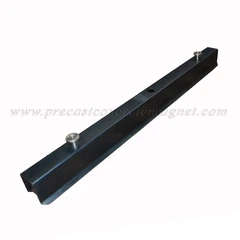
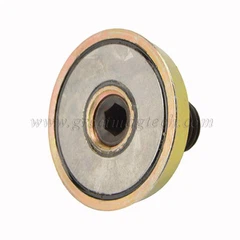
Magnetic brackets affix channels securely against steel formwork while pouring concrete. The magnets prevent the movement or floating of channels.
Laser projection systems outline the exact Cast-in channel positions on formwork per the 3D model design. This achieves placement accuracy within 1 mm for a flawless fit.

Controlled Concrete Pouring
The concrete pouring process requires care to avoid dislodging channels:
Low-frequency poker vibrators (100-200 Hz) adequately consolidate the concrete without over-vibrating, which risks shifting channels.
Temporary support braces made of steel straps hold channels in position during the pour. The braces resist concrete pressure and flow turbulence.
Self-consolidating concrete mixes flow smoothly around channels without external vibration, protecting against movement.
Curing for Strength
Proper curing controls temperature and moisture to strengthen concrete and prevent cracking:
Moist curing via wet burlap or sprayed curing compounds maintains 70% humidity for 7 days, the optimal level.
Insulated forms retard heat loss when curing concrete in cold climates, preventing detrimental rapid cooling.
Delaying formwork removal until the concrete reaches 70% strength (per ASTM C31) stops channel pull-out or concrete damage during demolding.
Adhering to these installation best practices ensures cast-in channels are positioned accurately and secured within the cured concrete to deliver robust structural connections over decades.
Applications of Cast-In Channels in Precast Projects
Cast-in channels enable secure connections in precast elements across diverse projects, from high-rise facades to infrastructure.
Building Facades
Cast-in channels allow cladding attachment without penetrating the concrete facade's waterproofing membrane. Exterior brackets bolt into the channels' slots, isolating the connection from the precast face.
A prime example is unitized curtain walls on high-rises. T-shaped Cast-in channels accommodate thermal movements up to ±15 mm through adjustable bolted joints. This prevents over-stressing the glazing and seals caused by expansion/contraction in extreme temperatures. Cast-in channels streamline facade erection by pre-aligning attachments to the building core.
Healthcare Facilities
Medical equipment in hospitals demands robust anchorage able to withstand seismic events. MRI machines weighing over 7,000 kg require heavy-duty Cast-in channels with 50kN tension capacity for a reliable connection. Seismic-rated channels, tested to 0.3g acceleration, secure scanners during earthquakes to protect patients from injury.
Precast headwalls use Cast-in channels to rapidly install patient room utilities like oxygen and suction. Their predetermined locations eliminate drilling into finished room surfaces.
Transportation Infrastructure
For accelerated bridge construction, Cast-in channels in precast parapets anchor guardrails without drilling into the concrete. Stainless steel channels spaced at 1.5m intervals attach crash-tested rails meeting MASH TL-3 impact standards of 200kN loads.
Cast-in channels also integrate lighting poles, noise barriers, overhead signage, and utilities along highways. The channels provide flexibility for inspection and maintenance.
Retrofit Projects
Existing structures can integrate new systems without destructive concrete coring using Cast-in channels. Parking garages retrofit EV charging stations by epoxy-injecting channels into the slab. The anchored conduit requires no structural modification.
Building interiors also benefit. Cast-in channels allow new partitions, mechanical systems, and services while preserving floor flatness. The channels bond to old concrete with injected epoxy for strength.

Advantages of Using Cast-In Channels in Precast Concrete
Cast-in channels offer significant benefits compared to traditional post-installed anchors in precast elements.
Speed
By pre-embedding connections, Cast-in channels accelerate installation versus drilling anchors after erection. A hotel case study found its 20-story precast facade went up 40% faster using Cast-in channels, saving weeks of construction time. Crews simply bolted brackets into the channels rather than heavy drilling.
The predetermined locations also streamline MEP coordination. Trades save time aligning hangers, conduits, and utilities to the channels versus field decisions.
Cost Efficiency
Eliminating drilling provides major labor and material savings:
PCI estimates pre-located Cast-in channels save approximately $15/m2 in man hours compared to post-drilled anchors.
No drill dust to dispose of reduces waste costs by 25%. Failed hole rework is also avoided.
Flexibility
Slotted Cast-in channels allow ±10 mm adjustability during erection. This corrects minor alignment issues from casting tolerances or installation variances. Tight connections are assured.
For seismic zones, oval oversized channels accommodate seismic drift while maintaining concrete cover fire protection.
Safety
Engineered Cast-in channels offer certified performance margins exceeding field-placed anchors:
Hilti HAS double nut channels offer a 3:1 safety factor for overhead installations.
Proprietary coatings like Hilti electroplated galvanizing prevent corrosion that threatens anchor capacity over time.
By optimizing speed, cost, flexibility, and safety, purpose-designed cast-in channels give precast construction a clear advantage.
Challenges and Solutions in Using Cast-In Channels
While advantageous, cast-in channels also present some implementation challenges requiring mitigation.
Misalignment
Channel positions shifting during concrete pour can prevent connections. This arises from poor formwork craftsmanship.
Solutions include switching to modular gang forms with pre-attached Cast-in channel rails. The reusable precision molds improve placement consistency pour-to-pour. Robotic forming further enhances accuracy.
Corrosion
Cast-in channel coatings must withstand long-term exposure to weather, salts, and chemicals per project conditions.
For severe marine environments, duplex coatings of hot-dipped galvanizing (85 μm) plus a bonded epoxy topcoat (150 μm) extend service life on bridges to 75+ years. The double protection resists chloride damage.
Design Coordination
Cast-in channels require detailing around congested rebar, post-tensioning ducts, and embedded items. Clashes can delay projects.
BIM clash detection resolves 95% of conflicts pre-construction per an Autodesk study. The software checks integrated Cast-in channel and rebar 3D models, enabling proactive adjustments.
Load Miscalculations
Under-designed Cast-in channels risk anchor pullout or concrete blowout under true load conditions.
Submitting custom channel designs for independent testing by organizations like UL or ETA validates strength and safety factors before use. Proof testing reduces liability.
Solutions
In summary, prefabricated formwork, robust coatings, coordination software, and third-party testing solve potential challenges using cast-in channels. With proper implementation, projects benefit from their clear advantages.
Future Trends and Innovations
Cast-in channel technology will continue advancing through digitization, sustainability, automation, and modularization.
Smart Cast-in channels embedded with IoT sensors will collect real-time load, vibration, and corrosion data. Cloud analytics platforms will monitor the structural health and predict maintenance needs before failures occur.
Green manufacturing processes like ArcelorMittal's XCarb® promise 70% lower CO2 emissions during steel production for Cast-in channels. This improves sustainability.
3D printing automation will integrate channels into concrete elements with precision. Printers like COBOD can extrude concrete around pre-placed Cast-in channels, cutting installation labor costs by 50% or more.
Standardized cast-in channel kits tailored for offsite projects will benefit modular prefabrication. Systems like Halfen's T-type channels enable industrialized production across regions.
Conclusion
Cast-in channels are pivotal in maximizing precast concrete's potential. As construction evolves toward modularity and sustainability, cast-in channels will remain at the forefront, enabling safer, faster, and smarter builds. By mastering their design and application, stakeholders can unlock new possibilities in the built environment.