


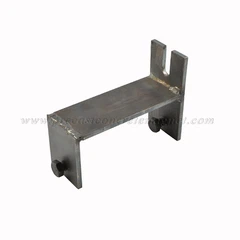
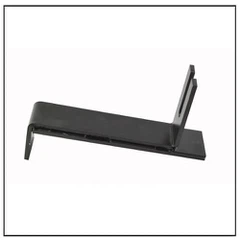


Looking at those big, tall buildings, did you ever wonder what causes them to stay in that position? What is the secret behind the safety and structural integrity of those sky-high buildings? The answer to this question is Concrete Spacers. A structure's strength is heavily influenced by its foundation in the construction industry. Spacers are the main elements that come into play to build a strong foundation. They are the unsung heroes who preserve the integrity of many structures around us, guaranteeing the proper placement and protection of steel reinforcement within concrete. You can ensure the stability and longevity of reinforced concrete structures by these minor but essential elements.
We understand the importance of Concrete Spacers in the building industry, so we aim to provide you with the best, highest-quality goods for your construction projects. In this article, we will discuss what concrete spacers are, their significance, their different types, and everything related to these marvelous elements.
What are Concrete Spacers?
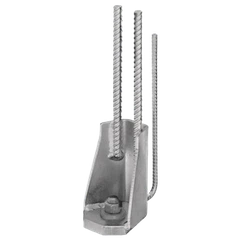
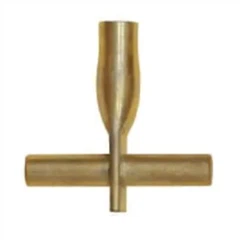
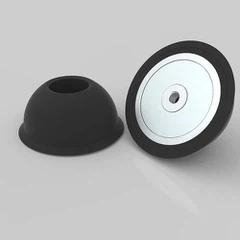
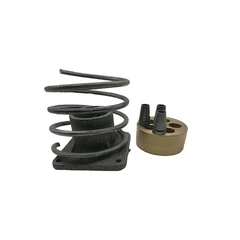
Concrete spacers, also called concrete aspros, are a necessary component of construction, as they ensure the distance between reinforcing bars (rebar) and the formwork in concrete constructions. They guarantee that the rebar is in the correct position in concrete. This is extremely important for the construction's endurance and to keep the structure sound and stable. Spacers usually come in a variety of materials, such as concrete, meta, and plastic. Each of these has its own uses and needs.

Importance of Concrete Spacers
Ensures Proper Cover: Concrete spacers keep the rebar and the concrete surface at the appropriate distance. This cover shields the rebar from environmental elements that can shorten the structure's lifespan and cause corrosion. Therefore, the moisture and corrosive substances don't reach the steel.
Improves Structural Integrity: Spacers make sure that the reinforcing bars are in place when the concrete is poured. This avoids displacement and ensures that structural parts are in place, thereby contributing to the structure's increased solidity.
Enhances the beauty of the structure: Proper concrete spacers also give a flawless concrete finish without any imperfections. So you don't have to spend extra on pricey touch-ups and repairs alongside improving the appearance of the finished structure.
Prevents Bleeding & Segregation: When the rebar cage is lifted or subjected to vibration, solid rebar spacers create a sturdy connection between the rebar and the concrete. In deep concrete structural sections, they also help to stop bleeding and segregation.
Some Useful Tips To Keep In Mind For Using Concrete Spacers
Choose the best spacer according to your task: Depending on your particular project, the type of concrete you use, environmental factors, and load-bearing capacity, you should use the best spacer.
Positioning of spacers: You can improve the structural integrity of your building and produce consistent outcomes by making sure that the spacers are positioned correctly. This will also maintain the necessary cover and prevent displacement during the concrete pour.
Use properly sized spacers: Use spacers with enough protection, ranging typically from 20 mm to 100 mm, depending on project specifications and local building codes.
Combine different types: You can also consider combining wire spacers, plastic spacers, and cast concrete spacers for intricate projects. This will help you satisfy various range requirements and guarantee the best performance.

Choosing the Right Spacer Material
Your choice of spacer material greatly impacts the construction procedure. A number of variables, including structural weight, possible rebar disruption, and concrete surface exposure, affect this choice. Concrete spacers, for example, are adaptable and can be used on a variety of constructions.
However, steel spacers are not appropriate for exposed and visible surfaces because, although they are strong, the non-structural steel in the cover zone may cause apparent rust spots on the poured concrete surface.
Plastic spacers might be a practical solution, but they might not be appropriate in situations where very heavy cages need to be supported or in places where there is a significant chance that rebar will be subjected to weight. A concrete spacer may be the best option in certain situations.
Types of Concrete Spacers
As previously said, there are various kinds of concrete spacers, all of which we will identify and discuss in this post. Understanding how concrete spacers are made is the aim of this project.
Round Wall Concrete Spacers
Also called solar or rotary spacers, these concrete spacers are frequently utilized on vertical surfaces.
This kind of concrete spacer net comes in two sections, and concrete spacers of this kind are frequently used on flooring.
Hard Concrete Spacer
Heavy buildings like foundations and floor beams frequently use these kinds of concrete beams. This kind of concrete spacer is also utilized for rebars that have a diameter of 32 or less. A hard concrete spacer can comfortably support up to 270 kg of weight.
Light Concrete Spacer
Lighter constructions frequently use these kinds of concrete spacers. We can discuss burdens up to 25 kg in weight, for instance. This kind of spacer has numerous uses in prefabricated parts and is typically utilized in light buildings.
Medium Concrete Spacer
As the name suggests, a medium concrete spacer is used for structures with a medium weight. We can use the floor of semi-heavy constructions as an example. A medium-sized concrete spacer can easily support up to 150 kg of weight.
Heavy Concrete Spacer
This kind of spacer is frequently utilized in foundations and other heavy, dense structures. The spacer can readily support heavy concrete up to 275 kg in weight.
We recommend utilizing four rebars per square meter in beams and three in pots when using this type of concrete spacer, which has a diameter of 18 to 32 mm.
Clamped Spacers
In various procedures, including concreting activities, these concrete spacers are stationary and do not spin. This is why installing the clamp spacer is so easy and straightforward; neither a lot of work nor an expert is required.
The size of the rebar is unrestricted for these concrete spacers. However, there is a chance that they will rotate and shift once they are installed. To stop the concrete spacer from rotating during installation, a tool like a wire hook should be utilized to keep it steady.
Combined Spacers
As the name suggests, combined spacers are a particular kind of concrete spacer that combines two or more different models. This fully utilizes the concrete spacers and reduces installation time and expense.
Floor Spacers
Heavy flooring and foundations are two applications for this kind of concrete spacer. This spacer has an excellent design and can support a point load of up to 30 kg. The rebars used in these spacers range in size from 8 to 32.
Main applications of this type include heavy constructions like foundations and floors up to four per square meter. Additionally, this type is used in three beams per square meter.
Spacers For Beams
For beams that result in internal coverage and uniform spacing in low longitudinal rebars, this kind of concrete spacer is used. This spacer is used 20 times every 20 cm at the start of each beam and once every 50 cm after each beam.

When To Use Concrete Reinforcement Spacers?
Knowing when and how to strengthen the structure is crucial when constructing anything out of concrete. Concrete reinforcing spacers are useful in this situation. You can contribute to the strength and durability of your finished project by uniformly spacing out the steel bars or mesh within the concrete that has been poured.
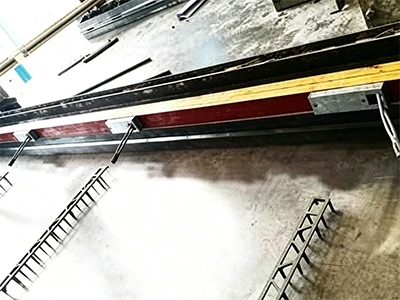
Reinforcement spacers help keep reinforcement in place during concreting processes and offer structural support for both large commercial structures and smaller home projects. With various sizes and forms to suit any project, these spacers are made from sturdy materials like steel or plastic. Additionally, spacers guarantee that reinforcing fittings such as dowel bars and the like properly adhere to the concrete. Construction teams may be certain that their concrete constructions will hold up over time with the help of reinforcing spacers, which provide dependable support provisions.
How To Use Concrete Reinforcement Spacers
Reinforcing spacers is essential for concrete reinforcement projects to be strong and long-lasting. They aid in precisely spacing out reinforcing bars, guaranteeing that the concrete is evenly reinforced on all sides. When using reinforcement spacers in these projects, make sure the spacer fits snugly against the other reinforcement materials by matching its size to the reinforcement bar used. Next, install each bar around the project's perimeter, carefully keeping them at their assigned distances. After doing this from every aspect, place the reinforcement spacers on top to adequately seal and keep the materials together. This will precisely reinforce your concrete project, ensuring it is completed with strength and accuracy.
Selection of the Right Spacer
Before the concrete is poured, little accessories called concrete or plastic spacers are utilized to keep the rebars in place in the concrete constructions. This is required to keep a clear space (cover) between the rebar and the concrete surface because if there isn't enough cover, the rebar will begin to corrode and cause the concrete to spill. After pouring, these spacers form a permanent component of the structure. Even if the properties of several spacer types are similar, choosing the appropriate one will make building easier and safer. Therefore, you can follow the below criteria to choose the spacer:
Height of Spacer
To create the precise concrete cover for the rebar in concrete, the spacer's minimum height is equal to its dimensions. As a result, this is the most important requirement for ordering. Different heights will be needed to support the rebars depending on where the multi-dimension spacer is installed. It is feasible to choose multi-dimension spacers with the right measurements in a project where the reinforced concrete structures have different concrete cover thicknesses.
Firmness of Subgrade
The forces from above, such as the weight of the rebars, personnel, and machinery, will affect the spacers beneath the rebar mesh. During construction, the spacers may settle if their area of contact with the soil or stone subgrade is inappropriate. As needed, this situation will result in a thinner concrete coating. Therefore, the spacers will require enough contact surfaces or more plates to distribute the load if the subgrade is not firm.
Material
As mentioned already, each type of material has advantages and disadvantages, so choosing the right spacer material requires careful thought. Although plastic spacers are often weaker than steel and concrete ones, they offer no sacrifice in terms of serviceability. Therefore, plastic spacers should only be chosen very carefully if the cage being supported is very heavy or if there is a considerable chance that the rebar will be walked on. Although steel spacers are more durable, they have the drawback of having some non-structural steel inside the cover zone. Steel spacers should also be avoided if the concrete surface is exposed and visible, as this frequently results in tiny rust patches showing.
GME Concrete Spacers
GME is a leading supplier of shuttering magnets and precast concrete magnets in China, and it has a decade of expertise in delivering quality solutions. At GME, you will find concrete spacers with the following qualities:
Durable: Engineered with high-quality materials to ensure longevity.
Customizable: Tailored to meet specific project requirements.
Affordable: Competitively priced with efficient delivery options worldwide.
There is strict adherence to the 6S and TS16949 systems, so end-to-end quality control is assured at GME from design to delivery. With partnerships with leading manufacturers in Ningbo and Qingdao, you will get the best value for your construction needs with GME.
Conclusion
Concrete reinforcing spacers are an essential component of building strong, long-lasting concrete. Spacers aid in preventing cracks and damage by supporting the concrete and holding it in place as it dries. Despite appearing to be relatively minor parts of building projects, concrete spacers greatly impact their quality, safety, and longevity.
Selecting the appropriate spacer type for your project is crucial because it comes in various sizes and forms. Choose the right spacers, and with a reliable supplier like GME, you can ensure your structures' durability, safety, and precision.