

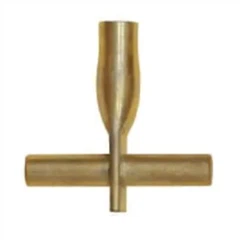

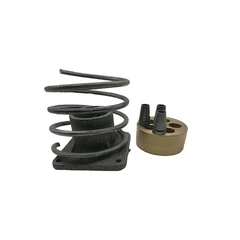

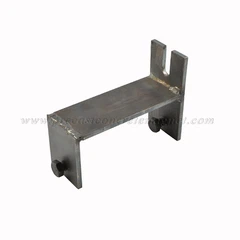
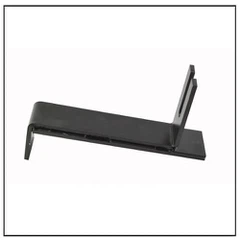


Choosing between a shuttering magnet and a formwork magnet can be difficult in the precast concrete manufacturing industry, especially given the wide variety of magnetic securing solutions available.
While both rely on high-performance permanent magnets to hold the formwork to the steel frame, formwork magnets are typically designed for quick and secure securing of standard side molds, while formwork securing magnets offer greater flexibility and compatibility with modular or irregular formwork systems.

The best solution depends on your specific production needs, such as the required holding force, the complexity of the formwork, installation efficiency, and adaptability to different precast components.
In this guide, we will detail the key differences between shuttering magnets and formwork magnets to help you determine which solution best suits your precast workflow and production goals.
What is a Shuttering Magnet?

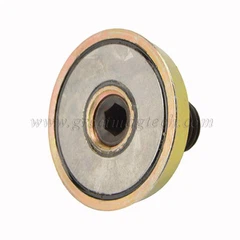
The shuttering magnet is a high-strength magnetic fixing device widely used in precast concrete production. It secures templates to a steel pouring platform without welding or drilling. Built-in permanent magnets firmly hold the steel template in place, ensuring precise alignment and dimensional consistency during concrete pouring.
The core components of a shuttering magnet include neodymium magnet blocks, a robust steel housing, and a switching mechanism. When activated, the magnet generates a strong attraction that firmly adheres to the pouring platform, resisting the lateral pressure of fresh concrete. Pressing the switch releases the attraction without damaging the steel platform.
Compared to traditional bolted fixing systems, they significantly reduce installation time while improving safety and dimensional consistency. For precast component factories that prioritize efficiency and repeatability, shuttering magnets are a proven, reliable, and ready-to-use solution.
Best for:
Precast wall panels, solid walls, and sandwich panels
Flat steel casting tables and standard steel side molds
High-pressure concrete casting requires strong suction
Repetitive production lines require frequent mold adjustments
Drawbacks:
Requires clean steel surfaces for optimal magnetism
Initial investment costs may be higher than basic mechanical fixing methods; limited design flexibility and adaptability.
What Are Formwork Magnets?

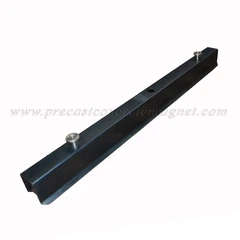
Formwork magnets are another type of magnetic fixing device used in precast concrete production. They securely fix formwork components to a steel pouring platform without drilling or welding. Typically, formwork magnets contain 2-3 high-strength permanent magnets, 2-3 times the length of the shuttering magnet.
They allow for quick, reusable, and non-destructive positioning of side molds, edge guides, and special profiles during concrete pouring. They can be used in fully automated precast concrete production lines.
Unlike traditional bolt systems, formwork magnets rely on magnetic force to provide a stable fixing force, enabling precast component plants to improve efficiency, accuracy, and flexibility, especially in modern modular production lines.
Best for:
Modular fixing production lines
Large precast concrete plants
Factories requiring speed and repeatability
Fully automated precast concrete component production lines
Drawbacks:
While high-quality formwork magnets require a higher initial investment than simple mechanical fasteners, the cost can usually be recovered through long-term reuse.
Key Differences Between Shuttering Magnet and Formwork Magnet

Main Applications
Shuttering magnets are primarily used for standard side formwork of precast wall panels and floor slabs. They are ideal for repetitive production on flat steel platforms.
Formwork magnets are designed for integrated or modular formwork systems and are commonly used for beams, columns, double-layer wall panels, and complex precast components.
Structural Design and Integration
Shuttering magnets are typically independent cores, which can be fixed individually or used with adapters or brackets to secure the side mold. This modular design offers flexibility, but special requirements necessitate additional components.
Magnetic formwork integrates multiple magnetic cores directly into the steel formwork, forming a unified system that reduces scattered parts and improves positioning accuracy.
Optimal Application Scenarios:
Shuttering magnets excel in standardized, high-volume production where frequent template changes are required.
Formwork magnets offer significant advantages in projects with complex geometries, complex molds, and extremely high dimensional accuracy requirements, making them particularly suitable for automated production lines.
Which Precast Concrete Magnet is Best for You?
Choosing the right precast concrete magnet isn't about the product label, but about how your factory routinely produces concrete components. The following practical analysis will help you make a decision.
Best Shuttering Magnet:
Suitable for standard precast wall panels and floor slabs produced on flat steel casting platforms.
Ideal for high-volume, repetitive production where speed and ease of use are critical.
Suitable for situations requiring frequent repositioning of side formwork.
Works efficiently with adapters and supports for flexible layout adjustments.
Best Choice for Formwork Magnet:
For complex formwork dimensions requiring custom heights.
Magnetic force is distributed along the length of the formwork, enhancing overall stability.
Highly compatible with automated or robotic production lines.
Considerations for Choosing Between Shuttering Magnet and Formwork Magnet
Selecting the right magnetic fixing solution can significantly influence production efficiency, dimensional accuracy, and long-term operating costs in a precast concrete plant. Before making a decision, consider the following key factors.
Considerations for Choosing Between Shuttering Magnet and Formwork Magnet
Selecting the right magnetic fixing solution can significantly influence production efficiency, dimensional accuracy, and long-term operating costs in a precast concrete plant. Before making a decision, consider the following key factors.
Type of precast elements
If your production focuses on standard wall panels and slabs, shuttering magnets are often sufficient. For beams, columns, double walls, or taller molds, formwork magnets provide better stability and alignment.
Formwork structure and complexity
Shuttering magnets work best with simple side forms and flat steel beds. Formwork magnets are better suited to integrated or modular formwork systems where precision and consistency are critical.
Production efficiency vs. accuracy
When fast setup and frequent layout changes are priorities, shuttering magnets offer clear advantages. When accuracy, repeatability, and clean edges matter more, formwork magnets deliver stronger overall control.
Automation level
Manual or semi-automatic lines often benefit from the flexibility of shuttering magnets. Automated and robotic systems typically pair better with formwork magnets due to their integrated design.
Long-term maintenance and cost
Shuttering magnets have lower initial system costs but require adapters and regular cleaning. Formwork magnets involve a higher upfront investment yet reduce labor, maintenance, and positioning errors over time.
Considerations for Choosing Between Shuttering Magnet and Formwork Magnet
Selecting the right magnetic fixing solution can significantly influence production efficiency, dimensional accuracy, and long-term operating costs in a precast concrete plant. Before making a decision, consider the following key factors.
Type of precast components
For standard wall panels and flat slabs, shuttering magnets are usually sufficient and cost-effective. For beams, columns, double walls, or tall elements, formwork magnets provide better alignment and structural stability.
Formwork structure and layout
Shuttering magnets perform best with simple side forms on flat steel tables. Formwork magnets are more suitable for integrated or modular formwork systems where precision and consistency are required.
Production flexibility vs. precision
If your factory frequently changes layouts or produces multiple panel sizes, shuttering magnets allow faster repositioning. If your priority is clean edges, tight tolerances, and repeatable results, formwork magnets offer greater control.
Level of automation
Manual and semi-automatic production lines benefit from the simplicity of shuttering magnets. Automated or robotic systems typically work more efficiently with formwork magnets due to their integrated design.
Long-term cost and maintenance
Shuttering magnets have a lower initial investment but may require more accessories and cleaning. Formwork magnets involve a higher upfront cost but reduce labor, adjustment time, and rework over the long run.
FAQ
Q: What are the main differences between shuttering magnets and formwork magnets?
A: The shuttering magnet is a standalone magnetic core used in conjunction with side molds and adapters, primarily for standard precast slabs. Formwork magnets, on the other hand, integrate magnetic blocks directly into the steel formwork, providing better alignment and overall stability for complex or tall components.
Q: Which magnet has a stronger attraction?
A: Both provide strong attraction. Shuttering magnets concentrate attraction at a specific point, while formwork magnets distribute magnetic force along the length of the formwork, thus improving stability during concrete pouring.
Q: Can formwork magnets and formwork magnets be used together?
A: Yes. Many precast component plants use shuttering magnets to secure standard wall panels while using formwork magnets to secure beams, columns, or special components, balancing flexibility and precision.
Q: Are shuttering magnets suitable for automated production lines?
A: They are primarily used in manual or semi-automatic production lines. For fully automated or robotic systems, formwork magnets are generally more suitable due to their integrated structure.
Q: Which solution is more cost-effective in the long run?
A: Shuttering magnets have lower initial costs and are ideal for simpler production processes. While formwork magnetics require a higher initial investment, they can reduce labor, adjustment time, and rework in complex or high-precision projects.
Q: How to choose the appropriate magnet strength?
A: The choice of magnet strength depends on the formwork height, concrete pressure, and component dimensions. It is essential to select the appropriate magnet strength based on your specific formwork and production conditions.
Conclusion
In summary, shuttering magnets and formwork magnets each have their advantages in precast concrete production.
Shuttering magnets are suitable for standard wall panels and floor slabs, offering quick installation and strong attraction, while formwork magnets provide greater stability, alignment accuracy, and integration for beams, columns, and complex or tall formwork systems.
The optimal choice depends on your production layout, formwork complexity, accuracy requirements, and long-term cost considerations.
If you are looking to upgrade your precast workflow, consider our high-performance magnetic solutions.