





Precast concrete wall panels are manufactured under controlled factory conditions to achieve consistent quality, dimensional accuracy, and structural reliability.
Unlike cast-in-place construction, precast production follows a defined workflow where each step influences the final panel performance. Understanding this workflow is essential for producers seeking efficiency, repeatability, and reduced rework.
The Precast Wall Panel Production Workflow begins long before concrete is poured. It starts with mold preparation, alignment, and fixation, and ends with safe demolding and handling of the finished panel. Each stage requires precise coordination between materials, equipment, and embedded systems.
From our manufacturing and supply perspective, production efficiency depends heavily on reliable mold fixing solutions, consistent formwork positioning, and stable embedded components. These factors directly affect surface quality, tolerance control, and turnaround time in the precast yard.
Understanding this workflow helps precast plants optimize output while maintaining the structural and visual standards expected from modern precast concrete construction.

Mold Preparation As The Foundation Of Panel Quality
Every precast wall panel begins with mold preparation. The mold defines the geometry, surface finish, and dimensional tolerance of the panel. Any defect at this stage is carried forward into the finished product.
Molds are typically steel tables or modular formwork systems designed for repeated use. Before setup, the mold surface must be thoroughly cleaned to remove hardened concrete residue, dust, or oil buildup from previous pours. Uneven surfaces or debris can cause surface defects and dimensional inconsistencies.
Once cleaned, a suitable release agent is applied evenly. The purpose is not lubrication but controlled separation during demolding. Excessive release agent can stain concrete surfaces, while insufficient coverage may cause adhesion problems.
At this stage, attention must also be given to mold flatness and structural rigidity. Warped tables or loose formwork sections compromise panel accuracy and increase corrective work later in the process.
Mold Setup And Positioning Accuracy
After preparation, mold setup begins. This includes assembling side forms, bulkheads, and block-outs according to the panel design drawings. The accuracy of this step determines the final panel dimensions and edge quality.
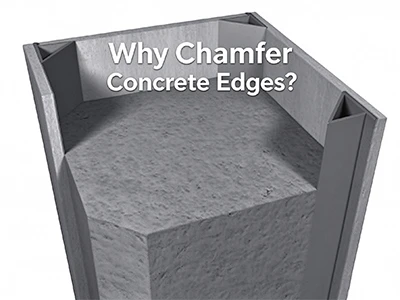
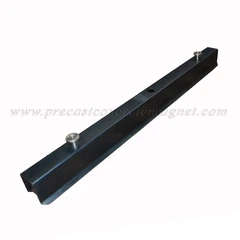
Side forms must be positioned precisely and secured firmly to resist concrete pressure during casting. In modern precast plants, this is commonly achieved using shuttering magnets and magnetic fixing systems instead of traditional bolting or welding.
Shuttering magnets provide fast and adjustable fixation without damaging steel tables. They allow operators to reposition forms efficiently while maintaining a strong holding force throughout the pour. This improves flexibility in production scheduling and reduces table wear.
The following table summarizes common mold fixing methods and their characteristics.
|
Fixing method |
Installation speed |
Reusability |
Table damage risk |
Adjustment flexibility |
|
Bolting |
Slow |
Limited |
High |
Low |
|
Welding |
Very slow |
None |
Permanent |
None |
|
Shuttering magnets |
Fast |
High |
None |
High |
From a production standpoint, magnetic systems reduce setup time and support rapid mold changeovers between different panel sizes.
Reinforcement Placement And Dimensional Control
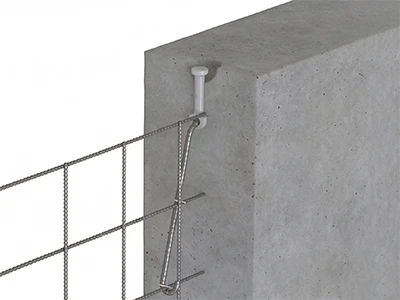
Once the mold is assembled, reinforcement placement begins. Steel reinforcement cages or meshes are positioned inside the mold according to structural design requirements.
Correct concrete cover is essential for durability and load performance. Spacers are used to maintain a consistent distance between reinforcement and mold surfaces. Poor spacer placement can result in exposed steel or excessive cover, both of which compromise panel quality.
Openings for doors, windows, and service penetrations are formed using block-outs fixed securely within the mold. These block-outs must resist buoyancy forces during pouring to prevent movement.
At this stage, dimensional checks are critical. Measurements are taken to confirm mold width, length, and diagonal alignment. Small deviations compound during installation on site, making early correction essential.

Integration Of Embedded Components And Fixing Systems
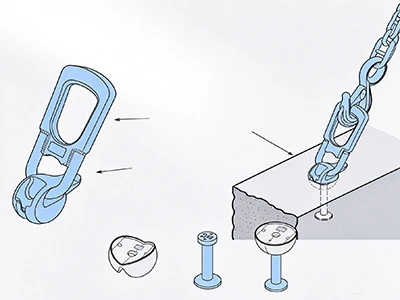
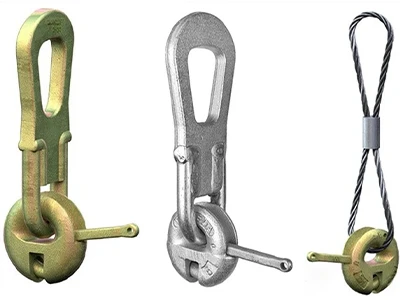
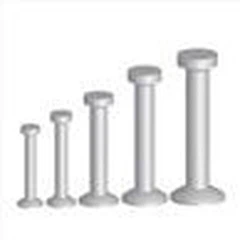
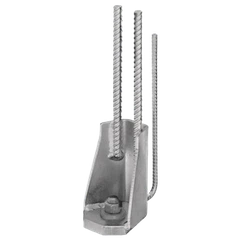
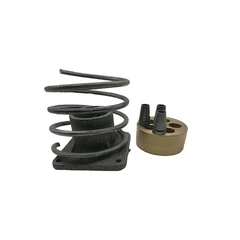
Modern precast wall panels often include embedded components such as lifting anchors, connection inserts, conduit sleeves, and insulation fixings. These elements must be positioned accurately to function correctly during handling and installation.
Embedding accuracy depends on reliable fixing solutions that hold components in place during vibration and concrete flow. Magnetic fixing systems are widely used for this purpose.
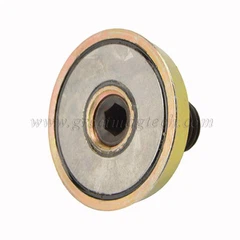
Precast concrete magnets and embedded magnet solutions allow inserts and accessories to be fixed to steel molds without drilling or welding. This improves repeatability and reduces mold preparation time.
From our product experience, embedded magnets offer several production advantages. They maintain position under vibration, allow quick layout changes, and reduce manual fixing errors. This directly supports consistency in high-volume precast operations.
The table below outlines typical embedded components and their fixing considerations.
|
Embedded component |
Position tolerance |
Common fixing method |
Production risk if misaligned |
|
Lifting anchors |
Very tight |
Magnetic holder |
Unsafe lifting |
|
Connection inserts |
Tight |
Embedded magnet |
Installation delays |
|
Electrical conduits |
Moderate |
Magnetic clamps |
Rework required |
|
Insulation anchors |
Moderate |
Mechanical clips |
Thermal bridging |
Correct integration at this stage prevents costly corrections after demolding.
Common Alignment Checks Before Concrete Placement
Before concrete placement begins, a final alignment review is required to avoid embedded component conflicts and dimensional errors. This step is often overlooked when production schedules are tight, but it prevents downstream corrections.
Key checks typically include:
Verification that all embedded magnets are fully seated and locked
Confirmation that lifting anchors align with panel lifting calculations
Visual inspection of conduit and sleeve positions relative to edges
Clearance confirmation for window and door openings
Re-check of reinforcement cover near embedded items
From a production control perspective, this inspection acts as a final quality gate. Errors identified after pouring usually require surface repair or rejection of the panel. Performing these checks systematically supports consistency across repeated panel designs and reduces variability between production batches.
Concrete Mixing And Placement Strategy
Concrete used for precast wall panels is designed for workability, strength development, and surface finish. Mix consistency is critical to achieving uniform results across production batches.
Before placement, the mix is tested for slump or flow to confirm compliance with production specifications. Deviations affect filling behavior and surface quality.
Concrete placement is performed in layers to reduce segregation and ensure complete filling of corners and recesses. Careful placement minimizes air entrapment and honeycombing.
Vibration follows placement. External vibrators or vibrating tables are used to compact the concrete. Over-vibration can cause segregation, while under-vibration leaves voids. Operators must balance duration and intensity based on mix design and panel thickness.
During this stage, all mold fixing systems, including shuttering magnets, must maintain stability under dynamic loads. Any movement leads to dimensional defects or surface irregularities.

Typical Causes Of Defects During Placement
Even with a correct mix design, defects can still occur during concrete placement if execution is inconsistent. Understanding common causes helps operators intervene early.
Frequent placement-related issues include:
Segregation caused by excessive drop height
Honeycombing due to insufficient vibration near corners
Form leakage from poorly sealed side forms
Movement of block-outs during high-flow placement
Surface voids from trapped air at mold edges
Most of these defects are linked to mold stability and fixation quality. Secure side forms and properly engaged shuttering magnets reduce the risk of movement during vibration. Early detection during placement allows immediate correction before curing begins, preserving both surface quality and structural performance.
Surface Finishing And Initial Curing
After vibration, the concrete surface is finished according to design requirements. For architectural panels, surface treatment may include troweling, brushing, or exposure techniques. For structural panels, a flat and level surface is usually sufficient.
Surface finishing is followed immediately by curing. Controlled curing ensures proper hydration and strength development. In precast plants, curing is often accelerated using steam or heat to shorten production cycles.
However, accelerated curing requires careful monitoring. Excessive temperature gradients can cause cracking or warping. Moisture retention is equally important to prevent surface drying.
During curing, molds must remain stable. Magnetic fixing systems continue to hold formwork in place, ensuring dimensional integrity until the concrete reaches sufficient strength.
Strength Development And Demolding Readiness
Demolding is not based on time alone. It depends on concrete strength development reaching a safe threshold. Premature demolding risks cracking, edge damage, or panel deformation.
Compressive strength tests or maturity monitoring are used to determine readiness. For wall panels, sufficient strength must be achieved to withstand lifting stresses.
Operators visually inspect edges, corners, and embedded components before demolding. Any signs of surface defects or movement are addressed immediately.
The decision to demold is a critical control point in the Precast Wall Panel Production Workflow, balancing productivity with quality assurance.
Demolding Process And Panel Handling
Demolding begins with the removal of side forms and block-outs. Thanks to magnetic fixing systems, this step is fast and does not damage the mold surface.
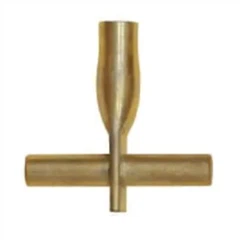
Shuttering magnets are released using designated tools, allowing forms to be lifted cleanly without prying or hammering. This preserves mold condition and reduces operator fatigue.
Once forms are removed, lifting anchors are engaged, and the panel is lifted vertically using cranes or lifting frames. Controlled lifting prevents torsional stress and cracking.
Panels are then transferred to curing racks or storage areas for continued strength gain. Proper support points are used to avoid warping during storage.
The following table summarizes key risks and controls during demolding.
|
Demolding risk |
Cause |
Preventive measure |
|
Edge damage |
Early release |
Strength verification |
|
Panel cracking |
Improper lifting |
Correct anchor placement |
|
Surface defects |
Mold adhesion |
Proper release agent |
|
Dimensional distortion |
Uneven support |
Controlled handling |
Mold Cleaning And Preparation For The Next Cycle
After demolding, molds are cleaned and inspected. Residual concrete is removed, and any surface damage is repaired immediately.
Because shuttering magnets and magnetic accessories do not require drilling or welding, mold surfaces remain intact over many production cycles. This reduces long-term maintenance costs.
The mold is then prepared again for the next panel, completing the production loop. Efficient plant design this cycle to minimize idle time while maintaining strict quality controls.
Production Efficiency And System Reliability
The efficiency of precast wall panel production depends on how smoothly each stage transitions to the next. Delays, rework, or inconsistent setups reduce output and increase costs.
Reliable mold fixing and embedded component systems play a central role in maintaining workflow stability. Products such as shuttering magnets, precast concrete magnets, and embedded magnet accessories support repeatable setup and fast changeovers.
From a production standpoint, these systems are not optional tools. They are integral to modern precast manufacturing, where speed, accuracy, and quality must coexist.
Engineering Perspective On Workflow Optimization
From an engineering perspective, the process from Mold Setup to Demolding is a controlled sequence, not a collection of isolated tasks. Each stage builds on the previous one.
Problems observed during demolding often originate in mold setup, fixation, or placement of embedded components. Addressing root causes early improves overall plant performance.
Investing in reliable fixing systems and standardized procedures reduces variability and supports scalable production. Over time, this leads to higher consistency and lower operational risk.
Routine Checks That Support Long-term Mold Performance
Beyond daily production, long-term mold performance depends on consistent inspection and maintenance routines. These checks protect mold accuracy and extend service life.
Recommended routine actions include:
Weekly inspection of mold flatness and edge straightness
Cleaning magnet contact surfaces to maintain the holding force
Checking release mechanisms on shuttering magnets for wear
Monitoring repeated stress points on modular formwork
Recording mold deviations and corrective actions
These practices reduce cumulative error over multiple production cycles. From an operational standpoint, maintaining mold integrity is more cost-effective than correcting dimensional issues after panels leave the factory.
Conclusion
Precast wall panel manufacturing is defined by discipline, precision, and repeatability. From mold setup to demolding, every step contributes to the structural and visual performance of the final panel.
Reliable mold fixation, accurate embedded component placement, and controlled demolding are essential to achieving consistent results. Magnetic systems such as shuttering magnets and precast concrete magnets support these objectives by simplifying setup and improving stability.
In modern precast plants, workflow reliability is not achieved through speed alone. It is achieved through systems that allow speed without sacrificing control.
FAQ
Q: What is the purpose of rebar tie wire in precast concrete?
A: Rebar tie wire is used to hold reinforcement bars in place before and during concrete placement. In precast concrete, this ensures accurate positioning inside molds and helps maintain consistency across repeated elements.
Q: Does rebar tie wire add strength to concrete?
A: Tie wire does not provide structural strength on its own. Its role is to keep the rebar correctly aligned so the reinforcement can perform as designed once the concrete cures.
Q: Which rebar tie wire works best for precast applications?
A: Soft annealed wire is commonly used due to its flexibility and ease of tying. For heavier precast elements, high-tensile wire or coated wire may be more suitable, depending on exposure conditions.
Q: Can rebar tie wire be used outdoors or in wet environments?
A: Yes, but coated or corrosion-resistant tie wire is recommended for outdoor or high-moisture environments to reduce rust and extend service life.
Q: How frequently should rebar be tied in precast molds?
A: Rebar is typically tied at intersections and at regular intervals to prevent movement, especially during vibration and concrete pouring in precast molds.
Q: Is manual tying still used in precast concrete production?
A: Manual tying is still common for smaller or detailed work, though many precast facilities now use automatic tying tools to improve speed and consistency.
Q: Do pre-cut tie wires improve productivity?
A: Yes, pre-cut tie wires save time by eliminating cutting on-site and help maintain uniform tying across large precast projects.