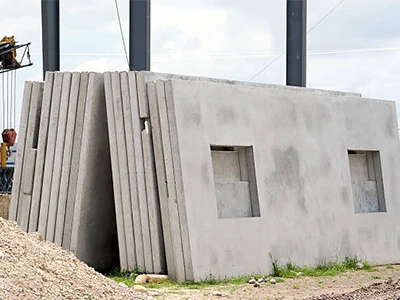







Precast concrete is the term used to explain concrete components that are made off-site in controlled conditions and then delivered to the building site for installation. These components are made in specialist establishments, often known as precast plants, where concrete is poured into molds and allowed to cure in a controlled environment. The precast concrete components are lifted and brought to the construction site for assembly once they have dried.
Precast concrete panels come in various shapes, sizes, and configurations, including walls, floors, beams, columns, and other structural components. These panels are designed and manufactured to meet specific project requirements, offering versatility and flexibility in construction applications.

Advantages of Precast Concrete Panels
Quality Control: Standardised procedures and controlled environments are used in the production of precast concrete panels, guaranteeing constant quality and performance. The regulated production environment reduces the possibility of flaws and irregularities that are frequently present in on-site casting.
Time Efficiency: By manufacturing precast concrete panels simultaneously with on-site preparation, construction time can be greatly decreased. Parallel processes made possible by off-site production enable quicker project completion and shorter construction deadlines.
Cost Savings: Precast concrete panels can save a lot of money overall since they require less labor, waste, and building time, even if they may demand larger initial investments in molds and equipment. Precast production efficiency helps with better project budgeting and cost predictability.
Structural Performance: Precast concrete panels meet or beyond regulatory criteria and requirements in terms of good structural performance and durability. The meticulous finishing and reinforcement made possible by the controlled production process increase the panels' strength and durability.
Design Flexibility: Precast concrete panels can be tailored to fit a range of engineering and architectural requirements, giving designers and builders the freedom to choose how to combine functional needs with aesthetically pleasing designs. Because precast concrete is so versatile, it may be used to create complex shapes, textures, and finishes that meet specific architectural goals.
Sustainability: Because precast concrete panels are long-lasting, reusable, and durable, they are naturally sustainable. Utilizing locally produced goods and effective production methods lessens the environmental effect and carbon footprint even further. Precast concrete panels can also improve a building's thermal insulation and energy efficiency, which enhances the building's overall sustainability performance.
Importance of Lifting Concrete Panels
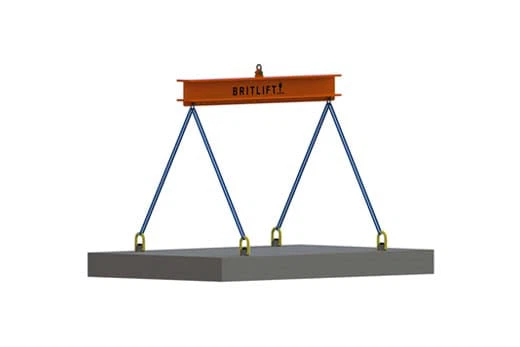
Construction projects can only be successful if concrete panels are handled and installed efficiently. To guarantee smooth and efficient operations, lifting concrete panels requires careful planning, coordination, and the use of the proper lifting equipment.
Time Efficiency: Efficient lifting techniques help expedite the installation process, minimizing project timelines and reducing overall construction costs. By streamlining the handling and placement of concrete panels, construction schedules can be optimized, leading to faster project completion and improved productivity.
Minimization of Disruptions: Proper lifting methods help minimize disruptions to other construction activities and on-site operations. By swiftly and safely maneuvering concrete panels into position, potential delays and bottlenecks can be avoided, maintaining project momentum and workflow efficiency.
Reduction of Labour Intensity: Automated lifting systems and mechanized equipment allow workers to accomplish tasks more safely and with less physical strain, contributing to enhanced productivity and worker well-being. Using effective lifting equipment reduces the labor intensity associated with manual handling and installation of concrete panels.
Preservation of Panel Integrity: When handling and installing concrete panels, proper lifting procedures assist in guarding against damage to the panels. The danger of chips, cracks, and breakages can be reduced by using lifting equipment made especially for precast concrete components, guaranteeing the panels' structural integrity and lifespan.
Safety Considerations During Lifting Operations
Whenever lifting concrete panel procedures are involved, safety must always come first. Precast components' weight and bulk provide serious risks if improperly handled, underscoring the significance of following safety procedures and recommendations.
Equipment Selection and Inspection: All lifting equipment, such as cranes, hoists, slings, and raising attachments, needs to be carefully inspected for flaws, damage, and appropriate operation before any lifting operations begin. To lower the danger of equipment failure and accidents, only approved and well-maintained equipment should be used to raise concrete panels.
Training and Certification: To guarantee proficiency in handling and operating lifting equipment, operators and workers engaged in lifting activities must complete extensive training and certification programs. Appropriate training promotes a culture of safety on the building site by improving knowledge of potential risks, safe lifting techniques, and emergency protocols.
Load Distribution and Calculation: To ascertain the panels' center of gravity and weight distribution, load calculations must be carried out prior to lifting concrete panels. In order to provide balanced and steady lifting and prevent tilting, shifting, or overturning of the panels during hoisting and placement, proper rigging and attachment points must be specified.
Clear Communication and Coordination: During lifting operations, team members must effectively communicate and coordinate with one another. To reduce the chance of mishaps and collisions, lifting personnel and equipment can move more smoothly and synchronized when clear signals, hand gestures, and spoken instructions are used.
Wearing the proper individual protective equipment (PPE), such as steel-toed boots, hard hats, safety gloves, and high-visibility apparel, is required for workers engaged in lifting tasks. By preventing potential risks, including falls, crush injuries, slips, trips, and falls, PPE improves worker safety and lowers the chance of mishaps.
Building teams can guarantee the successful and safe lifting of concrete panels, adding to the overall success and caliber of building projects by emphasizing effective handling and installation practices and abiding by strict safety regulations.
Products for Lifting Concrete Panels

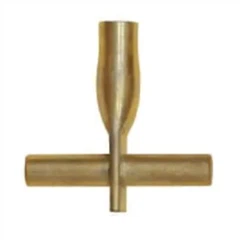
Precast Concrete Lifting Clutches
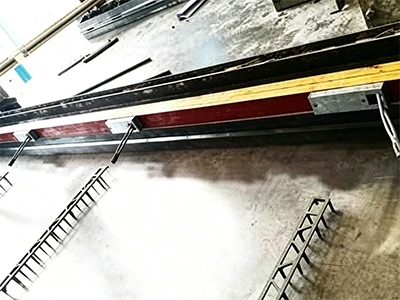
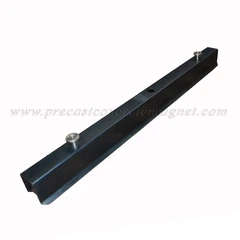
Specialized tools called precast concrete lifting clutches are used to hold precast concrete panels firmly throughout the lifting and installation processes. Usually included in the concrete panel during the casting process, these clutches offer a dependable attachment point for lifting apparatus. Precast lifting clutches are available in a range of sizes and load capabilities to suit varied panel weights and dimensions. Precast concrete elements are handled safely and effectively thanks to their engineering, which is designed to withstand the strains and forces experienced during lifting.
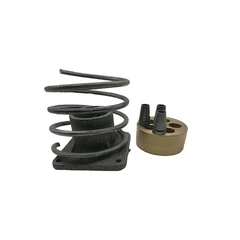
Lifting Anchors and Sockets
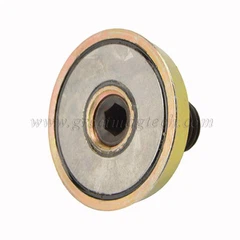
Precast concrete panels are lifted and positioned using lifting equipment, which requires the use of lifting anchors and sockets. Lifting anchors offer a safe attachment point for lifting hooks or chains and are normally chucked into the concrete panel during the manufacturing process. Conversely, sockets are recessed anchor places for raising pins or bars that are placed into precast concrete panels. Lifting anchors and sockets come in a range of configurations and load capacities to meet varying panel sizes and lifting needs.
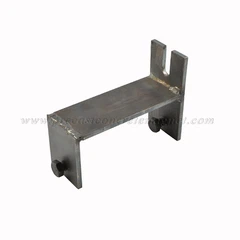
Lifting Loops and Inserts
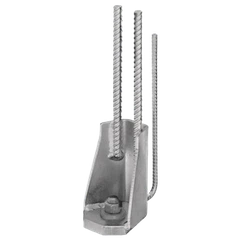
Precast concrete attachments called lifting loops and inserts make it easier to handle and raise precast concrete panels. Pre-installed into the concrete panel during casting, lifting loops offer a sturdy attachment point for lifting cables or slings. For them to survive the rigors of raising operations, high-strength materials like steel or synthetic fibers are usually used. Conversely, lifting inserts are incorporated into the concrete panel and function as strengthened anchor points for the lifting apparatus. To suit varied panel layouts and lifting arrangements, they come in a variety of forms and configurations.
Techniques for Lifting Concrete Panels
Use of Cranes and Hoists
One of the oldest and most popular ways to raise precast concrete panels is to employ cranes and hoists. The panels are lifted into place at the construction site using cranes that are fitted with specific lifting attachments. Depending on the weight and size of the concrete panels that need to be lifted, these cranes can have a range of capacities and sizes. With the help of hoists, exact panel positioning is ensured through controlled raising and lowering operations.
Advantages:
Versatility: A variety of precast concrete panels, such as walls, beams, and slabs, can be lifted using cranes and hoists.
High lifting capacity: Cranes are appropriate for large-scale building projects because they can carry huge concrete panels.
Accessibility: In a variety of construction settings, cranes can install panels quickly and efficiently since they can fit into small areas and get to high places.
Limitations:
Space and access requirements: In crowded or restricted building sites, cranes may be difficult to maneuver and set up in due space.
Cost: Cranes and hoists can be expensive to buy or hire, especially if they are specialized machinery with large lifting capacities.
Safety considerations: To guarantee the safe operation of cranes and hoists and reduce the possibility of accidents or injuries during lifting operations, appropriate training and supervision are crucial.
Vacuum Lifting Systems
Suction cups or pads are used in vacuum lifting systems to establish a vacuum seal between the lifting apparatus and the precast concrete panel. The technique creates a vacuum force that firmly holds the panel in place, enabling precise lifting and adjusting. Systems for Hoover lifting are frequently employed to handle large, flat panels, including slabs and wall panels.
Advantages:
Increased safety: By eliminating the need for manual handling, hoover lifting systems lower the possibility of worker strain or injury.
Accurate positioning: During installation, precise placement and alignment are made possible by the Hoover suction's firm hold on the concrete panel.
Versatility: Vacuum lifting systems are adaptable to raise panels with different dimensions, forms, and surface treatments, which makes them appropriate for a range of building needs.
Limitations:
Compatibility with surfaces: Because Hoover lifting systems depend on airtight seals to sustain suction, they might not be appropriate for rough or porous surfaces.
Maintenance requirements: To guarantee appropriate operation and avoid equipment failure, hoover components must undergo routine inspections and maintenance.
Limitations on load capacity: Lifting exceptionally heavy or irregularly shaped concrete panels may be beyond the scope of vacuum lifting systems, necessitating the use of other lifting techniques in these situations.
Hydraulic Lifting Equipment
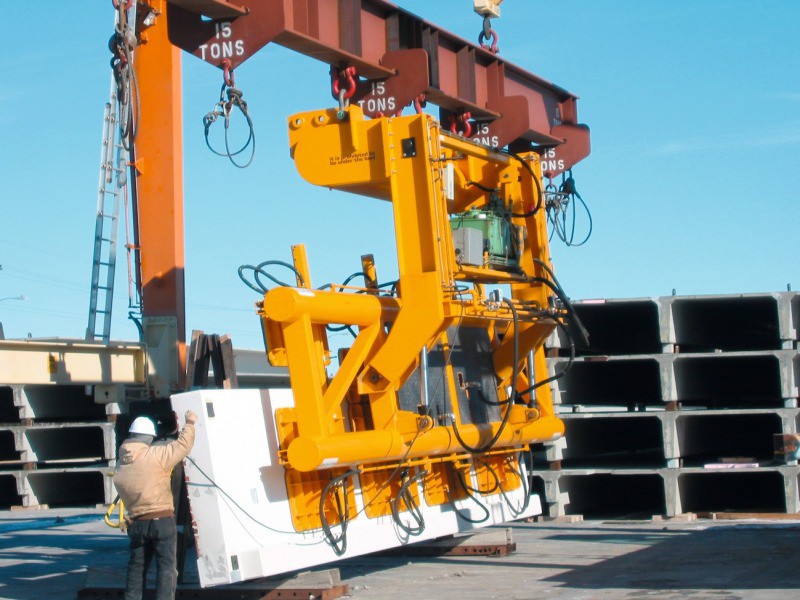
During installation, precast concrete panels are raised and lowered using hydraulic lifting equipment. These systems, which offer exact control over lifting activities, usually comprise hydraulic cylinders, pumps, and control mechanisms. Bridge beams and stadium seating sections are two examples of large, massive concrete components that are frequently lifted by hydraulic lifting machinery.
Advantages:
1. High lifting capacity: Due to its ability to exert significant force, hydraulic systems are appropriate for lifting large, weighty concrete panels and structures.
2. Accurate panel alignment is ensured by smooth and gradual lifting and lowering motions made possible by hydraulic equipment. This results in controlled lifting speed and precision.
3. Adaptability: Hydraulic lifting systems are versatile in construction applications because they can be tailored to suit different panel sizes, forms, and configurations.
Limitations:
1. Complexity: The operation and maintenance of hydraulic lifting equipment demands specific training and knowledge, which adds to the complexity of construction activities.
2. Cost: Hydraulic systems can have high upfront and ongoing maintenance costs, especially for large-scale projects needing several lifting units.
3. Environmental concerns: Hydraulic systems may need hydraulic fluid, which, if impr
operly managed, could present environmental risks. To reduce ecological concerns, proper disposal, and leakage prevention methods are required.
Comparison of Different Lifting Techniques and Equipment
|
Lifting Technique/Equipment |
Advantages |
Limitations |
|
Cranes and Hoists |
- Versatility in lifting various panel types |
- Space and access requirements |
|
- High lifting capacity |
- Cost of equipment and operation |
|
|
- Accessibility in tight spaces |
- Safety considerations |
|
Vacuum Lifting Systems |
- Enhanced safety during lifting operations |
- Compatibility with surface conditions |
|
- Precise positioning and alignment |
- Maintenance requirements |
|
|
- Versatility in lifting panels of different shapes |
- Load capacity limitations |
|
Hydraulic Lifting Equipment |
- High lifting capacity and control |
- Complexity of operation and maintenance |
|
- Controlled lifting speed and precision |
- Initial cost and investment |
|
- Adaptability to various panel sizes and shapes |
- Environmental considerations (fluid usage) |
This table provides a comparison of different lifting techniques and equipment commonly used in precast concrete panel installation. Each technique and equipment type offers distinct advantages and limitations, which should be carefully considered based on project requirements, site conditions, and safety considerations. By evaluating the characteristics and trade-offs of each lifting method, construction professionals can make informed decisions to ensure safe and efficient panel lifting operations.
Considerations for Successful Panel Lifting
Proper Panel Design and Reinforcement
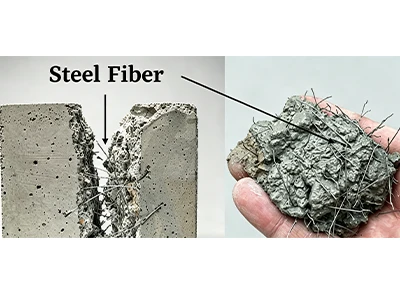
For lifting operations to be successful, the design and reinforcement of precast concrete panels are essential. During the design stage, engineers and designers have to take into account things like panel dimensions, weight distribution, lifting points, and structural integrity. The strength and stability of the panels are increased by proper reinforcing, which includes the use of steel bars or fibers, lowering the possibility of damage or failure during lifting and installation.
Inspection and Maintenance of Lifting Equipment
For safe and effective panel lifting operations, lifting devices like cranes, hoists, vacuum systems, and hydraulic equipment need to be inspected thoroughly to find any wear, defects, or malfunctions that could endanger performance or safety. Repairs, lubrication, and component replacements are just a few of the routine maintenance procedures that help keep lifting equipment operating dependably and extend its lifespan.
Training and Supervision of Personnel
Proper training and supervision of personnel involved in panel lifting activities are critical for maintaining a safe and productive work environment. Operators, riggers, and other workers responsible for handling and maneuvering precast concrete panels must receive comprehensive training on equipment operation, rigging techniques, load capacities, and safety procedures. Supervisors play a key role in overseeing lifting operations, enforcing safety protocols, and providing guidance to ensure adherence to best practices and regulatory standards.
Conclusion
The use of high-quality lifting products is crucial when it comes to precast concrete construction. The core of panel lifting activities is lifting equipment, such as clutches, anchors, sockets, loops, and inserts. Purchasing superior lifting equipment guarantees dependability, sturdiness, and safety when lifting objects. Precast concrete panels can have their integrity compromised by inferior or subpar lifting equipment, which can result in mishaps, hold-ups, and expensive rework. As such, it is essential that construction teams give top priority to obtaining reliable and approved lifting products from dependable vendors.