




What is Precast Concrete?
Precast concrete is concrete cast into reusable molds or "forms" under controlled factory conditions. It is then cured and transported to construction sites for rapid installation. The major differences from conventional concrete are:
Key Features:
Cast offsite allowing quality control
Cured precast units shipped to the site
Faster, cheaper, and higher quality than site-cast concrete
Compared to pouring concrete on-site, precast allows greater monitoring during production and curing to ensure strength, consistency, and finish quality. Modules are fabricated directly to design specifications.
Since precast structural elements arrive on-site fully cured and ready to install, it saves significant construction schedule time versus setting formwork and site-casting from scratch. Along with speeding up project timelines, the reuse of casting forms cuts production costs.
History and Origins:
The first precast concrete patent was awarded in 1901 to John Alexander Brodie in the UK for a "system of constructing concrete buildings"
Over 50 years later, the first major precast structure in the USA was the Walnut Lane Bridge in Philadelphia built in 1950
This pioneering project laid the foundation for the Precast Concrete Institute, established shortly after to guide the rapidly emerging industry
Now that we've covered the background of what is precast concrete, let's look at how it is produced…
How is Precast Concrete Made?
The manufacturing process for precast concrete elements consists of 7 key steps:
1. Design and Planning
Firstly, the requirements of the final concrete structure are determined. The precast fabricator visits the construction site to take critical measurements and assess the terrain where their modules will be installed.
All connecting pieces are carefully planned out. Complete technical drawings indicate the exact shapes and dimensions needed for the project.
2. Setup Molds
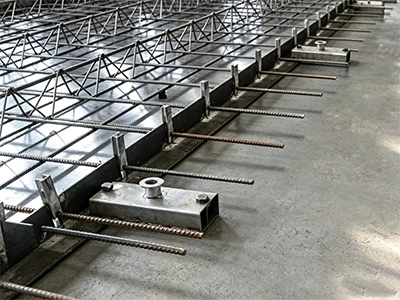
With CAD models, reusable steel or wooden molds are constructed and prepared for concrete pouring. These "forms" are held together firmly using welded frames or bracing.
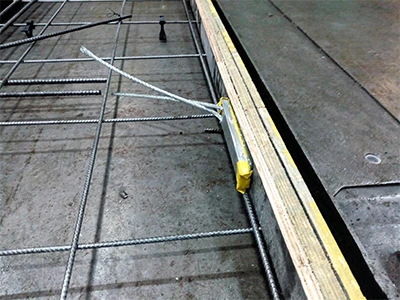
Reinforcing steel bars, commonly known as rebar, are fixed inside the mold cavity before pouring. Rebar adds tensile strength to compensate for concrete's weakness under tension loads.
3. Mix Concrete
A concrete batching plant combines measured amounts of cement, aggregates like gravel and sand, water, and specialized admixtures in a mixer truck.
The ingredients are precision blended to achieve the required concrete strength grade and workability properties for flowing smoothly into every crevice of the molds.
4. Pour Concrete into Molds
Under strict quality control, concrete is carefully poured into precast forms manually or pumped under pressure. Concrete placement must rapidly fill all sections to prevent defects from forming upon curing.
Skilled workers pass vibrator rods through the fresh concrete to remove air pockets. Vibration eliminates voids and ensures proper consolidation.
5. Cure Concrete
Once filled molds sit undisturbed as concrete hydrates and hardens. Precast plants monitor time, temperature, and humidity levels to guarantee strength gain meets specifications during this curing phase.
6. Remove Concrete Elements
After the concrete has hardened sufficiently, the forms are unbolted and mold faces are stripped away revealing finalized precast elements. Products continue gaining full strength after demolding while they await transport.
7. Inspect and Transport
Every single concrete piece goes through a comprehensive quality inspection checking for cracks, honeycombing, or other defects before leaving the plant. Satisfactory precast units are trucked to the construction site for integration into the building or structure.
Types of Precast Concrete Elements
When we think of precast concrete, often simple blocks or paving stones come to mind. However, precast technology can produce incredibly diverse components using specialized molds and casting methods. Anything that can be made with conventional concrete, can be precast. Let's explore the wide range of precast concrete products.
Structural Members
For constructing the structural frames of buildings, precast shines with elements like:
Beams - Inverted T and L-shaped beams support slabs across floors and roofs. Hollow sections optimize weight.
Columns - Square, rectangular, or circular columns in one-story segments. Corbels connect to horizontal members.
Wall Panels - Load-bearing crosswalls form partition and perimeter walls, or clad onto structural frames.
Floor Slabs - Flat slabs, hollow-core planks, and double tees spanning between supports.
Casting these members offsite combines strength, speedy installation, and architectural flexibility.
Architectural Cladding
Beyond structure, decorative precast concrete panels create stunning building facades:
Facade Panels – Thin non-structural cladding with custom shapes, colors, and textures for limitless design freedom. Insulation can be incorporated.
Windows and Doors - Openings pre-formed to enclose the building envelope watertight rapidly.
Architectural cladding must withstand weathering while offering aesthetic appeal. Precast allows factories to balance beauty and durability.
Standard Precast Floor Units
For elevated slabs, the most widely used standard products are:
Hollow-core Slabs – One-way slabs with continuous voids to reduce weight and add space for utilities. Spans up to 4 meters.
Double Tees - Two-way ribbed units transfer higher loads over longer spans exceeding 4 meters. More structural depth than hollow core.
Standard sizing along with pre-installed connections streamline multi-story buildings.
Custom Precast Products
Besides routine structures, one-off precast units customize solutions for specialized needs:
Culverts – Curved tubes channeling water flows under infrastructure. Custom hydraulics analysis shapes sizes and angles.
Retaining Walls – Mechanically stabilized earth (MSE) panels bolster soil stability along cut slopes or excavations.
Sound Barriers – Visually transparent walls blocking highway noise pollution. Unique texture and shape options.
The Possibilities are Endless! Any concrete form you can imagine can be precast from staircases to statues!
In summary, precast can deliver every component, big or small, needed to construct the entire building's structural system plus cladding. And customize anything in between! This versatility makes it an extremely useful construction process.
Benefits of choosing between Concrete
Why should builders and architects specify precast concrete solutions? Using precast concrete elements offers many advantages over traditional poured-in-place concrete:
Speed
Faster installation since structural components are pre-fabricated offsite under controlled conditions
Saves weeks or months of construction scheduling time versus site-casting every element
Quality
Cured in a consistent factory environment unaffected by weather
Higher quality control than concrete poured on an active chaotic site
Predictable concrete strength and durability are not left to chance
Safety
Less labor onsite reduces safety hazards from falls, heavy loads, machinery
Precast concrete arrives cured, ready for rapid "plug and play" installation
Cost Savings
Accelerated construction timelines mean faster occupancy and revenues
Reusable precision molds amortize costs over repeated projects
Less waste from controlled ingredient mixing and cured offcuts
Sustainability
Optimized mixture designs save raw materials like cement and aggregates
Water used for mixing and curing is recycled inside closed-loop plants
Significantly less landfill waste with process efficiency
Flexibility and Customization
Architectural precast facades offer unlimited stylistic options
Nearly any color, texture, shape, or pattern can be produced
Structural reinforcement and connection points are easily integrated
Additionally, the controlled precast environment provides better product consistency and ensures engineering specifications are met the first time. This prevents delays or extra costs from concrete rework.
Precast also minimizes disruptive concrete placement operations onsite. Delivered enclosures enable faster interior work protected from weather.
Applications and Structures Using Precast Concrete
With an understanding of precast concrete and how it outperforms cast-in-place concrete, let's now explore the diverse structural and architectural applications capitalizing on precast benefits.
Buildings
Precast building frames and envelopes accelerate construction across all types of facilities:
Residential Apartments – Multi-unit housing projects maximize livable space using hollow-core plank flooring. Facade panels add visual interest.
Office Towers – Load-bearing exterior cladding panels enable flexible open interiors. High quality and safety standards aid tenant attraction.
Retail Centers – Rapid enclosures allow earlier interior fitouts. Creatively textured exterior accents enhance brand identities.
Schools and Universities – Classrooms, laboratories, and auditoriums benefit from acoustic separation and spanning capabilities.
Key Benefits
Fast project completion meets quick occupancy targets
Thermal mass regulates internal temperatures for efficiency
Sound damping provides quiet environments for concentration
Inherent non-combustibility improves fire safety
Bridges
For crossing highways, rail tracks, and waterways, precast components construct reliable bridges:
Beams – Prestressed concrete girders contribute tensile capacity and distribution of loads.
Girders - Large I-shaped girders are fabricated to fit unique geometries and clearance needs.
Abutments – Mass concrete abutments transfer forces into the earth-retaining approaches.
Arches – Elegant architectural arches deliver aesthetics and strength.
Key Benefits
Minimizes traffic impacts with rapid construction
Quality-controlled precast units ensure exceptional durability over the design life
Stadiums
Large spectator venues leverage precast versatility and scale:
Grandstands – Circular risers maximize sightlines using hollow-core seating planks.
Concourses – Expansive covered walkways facilitate fan circulation beneath stands.
Food Kiosks – Numerous semi-permanent refreshment stands satisfy crowds.
Key Benefits
Fast turnaround races to make event dates
Strong precast pieces safely support significant transient loads
Creative precast options brand team identities
Transportation Infrastructure
Roads and rail networks depend on precast infrastructure:
Sound Barriers – Attractively patterned walls reduce noise pollution adjacent to corridors.
Retaining Walls – Mechanically stabilized earth retaining walls fortify elevated trackbeds allowing efficient use of space near rail routes.
Culverts – Precast box culverts swiftly replace deteriorated stormwater pipes under tracks and roadways with limited disruption.
Key Benefits
Rapid construction minimizes traffic shutdown duration
Durable components withstand heavy use and severe weathering
Mass-produces standardized modular infrastructure
Precast Concrete Repair and Maintenance
Precast concrete structures require minimal maintenance over their design life when installed correctly. However, when issues eventually emerge, here are common repair approaches:
Patching
Minor cracks or spalls need basic patching to restore appearance and prevent water ingress:
Chip damaged areas into square shapes
Fill forms tightly with cementitious grout
Typically only required occasionally for weathering defects
Patching maintains structural capacity while refreshing aesthetic uniformity.
Crack Injection
For fine structural cracks under 0.5 mm wide:
Ensure cracks are free of dust and debris
Pump low-viscosity epoxy resins inside under pressure
Resins soak into micro-cracks and bond both faces back together
Crack injection repairs restore monolithic integrity, preventing cracks from growing further over time.
Connection Repair
If inspectors discover two precast segments misaligned or inadequately connected:
Engineering analysis determines if added reinforcement is required
New connections may be cast adjacent to the original ones
Stiffening plates also reinforce joins
Connection repair prevents expensive dismantling and reconstruction.
With periodic cleaning and planned maintenance, owners enjoy exceptional lifespans from precast assets. Durable factory-made pieces resist weathering deterioration seen in site-cast concrete.
When damage eventually occurs after decades, localized repairs restore functionality affordably while retaining surrounding elements. And if facilities later require changes, altering or adding to existing precast buildings is straightforward.
In summary, precast concrete reduces lifetime maintenance budgets, and facilitates adaptation as needs evolve.
Now let's wrap up with conclusions…
Conclusion
In closing, precast concrete delivers an efficient, sustainable, and cost-effective alternative to traditional on-site casting. Its controlled offsite manufacturing process enables higher quality, faster construction, and more resilient structures than site-poured concrete.
With incredible design flexibility, consistent material properties, and rapid "plug and play" installation, precast streamlines construction across many buildings along with transportation and civic infrastructure projects.
Choosing precast translates directly into accelerated project delivery, risk reduction, capital savings, and greater overall value.
As innovative precast technologies, specialized equipment, and sophisticated techniques continue advancing year after year, expect its popularity and market share to grow even further. We've only begun to scratch the surface of the potential of precast concrete!
Here are 5 frequently asked questions about precast concrete to conclude the article:
FAQs
1. What is the cost of precast concrete?
While precast concrete does require greater initial investment into molds and production equipment, accelerated construction schedules and reuse of forms on multiple projects offer cost savings that offset higher material expenses.
2. How long does precast concrete last?
Thanks to optimized curing and precision manufacturing, properly installed precast concrete matches cast-in-place concrete lasting 50-100 years. Maintenance keeps it going even longer.
3. Can you pour concrete in cold weather?
Pouring concrete below 5°C risks strength loss and cracking. Precast plants maintain 20°C, allowing year-round production that is immune to weather delays.
4. Is precast concrete earthquake/fireproof?
Reinforcing steel and confinement details enhance resilience under seismic loads. And concrete itself already possesses excellent non-combustibility.
5. Can precast concrete be repaired?
Unlike traditional concrete, localized precast damage can affordably utilize special epoxies and connections to patch components while retaining surrounding assets.