



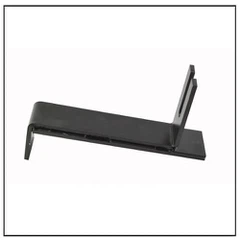


If you want to enhance efficiency, safety, and precision in your precast concrete projects, you've come to the right place. In this post, we'll explore the game-changing innovation of precast concrete magnets.
These powerful magnets can truly elevate your construction projects to new heights! We'll understand what they are, their various types, factors for selection, applications, and benefits. So, let's get started, shall we?
What Are Precast Concrete Magnets?
Precast concrete magnets are versatile specialty magnets designed specifically for concrete construction requirements. They usually have a durable steel housing encasing a strong neodymium magnet at the core.
Precast magnets' key purpose is to securely hold formwork and other precast elements through magnetic force during concrete casting and post-tensioning processes. This facilitates quicker, consistent, and safer installation and removal of formwork.
Types of Precast Concrete Magnets
The precast concrete construction industry employs specialty magnets to streamline processes and enhance structural durability. Let's look at the most common varieties and their attributes:
Shuttering Magnets
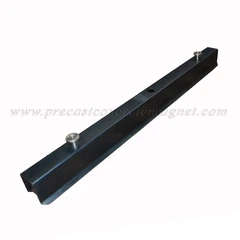
Shuttering magnets power the heavy-duty formwork operations in producing walls, beams, columns, and floor slabs. Also called box magnets, they comprise high-grade neodymium magnets fitted within thick steel casings using non-corrosive stainless steel screws.
The durable casing lends great mechanical strength to resist concrete pressures, while the magnet provides exceptional magnetic bonding to fasten formwork securely. Shuttering magnets are available in various dimensions, magnetic strengths, and safety mechanisms to suit project requirements.

Magnetic Chamfers
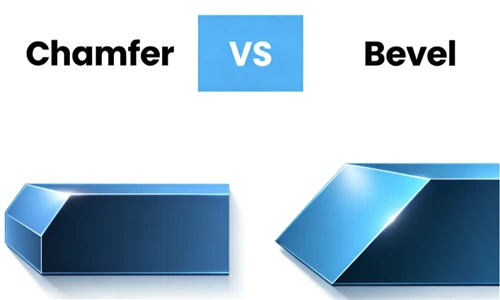
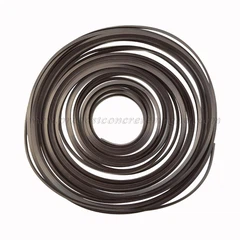
Magnetic chamfers enable quick, consistent placement of beveled edges on concrete modules to eliminate sharp corners. These chamfer strips contain flexible rubber-encased magnets that shape and bend as required.
On-site workers place the strips on formwork to create perfect decorative concrete patterns. The ease of fixing chamfers magnetically prevents costly reconstruction of incorrectly angled edges.

Magnetic Recess Formers
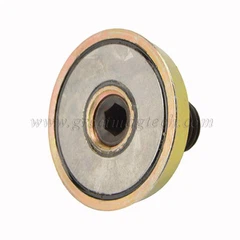
Recess formers enhance construction efficiency by embedding conduits, pipes, and other fixtures within concrete elements. Powerful cylindrically shaped neodymium magnets securely hold the formers on formwork walls.
Once set in the formwork, the recess former is encased within the casted slab or wall panel. Its removal later reveals accurately shaped recesses for seamless fixture integration without additional drilling or refitting.

Magnetic Formwork Systems
Magnetic formwork systems provide expansive, versatile solutions for diverse precast operations. Here, tailor-made shuttering magnet sets are supplemented with aligned structural steel accessories like rails, frames, and bracings featuring compatible embedded steel plates.
The complete system assembly helps optimize workflow through rapid mule-free positioning/removal of formwork. Individual magnet capacity also reduces on-site safety hazards. Such comprehensive systems prove invaluable for mass housing projects involving multiple formwork rotations.

Vital Considerations For Choosing Magnets
Selecting optimized magnets is crucial for high-quality, efficient precast concrete outcomes. Let's explore some vital technical and operational considerations:
Load-Bearing Ability
The magnet's load-bearing capacity is paramount - it must easily exceed the estimated weight of the concrete modules and formwork. Adequate strength prevents magnets from tearing off under pressure during casting, post-tensioning, or de-moulding.
For instance, magnetic lifting anchors holding 20-30-ton concrete elements would need high tensile capacities. Load rating charts from reputed magnet manufacturers prove helpful reference points.
Magnet Strength & Design
Magnetic power impacts formwork bonding reliability. Brittle magnets unable to withstand concrete mass vibrations or shear stresses lead to cracked finishes or alignment defects.
The magnet grade (N52), size (surface area), and shape (circular, rectangular, etc.) are combined to determine the effective flux density for formwork loads. Stronger neodymium magnets have higher Br (remnant flux density) values, putting greater magnetic energy at your disposal!
Customized magnetic circuit designs maximize contact effectiveness for heavy-duty applications like high-rise cores or long-span girder formworks.
Compatibility With Formwork
Dimensional coordination ensures firm, flush connections between magnets and formwork. Minor size mismatches greatly hamper stability.
Standard magnet dimensions suit most formwork steel plates. Custom shapes/sizes are recommended for unique mold shapes to prevent air gaps. Strong magnetic attraction forces also risk denting thinner, non-ferrous formwork.
Using suitable non-magnetic spacers protects aesthetic quality. Precision-welded anchors provide reliable attachment points.
Environmental Protection
Consider operational climate, ambient temperatures, and exposure to water or chemicals. Unprotected magnets corrode over time, losing magnetism and load capacity.
Select durable stainless steel or nickel coatings for longevity. Epoxy seals enhance water resistance. Maximum operating temperatures vary across magnet specifications to suit regional conditions.
These design choices help prolong magnet field strength for repeated reuse over the years.
Getting magnet selection right is pivotal to precast quality, safety, and productivity. For further guidance, connect with our engineering team - we are always happy to offer consultations tailored to your upcoming project!
Applications in Construction Projects
Let's explore how precast concrete magnets are revolutionizing workflows across residential, commercial, and infrastructure projects:
Optimizing Precast Wall & Panel Production
Prefabricated wall and floor systems are gaining immense traction, especially in urban housing, owing to magnet-enabled assembly efficiencies.
Powerful shuttering magnets securely hold stacked formwork in place on casting beds, accelerating multi-panel production cycles. Finely calibrated control over positioning enhances dimensional accuracy and finish quality.
Magnetic chamfers lend aesthetic appeal, while customized recess formers allow rapid embedding of conduits and fixtures. Overall, enhanced precision with reduced manual labor boosts cost competitiveness.
Sky City in China set a record for erecting 57-story modular concrete cores in 19 days using magnetic wall formwork! In India, too, magnets are driving prefab adoption for future smart cities.
Streamlining Bridge & Infrastructure Construction
From soaring metro viaducts to underground tunnels, infrastructure magnifies construction complexity.
Heavy precast components like wing walls, piers, girders, and parapets require stringent tolerance levels across assembly stages. Custom-fabricated lifting anchors safely bear gigantic 30-40-ton concrete loads.
Standardized shuttering systems minimize on-site formwork efforts for rapid span-by-span progress. Site casting enables monolithic bridge integrity.
In post-tensioning operations, durable reusable, magnetic wedges provide vibration-resistant high-capacity hold for stressing tendons until grout hardens. QC inspection is easier, too.
Thus, magnetic solutions effectively tackle massive infrastructure projects' elevated safety and quality challenges.
Enabling Safe, Rapid Tilt-Up Processes
Tilt-up technology expands housing opportunities through the simplified on-site casting of concrete walls in horizontal molds, which are then titled vertically into position.
However, tilting enormous wall sections safely and accurately through 180 degrees is hugely challenging! Specially engineered reusable tilting anchors safely grip panels weighing thousands of tons using pure magnetic power.
Controlled rotation speed prevents cracks or warps. The anchors are relocated down the wall line after each cycle. Thus, with concrete magnets easing a major workflow pain point, the Tilt-up method's cost savings and design flexibility are irresistible!
In summary, purpose-built magnets effectively address specific construction issues across domains, enhancing productivity and quality metrics. Their universal relevance provides ample growth runways for this industry as we advance.
Conclusion
Through this post, we've understood the problems plaguing conventional concrete construction and how precast concrete magnets present an efficient, safe, and creative solution.
These revolutionary magnets, whether robust shuttering magnets, flexible chamfer strips, or versatile recess formers, greatly simplify and streamline formwork processes. They enable rapid positioning and removal of formwork with enhanced dimensional precision and stability.
Factors like load-bearing capacity, magnet strength, system compatibility, and climate resilience are key in selecting optimized magnets for specific project environments and requirements. Customization enhances effectiveness further.
Across residential, commercial, and infrastructure domains, precast magnets are proving invaluable through their numerous benefits:
Accelerating speed to market
Enhancing labor productivity
Improving concrete finish and structural durability
Expanding design flexibility
Easing inspection and repairs
Promoting affordability
Ensuring worker safety
Their widespread impact confirms that precast concrete magnets are truly a game-changing construction innovation. One that delivers maximized outcomes through sheer magnetic power!
With this, we come to the end of our informative exploration of precast magnets. Please share your feedback and queries in the comments section.
Frequently Asked Questions About Precast Concrete Magnets:
1. What is the maximum weight that precast magnets can withstand?
The load-bearing capacity of precast magnets varies greatly depending on grade, size, and design. Shuttering magnets typically handle 100kg to over 2000kg based on the number and size of magnets encased.
2. How to ensure the durability of precast magnets over repeated uses?
Select magnet grade, coating, and casing material considering operating temperatures, humidity, and corrosion possibility. Proper care in handling and storage preserves field strength for consistent performance.
3. What magnet thickness should be used for tilt-up projects?
As tilt-up magnets undergo significant shear loads during controlled panel rotation, thicker magnet blocks evenly distribute stresses, preventing cracks or dislodgement. 20 to 30 mm thickness is recommended for wall panel widths up to 5m.
4. Can the chamfer profile and reveal depth be adjusted on-site using precast magnets?
Magnetic chamfers and recess formers allow easy customization of dimensions like chamfer edge angle or reveal depth on-site through flexible rubber casings without requiring extra cast in site preparation.
5. Why is certified custom precast magnet design vital for infrastructure safety?
Each infrastructure project features unique load, vibrational, and environmental considerations requiring tailored magnetic solutions vetted through design analysis, prototyping, and testing to meet stringent qu