





What Is A Precast Concrete Frame?
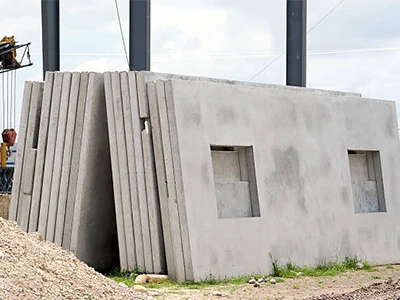
The precast concrete frame is a structural system where key load-bearing elements- typically columns, beams, and sometimes floor units-are manufactured off-site in a controlled plant environment and then transported to the site for erection and connection.
Compared with cast-in-place frames, precast frames aim to deliver faster schedules, more consistent quality, and reduced on-site labor, while requiring careful planning for connections, tolerances, lifting, and transport.
Types Of Precast Concrete Frames Are Buildings And Structures
Precast concrete frames are typically manufactured in a prefabrication plant before the main construction begins. This includes precast beams, columns (and some floor slabs or embedded parts at joints), which are formed and cured in a factory environment and undergo necessary quality inspections before leaving the factory. These components are then transported to the construction site and assembled and connected in a predetermined sequence using hoisting equipment to form a load-bearing frame system quickly.
In engineering practice, precast concrete frames are not limited to a single form. Depending on the component combination method, joint stiffness requirements, and lateral stability strategies, common systems include skeleton frames, H-frames, and portal frames. Different frame types have different focuses in terms of bending moment distribution, connection joint construction, transportation and hoisting difficulty, and applicable building scenarios. Selection typically requires comprehensive consideration of the project's span and height, wind/seismic effects, on-site installation conditions, and construction schedule requirements.

In precast frames, splice joints should ideally be placed in areas of minimum bending moment (or close to areas with low bending moment). The logic is straightforward: lower bending requirements at the joints, easier joint design, lower assembly risks, and less likelihood of cracking, excessive rotation, or deformation during use.
Skeleton:
For skeleton frames, the "most rational" placement of joints is usually in areas of low bending moment (e.g., near inflection points), minimizing the bending moment load on the joints.
However, in actual engineering, to facilitate precast production and on-site installation, Skeleton frame splice joints are often placed close to beam-column joint areas. The main reasons include: simpler mold and production organization, reducing component types and tooling adjustments; more stable component hoisting and flipping, facilitating transportation and stacking; easier on-site alignment, improving installation efficiency; and easier control of component length and transportation conditions.

Why The Bending Moment Diagram Changes:
Once splice joints are introduced, the internal force distribution of the precast skeleton frame may differ from that of the monolithic cast-in-place "field frame." This is because joints are typically analyzed as approximately pinned (although bending-resistant/rigid "torque nodes" can also be achieved through special construction).
Under vertical loads (gravity), hinges reduce structural continuity, making it easier for large positive bending moments (downward deflection) to occur at the mid-span of beams, while column bending moments are generally much smaller than in rigid frames.
Under horizontal loads (wind/earthquake), column bending moments tend to increase significantly, and the lateral resistance of the frame relies more on the columns and bracing/core tubes to distribute the bending moment rather than through the continuous stress on the beams.

Under horizontal loads (such as wind loads or seismic action), column bending moments typically increase significantly. For skeleton frames, because many connections are treated as approximately hinged in analysis and design, the bending load transfer capacity of beam-column joints is limited, making it difficult for the frame as a whole to achieve the continuous "frame moment transfer" seen in rigid frames. Therefore, the increased bending moment tends to concentrate more in the column and joint areas, rather than being effectively distributed within the beams as in a rigid frame.
Skeleton frames are widely used in the UK, commonly found in high-rise commercial buildings, office buildings, and schools, due to their significant advantages in industrialized production and on-site assembly.
A core advantage of the skeleton frame system is that the frame can be assembled from a series of standardized, independent components (columns, beams, floor slabs, etc.). This modular approach typically brings:
A degree of design and planning flexibility (components can be repeated, production scheduling is easier)
Easier manufacturing (factory casting, reinforcement layout, and quality control are more stable)
Easier transportation and hoisting (the dimensions of components are more controllable after disassembly)
In other words, while Skeleton frames can be very efficient, they often rely on independent lateral resistance systems to control lateral displacement and stability. This also explains why, in terms of lateral resistance and overall stiffness, they generally do not possess the inherent flexibility and capability of fully rigid frames.

H Frame:
H-frame prefabricated structures are a common type of prefabricated system. In terms of vertical load transfer, their bending moment distribution characteristics are often similar to those of monolithic cast-in-place "field frames." However, to ensure the feasibility of prefabrication and on-site hoisting, the joints between components are usually designed as approximately hinged or semi-pinned connections to control rotation and assembly difficulty, unless specifically designed as rigid bending joints.
In practical engineering, H-frames are more commonly used as outer (outer frame) systems rather than within inner frames. This is because outer frames more easily form clear lateral force transfer paths and can work in conjunction with floor slabs (horizontally rigid floor slabs) to provide peripheral support and lateral displacement control. They also offer: clearer wind load transfer paths; improved overall stability organization; and easier control of lateral deformation of the building's outer perimeter.
Core Advantages
A significant advantage of H-frames is that beams and columns can work as a more "cooperative" system, resulting in:
Thinner structural height (less structural depth): This facilitates control over floor height and increases headroom.
Higher efficiency in vertical load transfer.
The frame itself can contribute to bearing some horizontal loads, allowing wind loads to be transferred to the foundation through the frame and joints.
Main Disadvantages
Beam and column components may be larger, increasing the difficulty of manufacturing, hoisting, and transportation (route restrictions, crane capacity, etc., can all become constraints).
Joint assembly requires higher precision, typically demanding stricter tolerance control; otherwise, alignment difficulties, installation delays, or additional stress on joints can easily occur.
Joints bear both vertical loads and lateral resistance; therefore, connection construction and acceptance (steel plates, sleeve grouting, support zones, etc.) are often the concentration points of cost and risk.

Portal Framework:
Precast portal frames are structurally similar to H-frames, and their bending moment distribution can, under certain conditions, approach that of a cast-in-place field frame. Whether they can achieve a "near-rigid frame" performance depends crucially on whether the beam-column joints are designed and constructed for bending resistance (rigid or semi-rigid). Many portal systems themselves bear the primary lateral resistance, making joint performance even more critical.
Common portal frame forms in engineering fall into two main categories:
Flat Portal: Rarely seen with a shallow or nearly horizontal roof slope;
Pitched Portal: More common, facilitating drainage and increasing headroom, suitable for industrial buildings.
Portal frames are highly dependent on beam-column joints. Special attention needs to be paid to the bending joints (torque/moment joints) and related construction details at beam-column junctions:
Joint type (hinged/semi-rigid/rigid) and rotation control
Construction methods such as continuous reinforcement, embedded parts, connecting plates, bolts, or sleeve grouting
Installation tolerances and alignment accuracy (affecting stress and assembly efficiency)
Temporary supports and stabilization measures during installation (especially important before frame closure)
Scope and limitations:
Precast portal frames are generally more suitable for single-story or height-limited buildings. As building height increases and lateral resistance requirements rise, the system may require additional stabilizing components (such as bracing, shear walls, or core tubes), and the difficulty of joint design and construction acceptance will increase accordingly.

FAQ
Q: What is a precast concrete frame?
A: A precast concrete frame refers to a system where the main load-bearing components (usually precast beams and columns, and sometimes floor slabs) are prefabricated in a factory, transported to the site, and then hoisted and connected to form a complete frame system.
Q: What are the main types of precast concrete frames?
A: Common types include skeleton frames, H-frames, and portal frames. The main differences lie in the stress distribution at joints, bending moment distribution, and resistance to horizontal loads such as wind and earthquakes.
Q: Why are joints often placed near minimum bending moment zones?
A: Placing joints near the minimum bending moment zone reduces the bending requirements at the joints, makes the joints easier to design and assemble, and reduces the risk of cracking and rotation.
Q: Why do skeleton frames behave differently from cast-in-place frames?
A: Skeleton frames often have joints treated as approximately hinged, reducing structural continuity. Under vertical loads, beams are more prone to larger mid-span positive bending moments, while column bending moments are typically smaller than those of monolithic cast-in-place frames.
Q: How do precast frames resist wind or seismic (lateral) loads?
A: Under horizontal loads, column bending moments increase. When joints are not perfectly rigid, precast frames typically rely on bracing, shear walls, or a core tube for lateral stability.
Q: What is the advantage of an H-frame?
A: H-frames are often used for external bracing, enabling the transfer of lateral forces through the frame; when components are designed collaboratively, a smaller structural height (thinner frame) can be achieved, making them more space-efficient.
Q: What are portal frames best used for?
A: Precast portal frames are most commonly used in single-story or high-limit, large-span buildings such as industrial plants, warehouses, and logistics centers, characterized by fast construction and good economic efficiency.
Q: What are the biggest risks in precast concrete frame projects?
A: The risks of precast frames often lie in connections and tolerance control, such as misalignment, inadequate grouting/sealing, and insufficient temporary support during installation, rather than problems with the concrete itself.