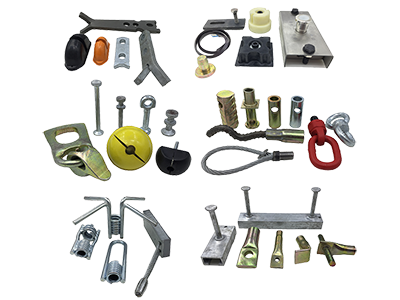


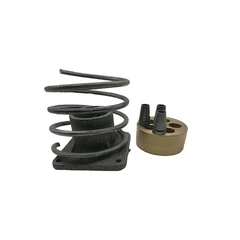

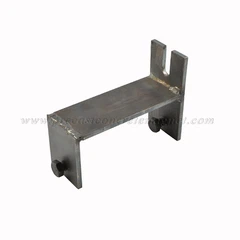
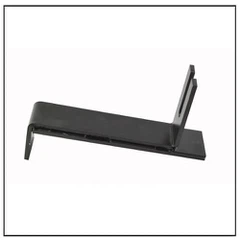


Concrete spacers are crucial for ensuring that the steel bars in concrete structures are always precisely positioned, neither shifting nor exposed. These seemingly insignificant elements play a crucial role in ensuring the thickness of the steel cover, enhancing the durability and safety of the structure.
Without these pads, the steel bars could be prematurely exposed to environmental influences, leading to corrosion and ultimately, cracks in the concrete and even structural failure. They not only extend the lifespan of buildings but also help projects better comply with relevant codes and standards while maintaining cost-effectiveness and construction efficiency.
Definition and Use of Concrete Spacers
Concrete spacers are small components used to ensure the correct positioning of rebar in reinforced concrete construction. Their primary function is to maintain a uniform concrete cover between the rebar and the surface.
Purposes:
Maintaining Consistency: Spacers hold the rebar in place during the pouring process, ensuring the specified concrete cover depth is achieved throughout the concrete structure.
Preventing Corrosion and Damage: Spacers prevent moisture, chemicals, and air from penetrating, reducing the risk of corrosion and cracking.
Improving Quality: Precise placement of rebar results in a stronger and more resilient finished concrete component.

Types of Concrete Spacers
Concrete spacers come in a variety of forms, each designed to meet different site conditions and structural requirements. Common types include plastic, fiber-reinforced, steel, and custom specialty shapes.
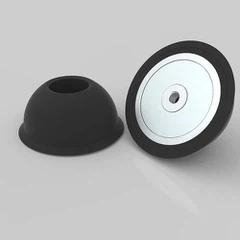
Plastic pads are widely used due to their lightweight design, affordability, and ease of handling. They are ideal for residential and commercial projects, but may not be as durable under heavy loads.
Fiber-reinforced pads are reinforced with fibers for added strength and are ideal for demanding projects such as bridges or tunnels that require high durability and resilience.
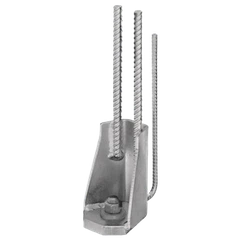
Steel pads, while less common, are sometimes used for specialized applications. However, they require careful handling to avoid corrosion risks.
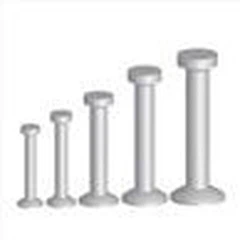
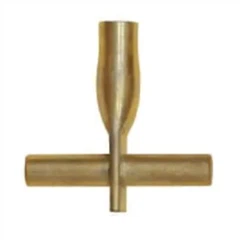
Specialty pads are available in custom shapes such as chairs, blocks, or wheels to accommodate complex rebar layouts or precast concrete requirements.

Selecting Concrete Spacer Height
The height of concrete spacers directly determines the thickness of the concrete cover applied to the rebar and is a critical factor in ensuring structural durability and safety. The minimum height of the spacer should be equal to its own dimensions to ensure the required concrete cover is applied to the rebar.
Spacers support the rebar, and their actual height varies depending on the installation location. Designed rebar cover thickness varies across components such as slabs, beams, columns, and walls, making selecting the appropriate spacer height crucial. For example, a residential slab might have a cover of 15–20 mm, a beam 25 mm, and a column 30 mm, while specialized projects such as bridges or tunnels may require 40–75 mm. Therefore, spacer size and height are key specification parameters during ordering and construction.
Benefits of Using Concrete Spacers
Precise Rebar Positioning: Spacers hold rebar in place, ensuring uniform concrete cover, which is crucial for structural integrity, load-bearing capacity, and stable concrete performance.
Reduced Corrosion Risk: Spacers protect rebar from moisture, air, and chemical attack. This significantly reduces the likelihood of rust, cracking, and premature structural failure.
Increased Construction Efficiency: Proper use of spacers effectively reduces the number of times workers must manually adjust rebar, reducing rework and accelerating construction schedules.
Prefabrication and Automation Friendly: Modern construction often relies on prefabrication systems and automated equipment. Spacers seamlessly integrate with these methods, ensuring stability and accuracy during the pouring process.

How to Choose the Right Concrete Spacer
Selecting the right concrete spacers is crucial for ensuring accurate rebar positioning, thereby reducing the risk of cracking, corrosion, and long-term structural damage. Key factors to consider include:
Rebar Size and Spacing Requirements
For residential slabs with a rebar diameter of 6-12 mm and spacing of 150-200 mm, lightweight rebar can be used; for residential slabs with a rebar diameter of 6-12 mm and spacing of 150-200 mm, lightweight rebar (Lig 20×20 mm) can be used. For beams and columns with a main rebar diameter ≥ 16 mm and interlayer spacing ≥ 100 mm, use 30×30 mm high-compressive-strength concrete spacers (≥ 50 MPa) to prevent displacement under pumping pressure. It is important to select spacers that match the rebar size and spacing to avoid displacement during pouring.
Loading and Structural Conditions
For bridges and tunnels (design grade ≥ C50/60, freeze-thaw grade F3, or chloride environment grade XD3), the spacers should have a compressive strength of ≥ 60 MPa and a water absorption of ≤ 5%. For residential slabs (exposure class XC1), a strength of 25 MPa is sufficient. Heavy-duty projects require higher durability, while light-duty residential applications can use standard-grade spacers.
Material Selection (Plastic, Concrete, or Metal)
Plastic: Best suited for dry indoor environments; yield temperature ≥ 90°C, UV stabilizer content ≥ 0.3%.
Concrete: Should match the parent concrete mix, have a bond coefficient ≥ 0.6, and a fire resistance rating of REI 120+.
Metal: Limited to special circumstances (e.g., electromagnetic shielding or T > 200°C), AISI 316L stainless steel is required, with a steel bar potential difference ≤ 50 mV to prevent galvanic corrosion.
Comply with Standards
Always ensure your gaskets comply with national and international standards. Non-compliant products may save upfront costs, but they can lead to safety risks and expensive rework later. Certified gaskets ensure reliability and peace of mind.
Conclusion
Concrete spacers are small but essential components that ensure the durability, safety, and performance of reinforced concrete structures. By maintaining the correct distance between rebar and the concrete surface, they prevent corrosion, reduce structural defects, and improve overall quality. Choosing the right type of spacer, based on material, size, and application, can save time, reduce costs, and ensure long-lasting construction. From residential buildings to large infrastructure projects, using concrete spacers correctly is a simple step that guarantees the reliability and safety of every concrete installation. rebar and the concrete surface, preventing corrosion, reducing structural defects, and improving overall quality. Choosing the right type of spacer, based on material, size, and application, can save time, reduce costs, and ensure long-lasting construction. From residential buildings to large infrastructure projects, using concrete spacers correctly is a simple step that guarantees the reliability and safrebar and the concrete surface, they prevent corrosion, reduce structural defects, and improve overall quality.