



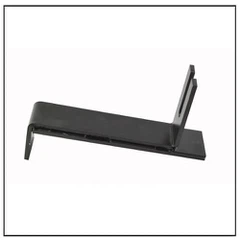


Infrastructure companies leverage decades of experience and passion for improving infrastructure projects with a nationwide network of precast facilities.
Precast concrete panels are used in various prefabricated structural components, including walls, roofs, floors, beams, staircases, and tunnels. The steel acts as an alternative option. However, concrete serves as an economical and practical choice.
Precast concrete is prepared, cast, cured, and finished in adjustable molds in an optimized factory environment. These panels have a
tough exterior resisting all kinds of weather conditions. It also combines different elements to form a complete structure.
In this blog, you'll gain first-hand experience in precast concrete panel manufacturing.
Introduction Of Precast Concrete
Precast concrete panels are concrete structural elements made of cement, reinforced with three-millimeter galvanized wire on both sides to form a pre-shaped mold. Curing the mold in an appropriate environment creates a durable concrete panel. Thus, the mold is then removed for reuse.
Precast concrete is versatile, affordable, and efficient, allowing buildings to withstand for years. Precast concrete factories use concrete panels to construct buildings, acting as a structure or cladding.

Types of Panels
There are three types of panels:
● Full-sandwich panels
● Half-sandwich panels
● Hollow core panels
Full-sandwich Panels
Panels with dual layers of precast concrete sandwich an insulating core material (polystyrene or polyurethane foam). Full-sandwich panels provide thermal and sound insulation, making it sustainable. Also, it customizes infrastructure to enhance aesthetics and functionality.
Half-sandwich Panels
Panels with a single concrete layer require additional insulation along with finishing. It's an exterior wall panel bearing a concrete slab and windproof.
Hollow Core Panels
Hollow core panels cover roofs, floors, and walls as the core serves as a ventilation or heating duct. These panels have a lightweight framework and efficient design.
Precast Concrete Panels Manufacturing Methods
Any of the two methods could be used for precast panel construction:
● Stand Method
● Flow Method
Stand Method
Stationary mold in which various manufacturing processes are carried out. There's no mold movement while all the placement, curing, and finishing stages occur simultaneously.
Flow Method
Precast units undergo movement from one place to another, with various processes moving in a cyclic technological order.
Precast Concrete Manufacturing Stages
Precast concrete panels come in various sizes, shapes, modes, and finishes. Engineers prepare precast concrete in a controlled environment and pour it onsite using advanced techniques.
Then they cure and vibrate in adjustable and reusable molds, finish panels, and transport to construction sites through mobile cranes.

Stage One: Engineering
Every product is engineered using the latest design tools and detailed drawings through a 3D computer-aided design process. When the design drawings have been approved, these are sent to the constructors to monitor the production.
Stage Two: Concrete Mixing
Raw materials, including rock and sand, form limestone minerals. Beaders whip the ingredients with the cement and chemical additives in a blend mixer. It turns into a thick, gritty mixture.
Stage Three: Mold or Form Preparation
Before casting, the crew uses different shapes to imprint particular shapes in the molds. The crew secures any openings or cutouts in the casting form. Then apply release spray on the casting form and the shapes to easily lift the product from the casting form.
Afterward, high-strength steel cables are strung throughout the casting form. Steel cables pull each other with a hydraulic device to a specific tension.
Stage Four: Manufacturing Reinforcement Cage
The manufacturing process begins with manufacturing and assembling the rebar cage. Engineers select steel and pass them to the storage racks for cutting and bending. These rebars are cut in exact dimensions to fit the design requirements.
Secondly, they assemble bars and tie them together. Rebar rods bend into loops linking with one another to form long cages, reinforcement cages. Welded wire cages are cut to the desired size to insert into the casting form.
Stage Five: Pre-pour Inspection
After reinforcing the assembly, cleaning the forum comes next. The mobile crane picks and places the cage in the casting form's core to stabilize the reinforcing cage for transportation to the forum.
In addition, quality control technicians perform a pre-pour inspection process to approve the drawings.
Stage Six: Concrete Placement
Steel keeps the wall concrete; it expands and contracts as the weather changes. Concrete spreads over the entire form and cage, leveling them called screed forms, a single-side sandwich.
In addition, placing rigid foam insulation at the center of the sandwich. Foam insulation is studded with protrusions to secure the concrete. Another layer of steel-reinforced concrete is spread over the casting form (completing a dual sandwich).
On the other hand, factories have a concrete laboratory to conduct routine raw materials testing and control in exact quantities for each batch.
When creating high quantities of self-consolidating concrete, lab technicians collect mixed samples to test the compression strength and verify the quality of each batch. This concrete undergoes various tests, such as the spread test, to check the aggregation has proper flow and doesn't segregate.
Furthermore, the approved batch is stored in buckets and transported to the casting form through cranes on the production floor. Concrete is allowed to flow without entrapped air voids.
Stage Seven: Vibrating for Concrete Compaction
When optimum density and desired strength of concrete are obtained, pokers or external vibrators compact concrete through high frequency.
Stage Eight: Curing & Finishing
Placing the concrete on the form to start the curing and finishing process. It involves tarping products overnight to capture heat from the hydration process. As the manufacturing area has a controlled environment, thus it helps to cure the full design strength.
After 12 hours, the concrete structure is stable enough to handle. Workers sandblast on the exterior surfaces removing the cement to expose the aggregate, creating a decorative band.
Stage Nine: Stripping
The stripping process begins when technicians approve that the product has reached the desired strip strength of 2500 to 3000 psi.
During stripping, technicians open the outer jacket, collapse the inner core, attach the lifting devices, and remove the product from the casting form.
Stage Ten: Post-pour Inspection
After removing the product, its cleaning and post-pour inspection ensure all the design dimensions have been maintained, and no visual defect is visible. It's then labeled and transported to yards for storage on proper dunnage until a customer demands the product.
When the customer is ready to receive the product, it's loaded on a truck and tied properly for shipment and delivery to the project site.
Stage Eleven: Overall Management
Carry out the following aspects to run an entire production unit properly:
● Employ a cyclic technological method to maintain speed and economy
● Improve mechanization to enhance quality and productivity
● Use quality elements for optimum production
● Use methods to minimize interruptions, such as harsh weather conditions
● Improve worker's working conditions
Materials Used In Precast Concrete
Materials in the precast concrete manufacturing process include:
Cement
It's the main ingredient of the precast concrete. The National Precast Concrete Association (NPCA) has set the quality that cement factories must employ in production. Manufacturers use Ordinary Portland Cement grades 43 and 53 in precast concrete.
Water
Water's ratio decides the superiority of precast concrete. Pure water with zero impurities forms a durable material; otherwise, it degrades the mixture.
Aggregate
The type of aggregate is specific for precast concrete structures. Project managers decide the aggregate based on durability, strength, color, and texture.
Extra materials contribute to maintaining strength:
Crystalline Waterproofing Admixtures
These mixtures don't allow water to damage the precast panel. It's used to construct walls, roofs, and septic tanks.
Oxide
When precast concrete panels are ready for installation, oxide pigments produce different colors in the product.
Steel tendons
Contamination-free tendons create a strong adhesion between the precast concrete and steel. These reinforcements should be coated to prevent metal corrosion.
Reinforcement bars
The concrete's spine strengthens the product to withstand harsh conditions. These are available in different designs, depending on the structure.
Joints
These add force to the structural components to maintain precast concrete stability and strength.
Fibers
Fibers, such as steel or polymeric fibers, act as reinforcements to maintain the precast concrete's strength.
Lightweight aggregate
When consumers require light building structures, lightweight aggregate reduces the density and overall weight of the concrete.
Epoxy grouts
Epoxy adds high-profile strength to precast concrete. As properties of epoxies vary, thus experts supervise before addition.
Products Used In Precast Concrete Panels
Great Magtech (Xiamen) Electric Co. provides high-quality accessories for precast concrete components.
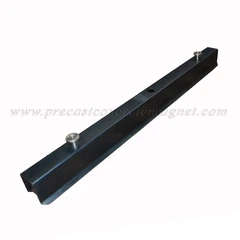
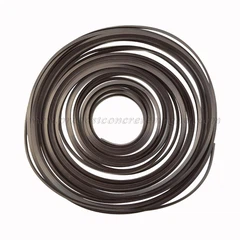
Shuttering Magnet Formwork System Precast Concrete Magnets
Precast concrete magnets are used in formwork structures. Shuttering magnet has a magnetic system with 250x power to fasten the side rail profile. These stainless steel button magnets have customized adaptors to improve efficiency.
Features:
● Easy installation
● No welding required
● Reusable
● Low cost
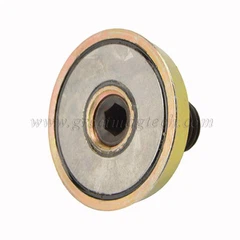
2100 kg Precast Concrete Shuttering Magnet For Concrete Formwork
When pouring concrete, a precast concrete iron magnet secures the panels to prevent the cement from flowing out of the casting form. Engineers control the magnetic adsorption force through on or off controller buttons at the center of the magnetic box.
Features:
● High durability
● Customizable
● Flexible
● Simple & convenient

Our Thai customer's usage scenarios
Precast Concrete Formwork For Wall Panel
These concrete formworks link the first and second wall panels, forming a spaced relationship. It is made of formwork steel bars and a magnetic suction cup system.
Features:
● Moisture-proof
● High intensity
● Stable & safe
● Cheap

Application of formwork magnet
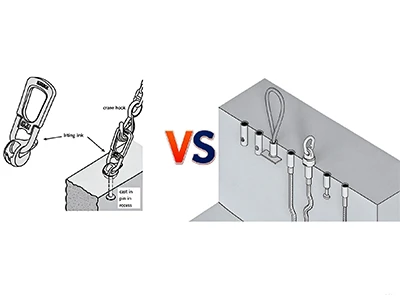
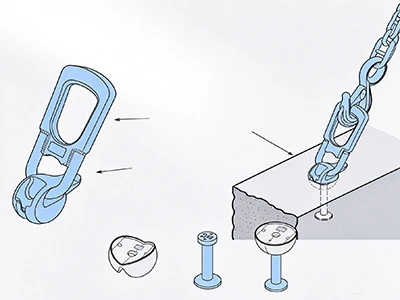
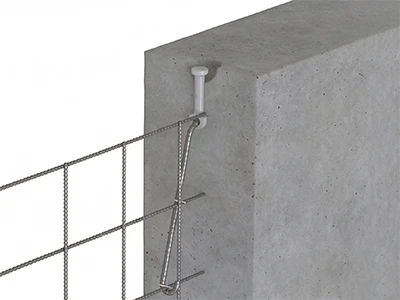
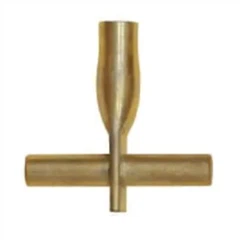
Lifting Eye Anchors For Precast Concrete
Eye underfoot passes tension loads into the concrete for safe lifting in thin sections. Lifting eye anchors handle lightweight concrete slabs and concrete strengths below 2000 psi.
Features:
● Automatic bolt feeding
● Sturdy & durable
● Easy-to-install
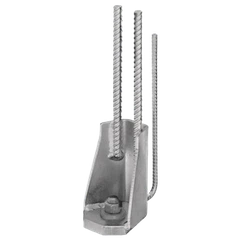
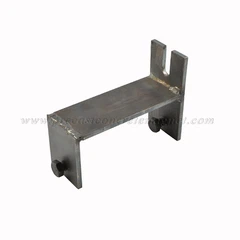
Embedment Plates Precast Concrete Steel Embed Plates
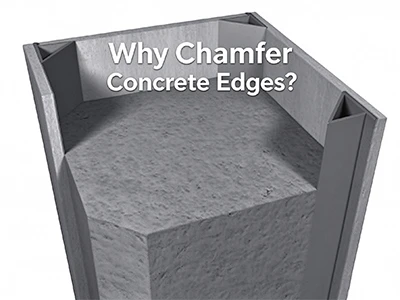
Steel embedment plates combine the concrete panel to build a foundation of steel structures, especially dock-type structures. These steel embed plates are set before concrete is poured to strengthen the exposed edges of the concrete.
Features:
● High-quality
● Customizable
● Reasonable price

Lifting anchors application
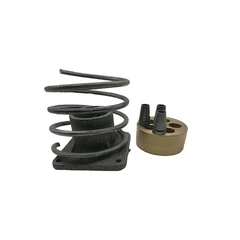
Wire Rope Lifting Loof For Precast Concrete Elements
Anchoring wire rope in precast concrete creates a threaded connection, helping obtain prefabricated concrete elements through straight pull. The lifting loop withstands a 45° lift when pulling the socket with thread.
Features:
● High-grade steel wire
● Versatile
● Galvanized

Lifting loops application
For more details, please click the picture below to contact us

Types of Precast Concrete Structures
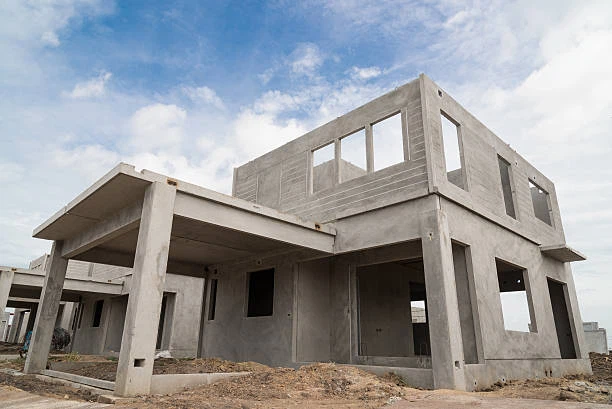
Once precast concrete panels are made, they are used in various precast concrete structures, including:
● Precast concrete walls and panels
● Precast concrete slabs
● Precast concrete beams
● Precast columns
● Precast stairs
Why Choose Precast Concrete?
Benefits of using precast concrete panels over conventional materials, cast-in-place concrete:
Construction Speed
Precast concrete panels speed up construction projects. However, pouring concrete and curing it at the construction sites takes several weeks.
Now ready-to-install precast products make the construction process far easier without taking time.
Strength
Adding waterproof admixtures, reinforcement bars, and other materials induces durability and strength in the precast concrete.
Controlled Environment
In precast concrete manufacturing sites, factories carefully control environmental conditions to carry out the curing process.
Quality Control
Builders don't have adequate time to monitor the precast concrete quality in large-scale projects. Thus, precast manufacturers focus solely on the product's quality through quality control mechanisms.
Cost-effective
Onsite projects require greater time, increasing labor and cost. Precast concrete saves both, favoring project speed.
Design Options
Manufacturers create decorative elements using specialized molds of different shapes and sizes.
Conclusion
Whether you're looking for easy-to-install and vigorous panels, precast concrete panels have been the best solutions for engineers, contractors, and consumers. You can create specified architectural structures using high-quality concrete and accessories without compromising quality, strength, and cost.