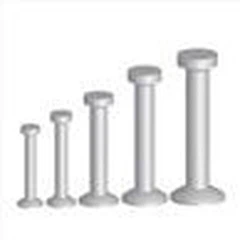


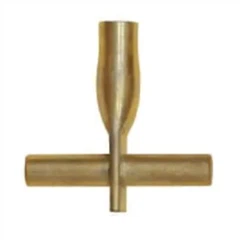

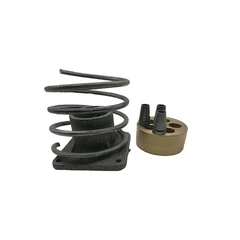



One of the most unique features of the prefabricated design is that you need to transport it from the site to where it needs to be installed, which leads to some things you need to consider early in the design, such as what panel breakers and can they be lifted from a truck How much weight, that's pretty much different on every site. Still, realistically it ranges between 5 and 10 tons, and that's the range of the lifting characteristics. Another aspect of making sure to limit weight is also the height, if you make it too tall they won't be able to transport it to the site, so what you need to consider is that probably anything over three meters will cause problems for transport on site unless you There are unique shipping options. The other thing, too, is bringing it to the site, you've got to realize that you're also going to need to lift it off the truck, so one thing you probably don't have to think about, because it's usually done by a temporary engineer, is those lifting points Where to put it, so when you're splitting up those panels, make sure you have a good place to put those lifting points so they can lift it and install it on site. The most critical thing about these lifting points is that you need to make sure that you have tie rods going through the entire height of the structure, or at least that panel, because that lifting point needs to lift it from the top, and concrete is not good in tension, so You want to make sure those tie rods are at the bottom of the panel so that when you lift it, the load is transferred from the bottom of the panel and doesn't have to be carried by the concrete structure, which is usually in a weaker state because it hasn't reached its final design strength.

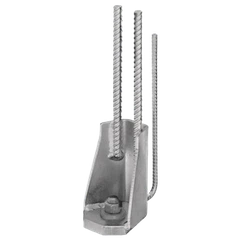
The next consideration is, how are you going to support that wall, and where are those supports going to be, usually the precast is installed before the slab above is installed so that you have a good connection to the slab above, but this also means that before the slab above is installed and poured, it will need to be temporarily supported until it reaches design strength, so typically you will need at least two prefabricated supports per panel unless there are other support mechanisms in place. When it comes to bracing and supporting precast panels there are two ways you can do it, you can use a diagonal brace dropped to the slab which is the more traditional method however this can result in unsightly joints on your slab Because you need to have a rear connection going in, especially if you have polished concrete or a very clean finished floor slab. If you have enough walls around you, you could also go to those elements with a horizontal brace to support the structure in that direction, which means you're limiting the connection to the slab, which might lead to a better solution, Because it works in that direction. This ends up destroying the structure rather than adding extra strength to those temporary support structures to support horizontal loads. When you install them, do you choose a post-mounted solution or a cast anchor? Arguably, cast anchoring may lead to a better and cleaner solution, but it means you're anchored in a certain location and you need to know exactly where those supports are going to be placed, and sometimes depending on the constraints of the site, you may not know, So you may need a post solution. When you're looking at a post-mounted solution you want to make sure it's mounted to the design anchors and can't be easily removed, which is why something like a real ball is great because they can come in and you can install them, but they can also be installed afterward Removing them means you are left with a flat surface once the design is complete and installed correctly.
In addition to the supports, especially on these precast walls, you also need to put shims underneath because when you install a precast wall you don't want concrete on concrete because it will wear away and won't make a good connection, and you There's also not a completely flat surface, so to make up for that difference, you're usually going to put a mortar barrier in there, so you need to carefully design the precast panels to be prepared for that mortar barrier and any load dispersion that might occur, specifically is in the lap joint, but the other thing you need to worry about is, you can see, the stress is limited because of that load dispersion, but the other thing is, you need to support it with shims Because that mortar does not have enough capacity to resist the compressive load of the precast panels in their wet state, otherwise the mortar would squeeze out, what does that mean? You need to put a series of shims under the wall that will allow you to stack the building up and also keep it apart but also allow you to have a temporary state so we can mortar it and make it That mortar cures. One thing you need to carefully consider is, are those spacers harder than the surrounding mortar as the load increases. Generally, you want them to be softer so that when a load is applied to them they are not attracted to those shims you put in but to the bed of mortar next to them so that when it crushes it is more Probably the stress is in the mortar bed, not the gasket itself, otherwise it could have some localized area stresses causing some localized cracking. Also think carefully when putting those shims in to make sure the load is balanced and doesn't cause stress points in your critical areas, especially around nails and other similar places. Spacers are also something you need to consider, do you mortar the bed as soon as the panels go down or do you mud it around with liquid mortar and mortar the fill? If you do the latter, you'll want to make sure you think carefully about how many floors you need to install before that mortar joint requires mortar and make sure it's not forgotten during the construction and installation of those precast panels. Sometimes to make it easier to install these panels there may be a permanent state different from the temporary state of installation, a good example is sometimes if you have a cantilevered panel attached to a prefabricated panel you can do it in two ways Do, you can embed it so that you have a direct concrete on the side of the panel to take the load, which is a nice detail but will result in a really bad joint, especially on the exterior, that the architect may not like.
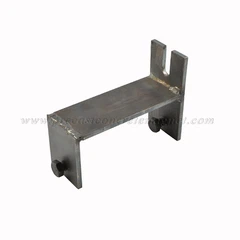
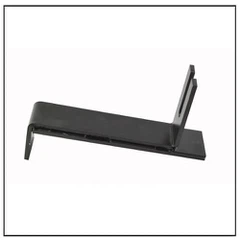
Another option is to have the precast panels continue up and put the precast panels on the side, which means you need to put some seam boards in there to secure that panel, but what you don't want to do is secure that overhang on a crane, so An easier method is to put a small shelf angle on the support panel, this will allow you to temporarily put the prefabricated panel on top, and give you time to repair those seamed panels on top, which will support those permanent forces. Another thing is whether you need a critical design for the underlying system, whether it's a permanent or temporary state. Sometimes because of the constraints of the site, you might need to put some temporary foundations in there to help you support those precast panels, or the anchors at the bottom might be fixed for that temporary state, so when you look at these different aspects, say Does my base need to be designed differently for temporary states, or is it more critical for permanent states because sometimes you may change between them. Another good way to think about this is when you're looking at this permanent and temporary state when you sew the precast panels together, there are design forces for shear, especially if you have a large shear wall, you should Overlap them as much as possible, like bricks, so that you can get a good shear plane through without relying on that seam plate detail we talked about before, because there are some things, a seam plate detail is soft Because it allows them to slide between each other, it can create additional stresses in the floor connections to transfer more shear loads to the system, some of the critical areas of those connections, particularly in the floor slabs, seam slabs, and those under-joint connections. , one thing that might work in your favor is those dow connections, for floor connections, the fact is that the dows are on the edge of the floor panel, so there's a distance that that adagio needs to span to take the load of it, which Make it softer and if it has a little crack, that means it won't take as much load as you would expect.