




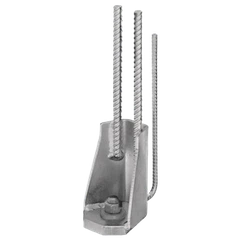
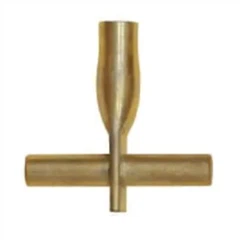
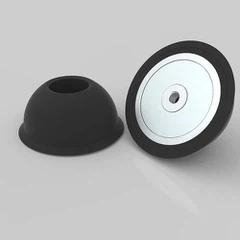
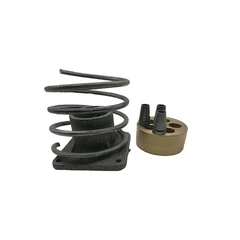



Precast Concrete, also known as PC component, refers to concrete products produced by standardization and mechanization in the factory. The corresponding cast-in-place concrete corresponding to the site requires on-site molding, on-site casting and on-site maintenance. Concrete prefabricated parts are widely used in construction, transportation, water conservancy and other fields and play an important role in the national economy.
Compared to cast-in-place concrete, factory-produced concrete prefabricated parts have many advantages:
Safety: For construction workers, a relatively stable working environment in the factory has a higher safety factor than a complex site;
Quality: The quality and process of building components can be better controlled through mechanized production;
Speed: Standardization of preform dimensions and characteristics can significantly speed up installation and construction progress;
Cost: Compared with traditional on-site molding, the molds in the factory can be recycled and reused at a lower overall cost; mechanized production requires less labor, and as labor costs continue to increase, the cost advantages of large-scale production of prefabricated parts It will become more and more obvious.
Environment: The amount of on-site work on construction sites using prefabricated parts is significantly reduced, and dust pollution and noise pollution are significantly reduced.
Disadvantages of prefabricated parts:
The factory needs a large area of yards and supporting equipment and tools, and the storage cost is high;
A professionally trained construction team is required to cooperate with the installation;
Transportation costs are high and risky, which determines the limited range of radiation in the market.


