

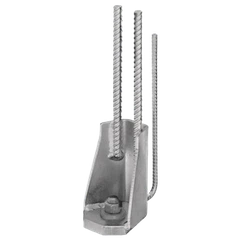
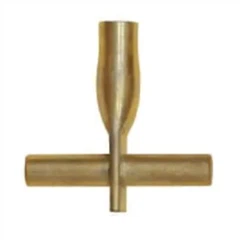

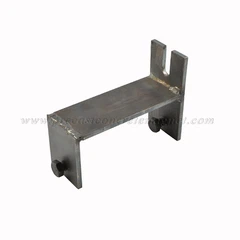
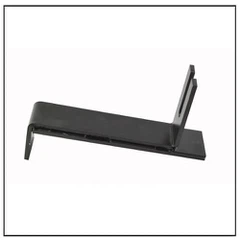


PC is a component used in construction, transportation, water conservancy, and other fields, also known as "precast concrete components". For example, prefabricated reinforced concrete column foundation, prefabricated steel structure steel column foundation, street lamp billboard column reinforced concrete foundation, prefabricated floor slab, etc. Correspondingly, conventional cast-in-place concrete requires on-site molding, on-site pouring, and on-site maintenance. Precast concrete components are widely used in construction, transportation, water conservancy, and other fields, and play a pivotal role in the country's economic development.
Advantages of PC Components:
PC components have the advantages of energy saving, environmental protection, cost reduction, and providing useful functions, and use functions. At present, construction units around the world have different application methods for PC components, and mainland China is still in the development and research stage. In recent years, with the rise of many new building concepts such as building industrialization, energy conservation and emission reduction, quality and safety, and ecological environmental protection, as well as a large number of infrastructure construction in the process of urbanization.
Progress: PC components can greatly improve the assembly and construction progress.
In terms of cost, compared with traditional in-situ molding, the molds produced in the factory can be recycled and reused, and the overall cost is relatively low; mechanized manufacturing requires less manpower, and with the increase of labor, the large-scale production of PC components will be more cost-effective.
Environmental protection: After the PC components are used in the construction site, the workload of the construction site is significantly reduced, and dust pollution and noise pollution are significantly reduced.
Classification of PC components:
PC components are generally classified by the combination of columns, beams, slabs, and more. At the same time, the internal force and reinforcement are analyzed, and the structure is optimized on this basis.
Precast Beams: Horizontal structural members that transfer loads from slabs to columns. Engineered for high strength and durability, precast beams are suitable for residential, commercial, and industrial projects. They allow faster assembly and maintain precise alignment, reducing potential structural errors.
Precast Slabs: Flat panels used for floors and roofs, including solid and hollow-core slabs. Hollow-core slabs are especially efficient, reducing material weight while maintaining load-bearing capacity. Precast slabs enable rapid installation, provide uniform surfaces, and improve project timelines significantly.
Precast Walls: Both exterior and interior panels are available in load-bearing and non-load-bearing forms. Precast walls provide structural integrity, thermal insulation, and soundproofing while allowing customizable finishes for aesthetic versatility.
Precast Stairs and Landings: Pre-manufactured staircases and landings offer safe, rapid vertical circulation installation. They minimize on-site labor, ensure consistent dimensions, and integrate seamlessly with floors and landings.
Precast Foundations: Precast footings, bases, and foundation elements provide a stable and precise support system for the entire structure. These components enhance construction speed, reduce rework, and maintain alignment and quality under heavy loads.
Applications Across Industries
Residential Construction: Used in walls, floors, and foundations of homes and apartment buildings.
Commercial Construction: Used for the structural and aesthetic benefits of office buildings, retail spaces, and hotels.
Infrastructure: Used in bridges, tunnels, and highways for its strength and durability.
Industrial: Used as strong structural components in factories and warehouses.
Precast concrete elements play a key role in modern construction, offering exceptional efficiency, quality, and versatility. Their widespread use across various sectors underscores their importance in building sustainable and durable structures.
FAQ
How long does it take to install precast walls?
Installation is much faster than traditional cast-in-place construction. Depending on project size, precast walls can be positioned and secured in hours to a few days, rather than weeks. Factory precision and modular design allow quick assembly, reducing labor costs and overall construction timelines.
Are precast components more expensive than traditional concrete?
While the initial material cost can be higher, precast components often save money in the long term. Faster installation, reduced labor, fewer on-site errors, and minimal waste make precast a cost-effective solution for residential, commercial, and industrial projects.
What types of precast slabs exist?
Precast slabs include solid, hollow-core, ribbed, and double-tee slabs. Hollow-core slabs reduce weight while maintaining strength, ribbed slabs offer extra stiffness, and double-tee slabs are ideal for long spans, making them versatile for floors and roofs across building types.